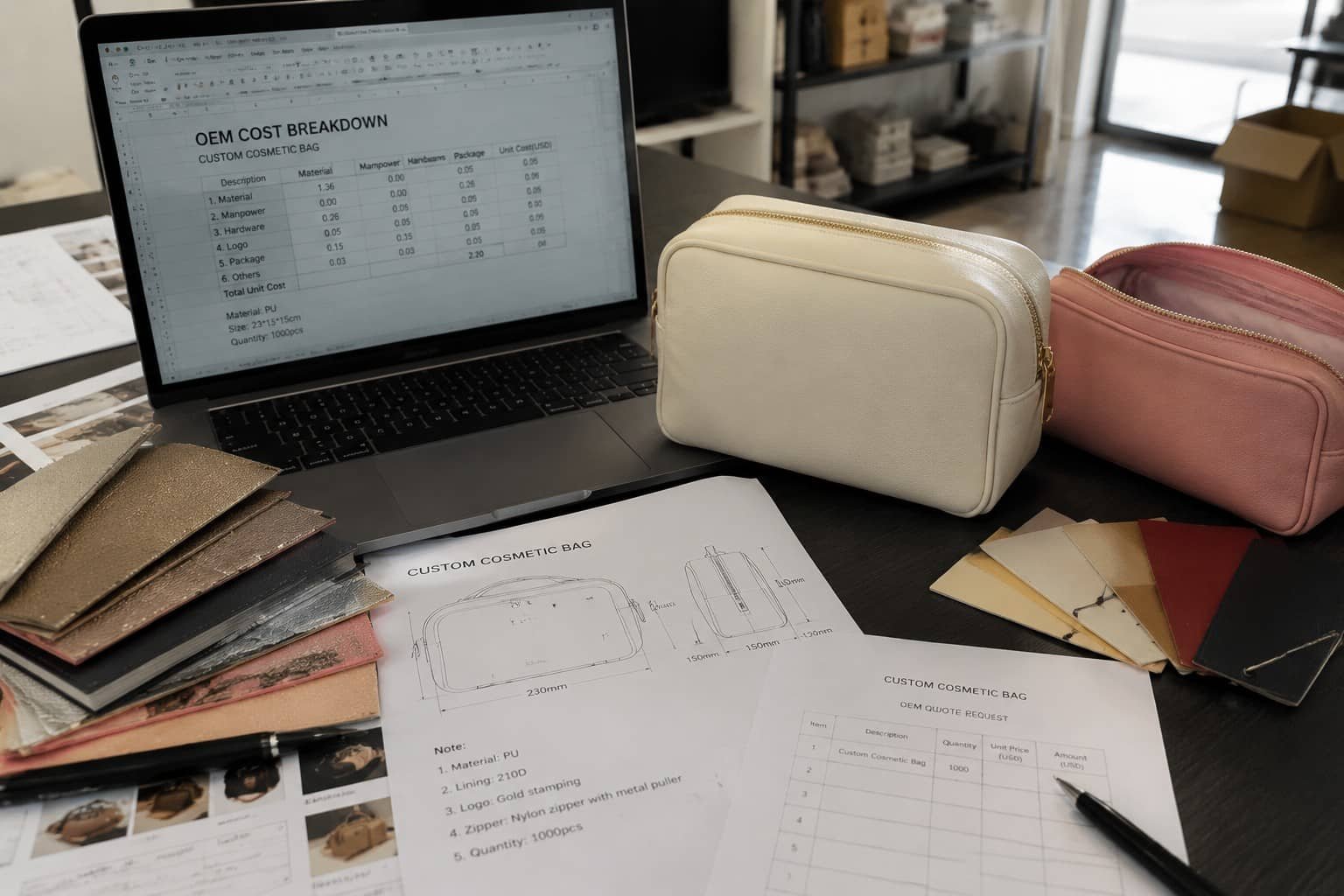
Quick Summary: Custom cosmetic bag cost is driven by five factors: material selection (typically 30–50% of total cost), order quantity (per-unit price drops 15–25% at key MOQ thresholds around 300, 1,000, and 3,000 units), design complexity (each additional panel or compartment adds measurable labor cost), customization method (one-time setup fees vs. ongoing per-unit costs), and packaging requirements. A simple canvas pouch at 1,000 units lands around $1.50–3.00 FOB; a structured PU leather cosmetic bag ranges $3.00–7.00; a full-grain leather vanity case at 300 units can exceed $15.00.Actual pricing varies depending on material grade, construction, order quantity and customization requirements. For accurate OEM pricing, submit a complete RFQ with your material preference, dimensions, target quantity, and branding requirements — incomplete specs lead to conservative quoting and extra sampling rounds.
Key Takeaways:
- Material is the biggest cost lever.Same design, same factory — leather costs 3–7× more than canvas. But labor, hardware, and packaging each move the final quote independently, and swapping one material for another changes all downstream costs.
- MOQ creates pricing cliffs, not gentle slopes.Meaningful cost breaks happen at roughly 300, 1,000, and 3,000 units. Understanding where you land on this curve changes your negotiation position and per-unit budget.
- Not all quotes include the same things.One factory’s $5.00/unit might be FOB with basic poly bag packaging. Another’s $5.50 might include branded gift boxes and DDP shipping. Comparing bottom-line numbers without mapping what’s inside each quote is the fastest way to make a bad sourcing decision.
- Hidden costs are predictable — if you know to ask.Sample fees, color-matching surcharges, custom hardware tooling, and inner packaging are rarely in the first quote but are standard in the industry. Budget 15–20% above the quoted unit price for your first order.
- An experienced manufacturer saves more than a cheap one.Expertise in your material category, transparent cost breakdowns, structured QC processes, and clear communication shorten sampling cycles and reduce defect rates — both of which affect your total landed cost more than a $0.30/unit price difference.
Introduction: Why Your Cosmetic Bag Quotes Vary by 3×
If you’ve requested custom cosmetic bag quotes from three manufacturers and received prices ranging from $2.80 to $11.50 for what looks like the same bag — you’re not being played. You’re seeing five independent cost variables at work, and understanding them is the difference between a smart sourcing decision and an expensive mistake.
Based on our experience working with beauty brands and private label buyers, the single biggest predictor of a smooth sourcing experience isn’t the brand’s budget or design taste. It’s whether the buyer understands what drives the quote before they open it.
This guide isn’t here to give you a fixed price list — because honest OEM factories don’t give flat price lists for custom products. It’s here to teach you how to read a cosmetic bag quotation the way a factory actually builds it. By the end, you’ll know which line items to question, which ones are standard, and which suppliers are quoting a number designed to win the first email — not deliver the product you’re imagining.
Table of Contents
The 5-Layer Anatomy of a Cosmetic Bag Quote
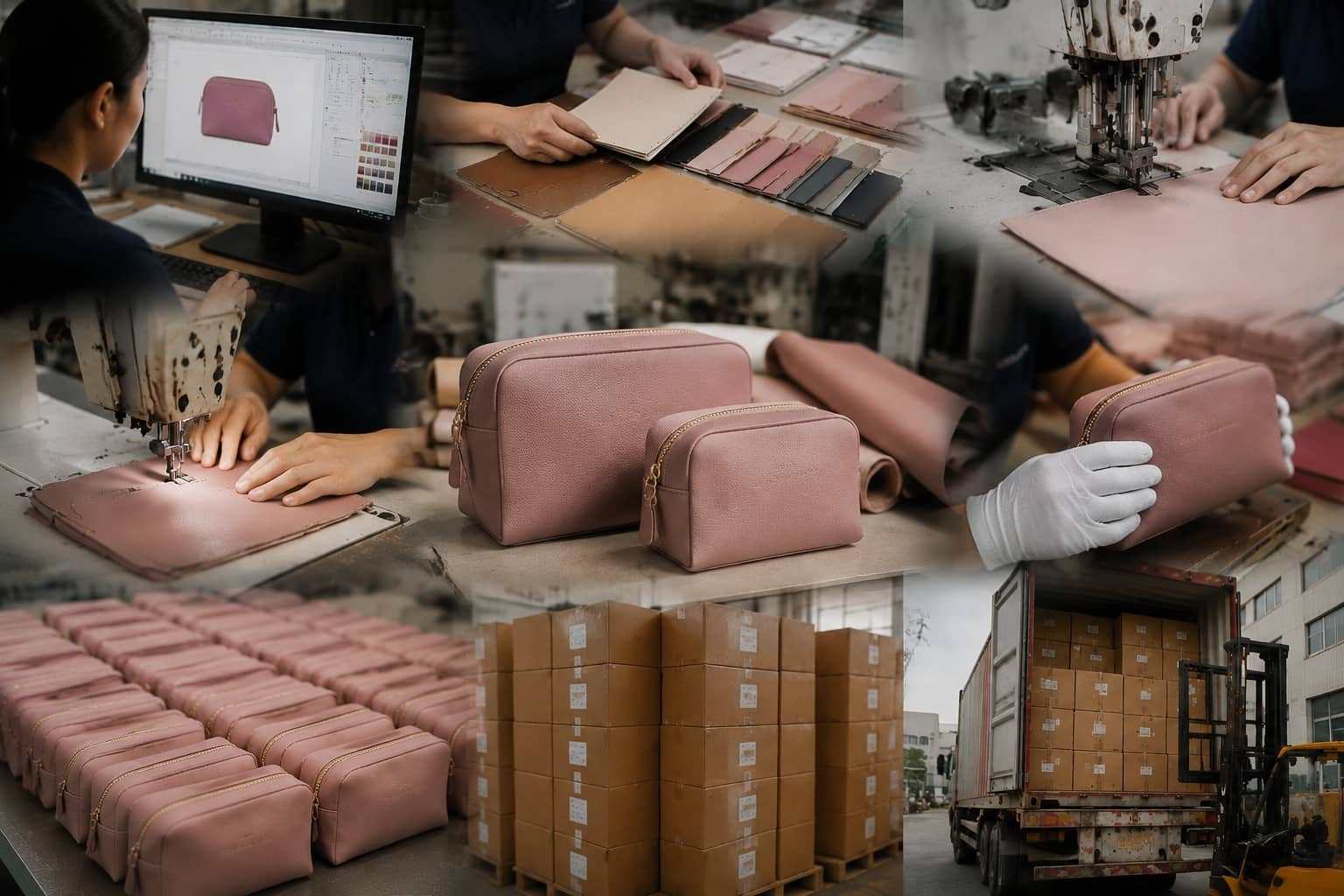
Most custom cosmetic bag quotes arrive as a single number. They’re not. Every OEM price is the sum of five cost layers, and each one moves independently. Here’s how the math actually works.
| Cost Layer | Typical Share of Total | What It Includes | What Moves It |
|---|---|---|---|
| 1. Raw Materials | 30–50% | Outer fabric, lining, interfacing, thread, zipper tape | Material type, thickness, supplier grade, custom dyeing |
| 2. Direct Labor | 20–30% | Cutting, stitching, assembly, QC inspection | Panel count, seam complexity, skilled vs. unskilled operations |
| 3. Hardware & Components | 5–15% | Zipper, puller, metal accents, elastic, mesh pockets | Branded vs. generic, metal vs. nylon, custom mold requirements |
| 4. Logo & Customization | 3–10% | Logo application, branding decoration per unit | Method (silkscreen vs. embossing), one-time setup amortization |
| 5. Packaging & Logistics | 5–15% | Inner packaging, export carton, pallet, freight | Poly bag vs. gift box, FOB vs. DDP, shipment volume |
The key insight: when one factory quotes $4.00 and another quotes $5.80 for the “same bag,” they’re rarely building the same cost profile. Factory A might be quoting 0.4mm PU with a standard nylon zipper, poly bag packaging, and FOB terms. Factory B might be quoting 0.6mm PU with a YKK zipper, branded gift box, and DDP delivery. The $1.80 difference isn’t margin — it’s a different product.
How Much Do Custom Cosmetic Bags Cost?
Rather than giving you a fixed price that will be outdated before you read it, here’s how brand spending actually distributes across real OEM cosmetic bag projects — drawn from our production data.
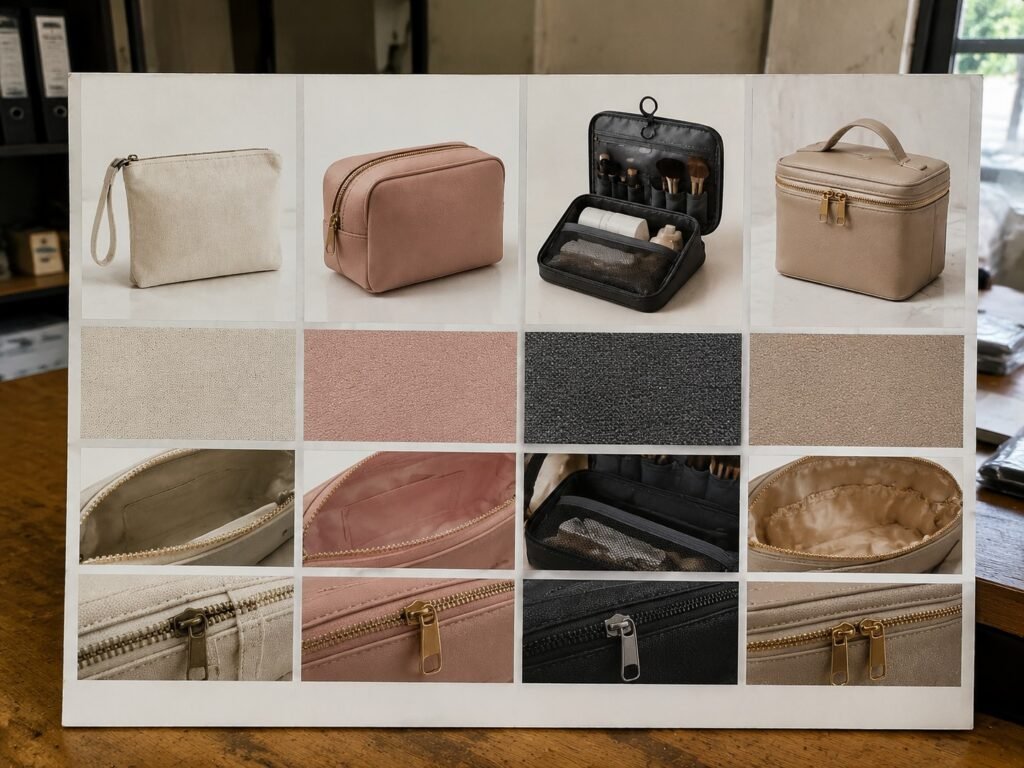
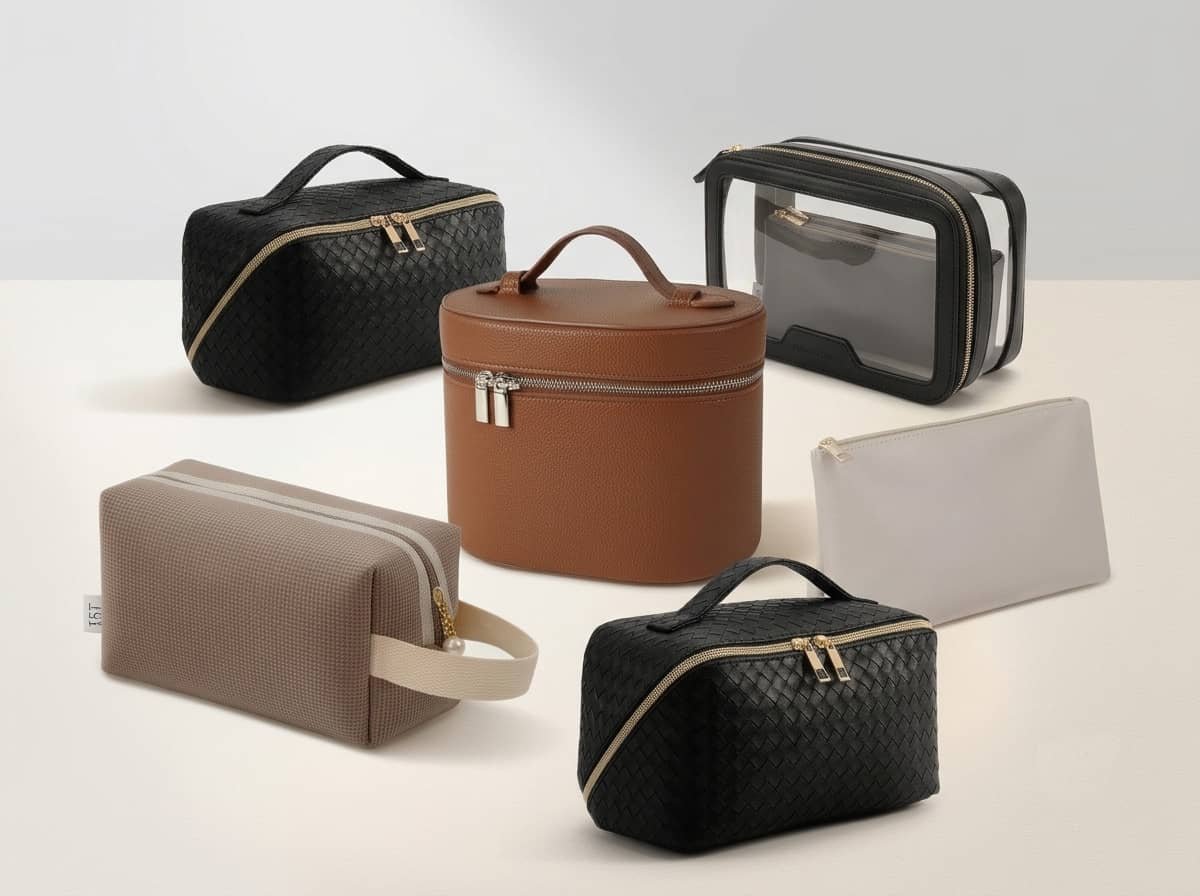
Cosmetic Bag Cost Range by Product Type
| Cosmetic Bag Type | Typical FOB Range (per unit) | Material Examples | Typical MOQ | Best For |
|---|---|---|---|---|
| Simple Canvas Pouch | $1.50–3.00 | 10–12oz cotton canvas, basic nylon zipper | 300–500 | Promotional giveaways, subscription box inserts, trade show handouts |
| PU Leather Cosmetic Bag | $3.00–12.00 | 0.6–0.8mm PU, microfiber backing, custom color | 300–1,000 | Private label beauty brands, mid-market retail, fashion accessory lines |
| Travel Organizer Bag | $5.00–12.00 | 420D nylon or PU, multi-compartment, waterproof lining | 500–1,000 | Travel accessory brands, airline amenity kits, outdoor retailers |
| Structured Vanity Case | $8.00–18.00 | PU or genuine leather, structured panels, metal hardware, internal organization | 300–500 | Professional MUA kits, premium gift sets, department store retail |
| Genuine Leather Cosmetic Case | $12.00–25.00+ | 1.0–1.4mm full-grain or top-grain leather, metal YKK zippers | 300–500 | Luxury beauty brands, high-end hotel amenity kits, limited-edition collaborations |
| Transparent TPU Pouch | $2.50–6.00 | 0.4–0.5mm TPU, ultrasonic welded seams | 500–1,000 | TSA-compliant travel, duty-free retail, modern minimalist beauty brands |
Three things this table should tell you:
Most brands cluster in the $3.00–12.00 range. About 45% of the custom projects we produce sit here — structured PU or entry-level leather, custom color, branded packaging. If you’re a beauty brand or private label launching your first collection, this is almost certainly where you land.
Luxury doesn’t always mean high quantity. Premium brands often order 300–500 units of a leather vanity case at $15–25/unit — higher per-unit investment, lower total inventory risk. The math works because their retail price supports it.
Your cost tier is set by your customer, not your factory. A brand selling $60 skincare sets at Nordstrom can’t use a $1.80 giveaway pouch. A brand selling $12 lip kits on Instagram can’t use a $16 leather case. Work backwards from your retail price, not forwards from the factory quote.
Important: These are FOB cost ranges — the price ex-factory, before international freight, import duties, and local delivery. If you’re comparing quotes across suppliers, confirm whether each quote is FOB, CIF, or DDP. An FOB quote at $5.00 can end up costing $6.50–7.00 landed after freight and duties. See the Hidden Costs section for a full breakdown.
1. Material Selection: The Biggest Factor in Custom Cosmetic Bag Cost
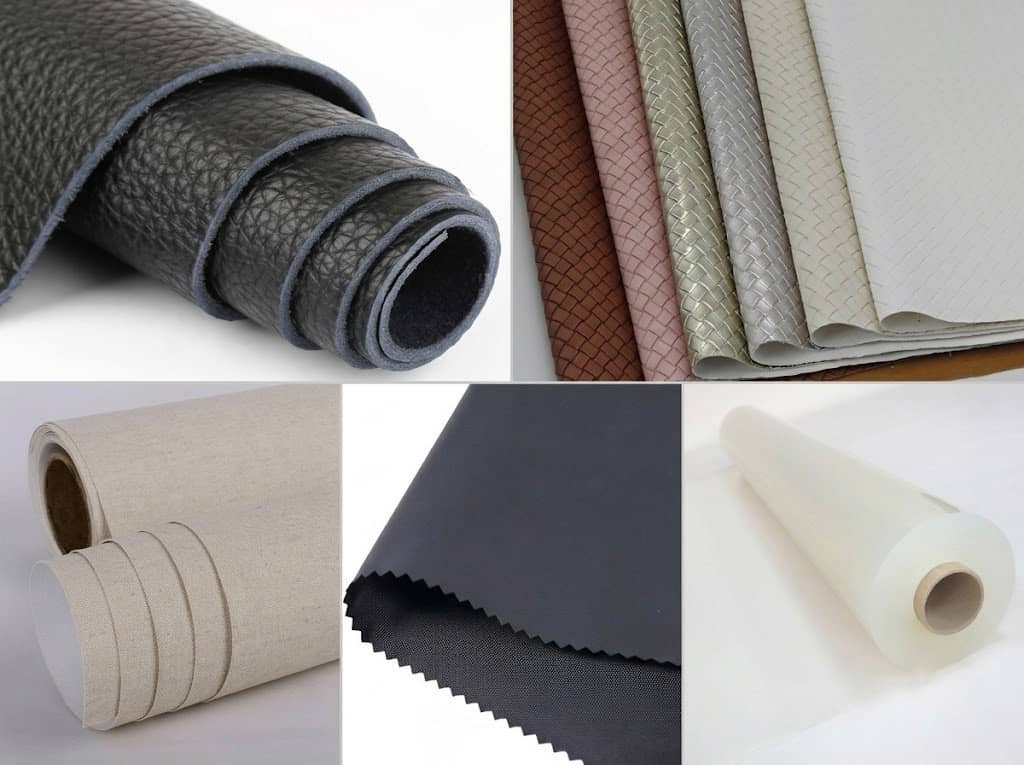
Material doesn’t just set the raw fabric price. It dictates which machines are used, how skilled the operator needs to be, what waste rate to expect, and which logo methods will work. All of that ripples through your OEM quotation.
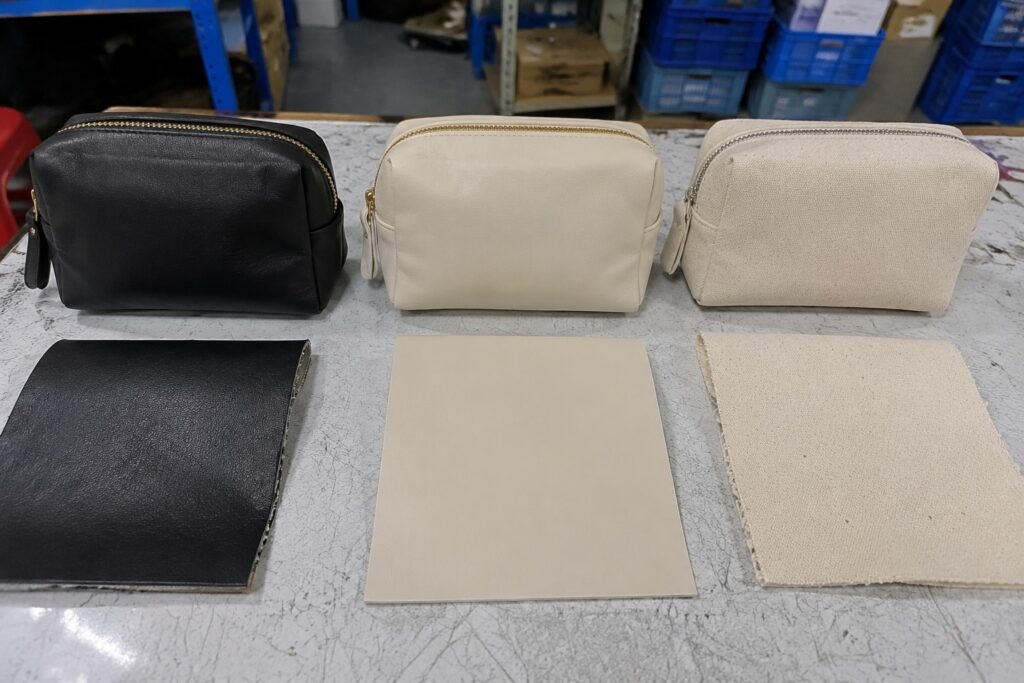
How Material Choice Flows Through to Your Quote
Here’s a real comparison — same bag design, same dimensions (20 × 15 × 8 cm), 1,000 units, from the same factory floor:
| Specification | 12oz Canvas | 1.0mm PU Leather | 1.2mm Genuine Leather |
|---|---|---|---|
| Raw Material Cost | Base | +40–60% vs. canvas | +200–400% vs. canvas |
| Material Waste Rate | 5–8% | 5–8% | 15–25% (hide-dependent) |
| Cutting Labor | Standard — CNC or manual, forgiving material | Standard — consistent surface, low rework | Skilled — hide utilization expertise required |
| Stitching Labor | Standard flatbed machine | Standard flatbed machine | Walking-foot industrial machine, experienced operator |
| Logo Application | Silkscreen or digital print (lowest cost) | Debossing / foil stamping (medium cost) | Brass-die embossing / foil stamping (premium cost) |
| Quality Risk | Low — rework-friendly | Low-Medium — batch consistency high | Medium — natural hide variations, dye lot control |
| Perceived Value | Casual, approachable | Premium fashion | Luxury, heirloom quality |
The takeaway: material cost isn’t a line item you can isolate. It’s a package deal with labor, waste, hardware compatibility, and customer perception. When a brand asks us “how can we get the leather look at a PU price?” — we show them 0.8mm matte-finish PU with microfiber backing alongside a leather sample. You get about 80% of the premium feel at roughly 30–40% of the material cost. The remaining 20% is whether your customer genuinely values the natural grain and aging character — or just wants something that looks and feels premium on a shelf.
For a complete breakdown of material options with durability ratings and OEM tips, read our cosmetic bag materials guide.
2. How MOQ Affects Your Custom Cosmetic Bag Unit Price
This is the question every startup brand asks, and the answer is never just “more is cheaper.” MOQ pricing has structure. Understanding where the actual cost breaks happen changes how you plan your order — and how you evaluate supplier quotes.
The Three MOQ Thresholds in Custom Cosmetic Bag Production
In our production experience, meaningful per-unit cost breaks happen at three specific thresholds:
| MOQ Range | What Changes | Typical Unit Price Reduction vs. Previous Tier | Best For |
|---|---|---|---|
| 100–300 units | Baseline setup costs covered. Materials bought at small-lot pricing. | Baseline | Startups testing a new design, first production run, market validation |
| 300–1,000 units | Bulk material purchasing activates. Setup cost amortized across more units. | ~5–10% drop from sub-300 pricing | First serious production order, private label launch, seasonal collection |
| 1,000–3,000 units | Full wholesale material pricing. Dedicated production line becomes viable. | ~5–10% drop from 300–1,000 pricing | Established brands on reorder, proven SKUs, annual collection launch |
| 3,000+ units | Maximum purchasing leverage. Line production at peak efficiency. | ~5–8% drop from 1,000–3,000 pricing | Large-scale brands, promotional campaigns, subscription box programs |
The Startup MOQ Dilemma
Here’s something most pricing guides won’t tell you: for a startup testing the market, a higher unit cost at lower MOQ is often the smarter financial move.Lorem ipsum dolor sit amet, consectetur adipiscing elit. Ut elit tellus, luctus nec ullamcorper mattis, pulvinar dapibus leo.
A brand testing their first cosmetic bag design orders 100 units at $8/unit = $800 total cash outlay. At 1,000 units, the price drops to $5/unit — but now they’re committing $5,000 in cash and sitting on 900 units of inventory they haven’t validated yet.
The “cheaper” unit price costs them $4,200 more in total cash and creates significant inventory risk. For a market test, the lower-MOQ, higher-unit-cost option preserves cash and flexibility.
Our OEM MOQ Approach
At Solton Leather, we understand that brand needs vary dramatically depending on stage, market, and product tier. Our standard MOQ starts at 100 pieces per style per color for most materials and designs — but the optimal MOQ for your specific project depends on what you’re trying to achieve.
- Testing a new product?We support flexible low-MOQ production at 100 units for most materials, with transparent pricing that reflects the real per-unit economics at that volume.
- Launching an established brand’s new SKU?We’ll recommend ordering at the 500–1,000 unit threshold to capture the first major material efficiency break.
- Reordering a proven seller?We’ll help you scale to 3,000+ units to maximize production efficiency while maintaining consistent quality across batches.
The right MOQ strategy isn’t about hitting an arbitrary number. It’s about matching your order volume to your business stage, cash position, and market validation. We’ll help you figure out where you are and what makes sense — not push you toward a larger order than you need.
3. Design Complexity and Manufacturing Cost
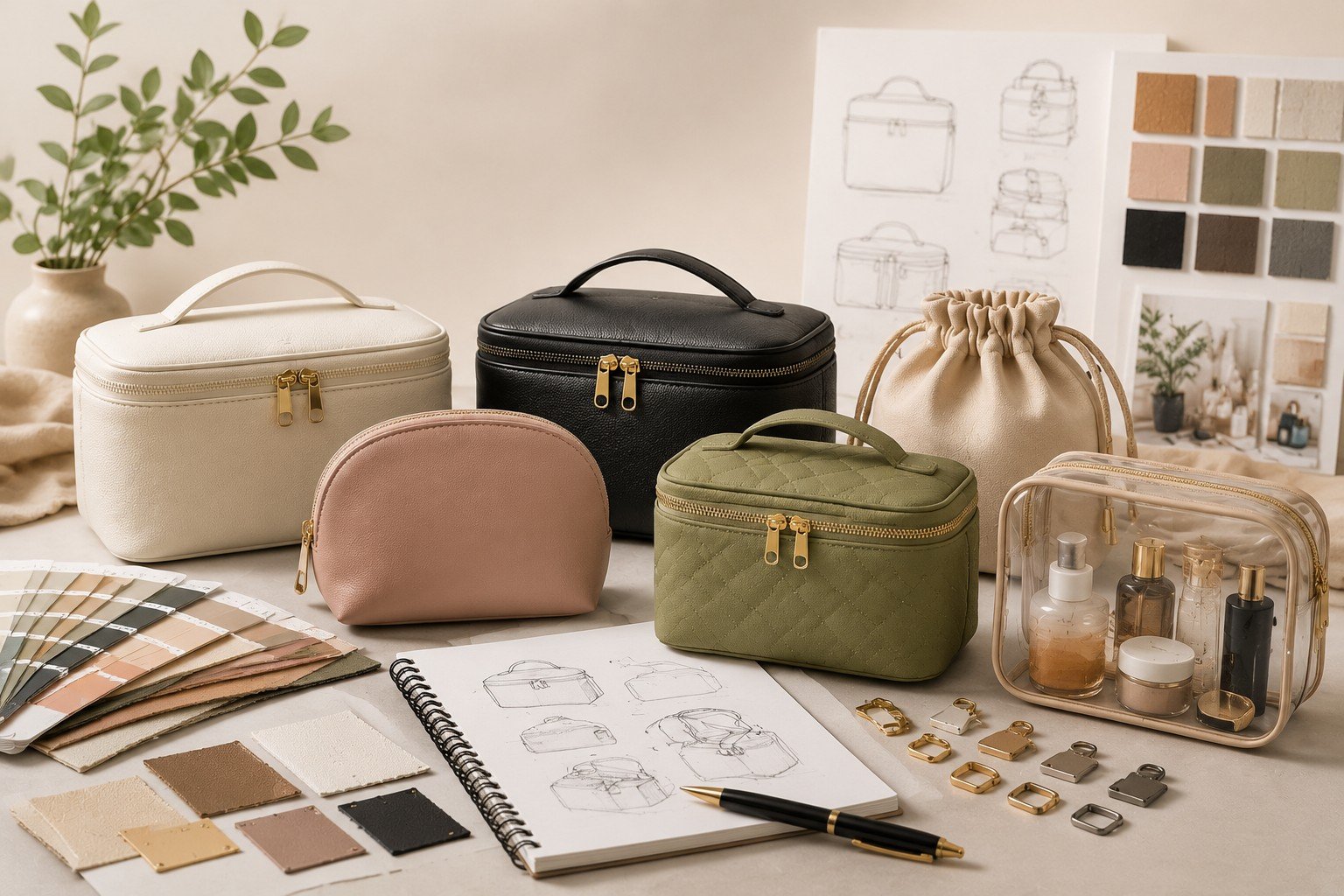
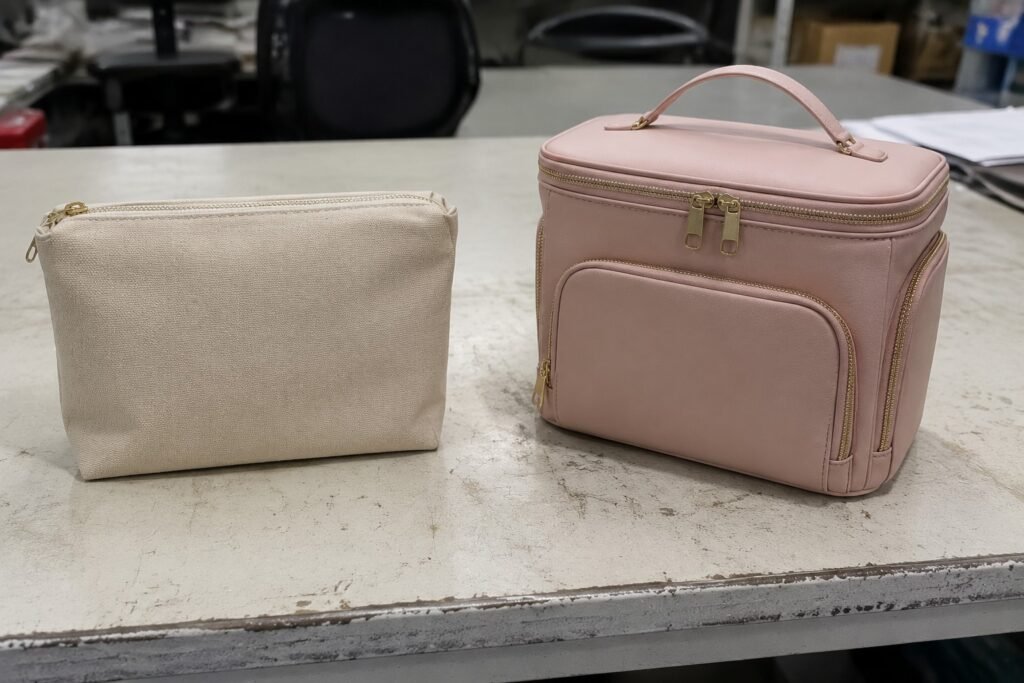
This is where design decisions meet factory-floor reality. Every additional panel, seam, and compartment adds a specific amount of cutting time, stitching time, and QC checkpoints. The fastest way to overshoot your budget isn’t choosing leather — it’s designing a bag with twice the assembly time of a simpler version that looks nearly identical.
Cosmetic Bag Complexity Self-Assessment
Use this framework to estimate where your design lands for cosmetic bag styles before you contact a manufacturer:
Score 1 point for each feature your design includes:
- ☐ More than 2 main body panels (a basic flat pouch uses 2 panels; a structured case uses 4–6)
- ☐ Internal divider or separate compartment
- ☐ Elastic brush loops or internal organization
- ☐ Waterproof lining in one or more sections
- ☐ Non-rectangular shape (curved edges, trapezoid, custom silhouette)
- ☐ Detachable strap, wristlet, or handle
- ☐ Metal hardware beyond the zipper (buckles, D-rings, frame closure)
- ☐ Custom-shaped gusset or base panel
| Your Score | Complexity Level | Labor Impact | Typical Lead Time | Best For |
|---|---|---|---|---|
| 0–2 | Simple | Baseline labor. Fastest production. | 15–25 days | Promotional giveaways, subscription box inserts, budget-conscious launches |
| 3–5 | Moderate | +20–40% labor vs. simple. Standard for branded cosmetic bags. | 25–35 days | Private label beauty brands, mid-market retail, fashion accessory lines |
| 6+ | Complex | +50–100%+ labor. Requires experienced operators. | 35–45 days | Professional MUA kits, luxury vanity cases, premium gift sets |
A real example from our floor: A brand came to us with a 6-panel structured vanity case — separate base gusset, two internal mesh pockets, detachable wristlet, custom metal feet. Beautiful design. Complexity score: 7. At 500 units, the quote landed above their $12 budget.
The fix: we consolidated 6 panels into 4 by integrating side panels with the gusset, replaced metal feet with reinforced bottom corners, kept the mesh pockets and wristlet. Complexity score dropped to 4. The bag looked 90% the same. The unit cost dropped 28%. They launched on budget.
The design-to-cost rule: every time you add a feature, ask — “does this solve a specific customer problem, or am I adding it because it looks good on a sketch?” If you can’t name the user benefit, leave it out for version one.
Every design choice — zipper placement, compartment count, gusset depth — directly affects
your production cost. See how to make cost-smart design decisions in our custom makeup bag design guide.
4. Customization Options: One-Time Setup vs. Per-Unit Costs
This is the pricing detail that separates experienced buyers from first-timers. Most customization has two cost components that buyers often confuse: a one-time setup fee and a per-unit application cost. Mixing these up — or not knowing which is which — leads to sticker shock when the OEM quote arrives.
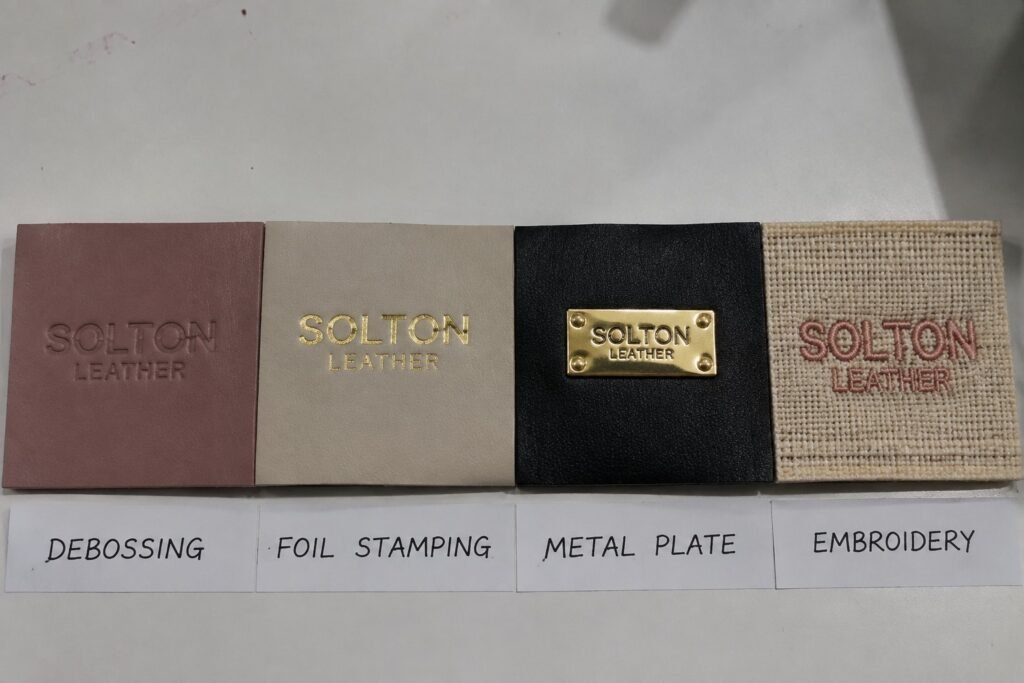
| Logo Method | One-Time Setup | Compatible Materials | Durability |
|---|---|---|---|
| Silkscreen Print | $30–50 (screen) | Canvas (best), PU, Nylon | Medium — may fade with heavy abrasion |
| Heat Transfer | $40–80 (film) | Canvas, PU, Nylon | Medium — depends on application quality |
| Debossing / Embossing | $80–150 (brass die) | Leather (best), PU leather | High — permanent, won’t wear off |
| Foil Stamping | $80–150 (brass die) | Leather (best), PU leather | High — metallic finish, permanent |
| Metal Logo Plate | $100–200 (mold) | Leather, PU, Canvas (sewn-on) | Highest — physical metal, premium |
| UV Digital Print | $0 (no setup) | TPU (best), Canvas, PU | Medium-High on TPU, medium on fabric |
| Embroidery | $40–60 (digitizing) | Canvas (best), Nylon | High — thread, permanent |
What this means for your cosmetic bag quotation:
- Ordering 300 units?One-time setup fees (brass die $120, mold $150) add roughly $0.90/unit at 300 units but only $0.09 at 3,000 units. Low-volume orders feel customization costs more acutely. Consider silkscreen or UV print for first runs — lower setup costs, easier to iterate.
- Custom zipper pullers with your logo?Great for branding, but the mold costs $150–300. At under 1,000 units, we often recommend a standard YKK puller plus a branded hangtag ($0.05–0.10/unit) instead. Upgrade to custom pulls on the reorder when volume justifies the mold.
- Custom Pantone dyeing?Standard supplier color catalogs: no surcharge. Matching a specific Pantone shade: $50–150 per custom dye lot, and may increase the material MOQ.
Pro tip:
Test your logo on your actual material before commissioning tooling. A debossing die designed for 1.2mm leather won’t register cleanly on 0.6mm PU. A 10-minute test press on a material swatch costs nothing and catches this mismatch before you spend $120 on a die.
5. Packaging: The Cost Most Brands Forget to Budget
Packaging is the line item that shows up late in the sourcing process and surprises brands the most. A factory quotation for “$5.00/unit FOB” rarely includes the packaging your brand actually needs at retail.
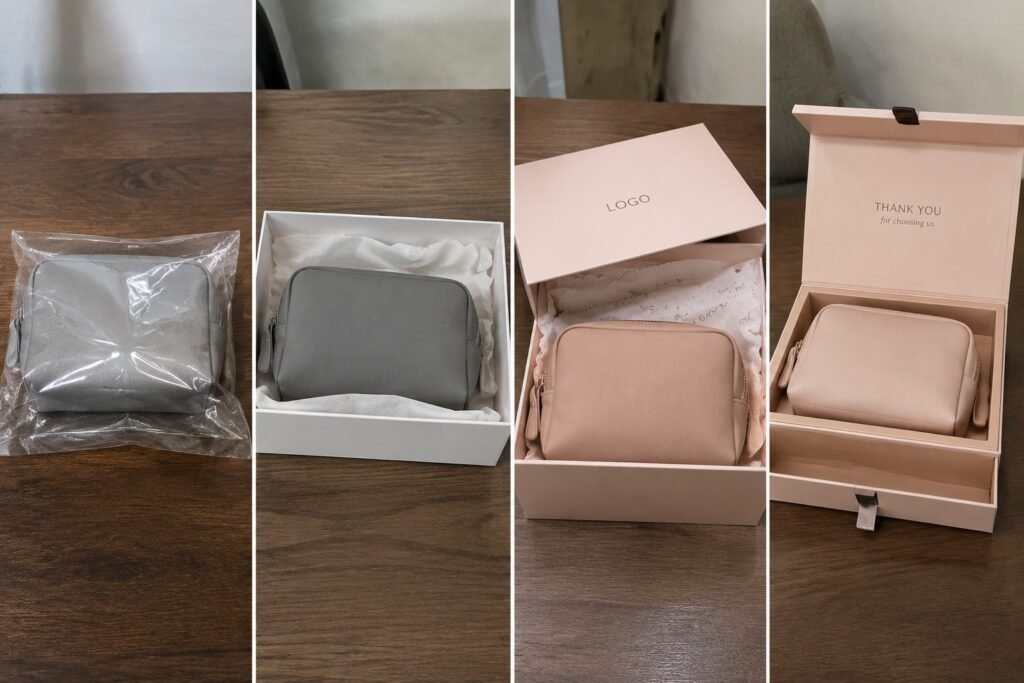
| Packaging Level | What’s Included | Cost Impact | Best For |
|---|---|---|---|
| Basic | Individual poly bag, export carton | Included in most FOB quotes | Wholesale distribution, Amazon FBA, warehouse stock |
| Branded Basic | Poly bag with brand sticker or simple insert card | +$0.10–0.25/unit | Direct-to-consumer brands on a budget |
| Retail-Ready | Individual gift box, branded hangtag, care instruction card | +$0.50–1.50/unit | Department store retail, boutique shelves, premium unboxing |
| Luxury Unboxing | Rigid gift box, custom insert tray, dust bag, tissue paper, outer shipping carton | +$1.50–4.00/unit | Premium beauty brands, gift sets, limited editions |
Private label packaging-budget rule: Decide your packaging level during the design phase, not after the sample is approved. Retrofitting luxury packaging onto a quote built for basic packaging is the #1 cause of “the final cost is higher than we expected.”
6. Hidden Costs: What to Budget Before You Order
These are the costs that experienced buyers budget for and first-timers discover the hard way. Every factory knows about them. Not every factory volunteers them upfront. None of them are scams — they’re standard in custom OEM manufacturing. But they’re only predictable if you know to ask.
| Hidden Cost | What It Is | Typical Range | When It Hits |
|---|---|---|---|
| Custom color matching | Standard supplier color swatches: free. Custom Pantone matching: dye lot setup + potential material MOQ increase. | $50–150 per custom color | Material sourcing phase |
| Custom hardware tooling | Zipper pullers, metal logo plates, custom buckles all require molds that are yours to keep and reuse. | $100–500 one-time per component | Before production begins |
| Inner packaging & labeling | Barcode stickers, price tags, care labels, branded insert cards — often quoted separately. | $0.10–0.40/unit | Final quote stage |
| Third-party lab testing | REACH, CPSIA, Proposition 65 compliance testing for regulated markets. | $200–600 per test batch | Before shipment; budget during planning |
| Freight & import duties | Most OEM quotes are FOB (ex-factory). Sea/air freight, insurance, customs clearance, duties are additional. | Varies by volume, destination, and HS code classification | Post-production, pre-delivery |
How to handle hidden costs proactively:
Ask every manufacturer the same question: “Does your quotation include samples, custom color matching, inner packaging, and shipping? If not, what are those costs separately?” A factory that answers with specific numbers is organized. A factory that says “don’t worry about it” is one you should worry about.
Budget 15–20% above the quoted unit price for your first production order. If the quote is $5.00/unit at 1,000 units — plan for $5.75–6.00 landed. If you come in under, great. If you don’t, you’re not scrambling.
7. Cost Optimization: Strategies We Recommend to OEM Clients
These aren’t generic suggestions. They come from 400+ brand conversations where the goal was “make it work at this budget” — not “spend less by cutting corners.”
A skincare brand wanted full-grain leather exterior + genuine suede interior for a $6/unit budget at 500 units. The math didn’t work — suede lining alone would consume roughly $2 of that budget before we addressed the exterior.
What we recommended: Top-grain leather exterior (same premium look, 30% lower material cost than full-grain) + microfiber interior (suede-like hand-feel, more stain-resistant, 50% less than genuine suede). Result: 90% of the premium feel at roughly 60% of the material cost. The brand hit their $6 budget and the unboxing experience was indistinguishable from the original specification.
Strategy 2: Structural Simplification
A 3-panel structured cosmetic case with a separate bottom gusset requires approximately 40% more stitching time than a 2-panel design with an integrated base. On a 1,000-unit order, that structural difference alone shifts labor cost by $0.40–0.80/unit — without changing the bag’s external appearance.
Simplify your design: can any panels be combined? Can a separate base gusset integrate into the side panels? Every seam you eliminate saves cutting time, stitching time, and one fewer QC checkpoint.
Strategy 3: Hardware Phasing
Custom zipper pulls with your brand logo: excellent for branding, but the mold costs $150–300. For a first production run under 1,000 units, that mold amortizes to $0.15–0.30/unit on top of the per-unit pull cost.
Alternative: Use standard YKK pulls for the first order. Add a branded hangtag ($0.05–0.10/unit, no mold) and a custom-printed care card ($0.03–0.08/unit). Total branding impact is comparable. On the reorder, when volume justifies the mold, upgrade to custom pulls — your customers won’t notice the difference in version one.
Strategy 4: Production Timing
Every OEM factory has a seasonal rhythm. February through April, brands rush for spring/summer launches. September through November, everyone pushes for holiday and Q1 planning. Lead times stretch, and factories running at full capacity have less incentive to negotiate on pricing.
If your timeline is flexible: plan production during slower windows (November–January, July–August). You’ll typically get faster turnaround, more factory attention, and better pricing leverage. If your timeline isn’t flexible, plan 12–14 weeks door-to-door from design brief to delivery, and accept that peak-season production commands a premium.
Strategy 5: Work With a Manufacturer That Knows Your Material
This doesn’t appear as a line item on any quotation, but it affects your total landed cost more than most visible costs do. A factory that specializes in leather cosmetic bags achieves 80–85% hide utilization, has in-house embossing expertise, and maintains established relationships with quality tanneries. A factory that mostly makes canvas bags and “can also do leather” sees lower utilization, longer sampling cycles, and higher defect rates — all of which cost you time and money, even if their opening quote looks cheaper.
8. Why Working With an Experienced Cosmetic Bag Manufacturer Matters
You’ve now read through seven sections explaining how custom cosmetic bag cost is calculated — the cost layers, the MOQ thresholds, the hidden fees, the optimization strategies. At this point, the logical question is: who should I work with?
The OEM manufacturer you choose doesn’t just determine your per-unit price. They determine your sampling timeline, your defect rate, your communication experience, and — most critically — whether your final product matches the spec you approved. Here’s what separates an experienced cosmetic bag manufacturer from a factory that simply quotes the lowest number.
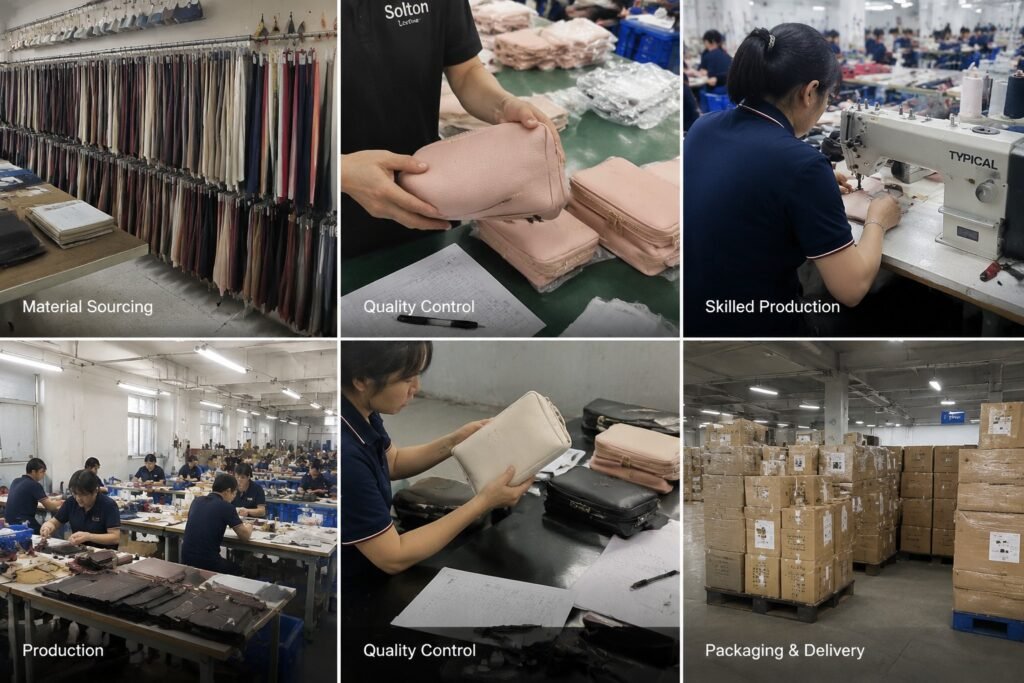
Material Sourcing: Relationships Lower Your Cost
An experienced manufacturer with established supplier relationships sources materials at wholesale pricing and passes those savings through to you. More importantly, they know which suppliers are reliable and which ones deliver inconsistent quality — a variable that directly impacts your production timeline and defect rate.
For example, our PU leather supplier network spans 15+ mills. When a brand requests a specific Pantone shade with microfiber backing at 0.6mm, we know which three suppliers can hit that spec reliably. A generalist factory sourcing from a single supplier might quote a lower price — but they’re gambling on a supply chain they can’t control.
Production Efficiency: Experience Reduces Labor Cost
Skilled operators working on familiar materials produce fewer defects and work faster. In a leather cosmetic bag, hide cutting alone separates an experienced operator from a general one — the difference between 85% hide utilization and 70% is roughly 20% more material cost for the same finished bag.
The same principle applies across every production step: stitching consistency, seam alignment, zipper installation, logo application. Experience compounds across thousands of units into measurable cost savings and quality consistency.
Quality Control: Catching Defects Before They Ship
Every factory says they do quality control process. The difference is in the system: pre-production material inspection, in-line QC at each production station, and final AQL-based random sampling before shipment. Our QC team checks material consistency before cutting begins, verifies stitching tension at each production station, and performs AQL 2.5 (Level II) sampling on every completed order before it leaves the factory floor.
For brands selling into regulated markets (EU, US, Middle East), this systematic approach to quality isn’t optional — it’s the difference between passing customs and having a container held at port.
Sampling Experience: Fewer Rounds, Faster Launch
The most expensive part of custom cosmetic bag development isn’t the sample fee — it’s the time. Each additional sampling round adds 7–14 days to your timeline. An experienced manufacturer who understands your brand context and material requirements from the initial brief typically achieves design sign-off in 1–2 sampling rounds. A less experienced factory takes 3–4 rounds — potentially adding a month to your launch timeline.
Transparent Communication: You Know What You're Paying For
An experienced OEM partner provides a cost breakdown by layer — material, labor, hardware, logo, packaging — so you understand exactly where your money goes. If you need to reduce cost, they can tell you which layer to adjust and what trade-off each adjustment creates. A factory that gives you only a bottom-line number isn’t protecting proprietary information — they’re preventing you from making informed decisions.
Looking for a Reliable Custom Cosmetic Bag Manufacturer?
More Resources for Cosmetic Bag Buyers
Materials Guide: Compare 5 Bag Materials
Design Guide: From Concept to Prototype
Frequently Asked Questions
What determines custom cosmetic bag cost?
Five factors determine custom cosmetic bag cost, in order of impact: (1) Material selection — raw material cost plus labor skill requirements, typically 30–50% of total OEM cost; (2) Order quantity (MOQ) — key cost breaks occur at roughly 300, 1,000, and 3,000 units, with 5–10% unit price reductions at each threshold; (3) Design complexity — panel count, internal compartments, and special construction features each add measurable labor hours; (4) Customization method — one-time setup fees (brass dies, molds) plus per-unit application costs; (5) Packaging requirements — from basic poly bag to luxury gift box presentation.
What is the average cost of a custom cosmetic bag?
There is no single average — custom cosmetic bag cost depends entirely on your specifications. Normally, simple canvas pouches range $1.50–3.00/unit FOB at volume; structured PU leather cosmetic bags land in the $3.00–12.00 range ; travel organizers range $5.00–15.00; genuine leather vanity cases start around $15.00 and can exceed $25.00 at low MOQ. The most accurate way to estimate your cost is to submit a detailed RFQ with your specific material, dimensions, quantity, and branding requirements.
What is the MOQ for custom cosmetic bags?
MOQ varies by material and design complexity. Canvas and basic PU cosmetic pouches typically start at 200–300 units. Genuine leather bags usually start at 300–500 units due to hide sourcing economics. TPU and multi-compartment designs may require 500+ units. At Solton Leather, our standard MOQ starts at 100 pieces per style per color for most materials and designs, with flexible low-MOQ options available for brands testing new products. If your target quantity is under 300 units, expect a 10–20% per-unit premium over 1,000-unit pricing.
Does a custom logo increase cosmetic bag cost?
Yes — through two separate costs: a one-time setup fee (e.g., brass die for embossing: $80–150; mold for metal logo plate: $100–200; silkscreen: $30–50) and a per-unit application cost ($0.05–1.50/unit depending on method). One-time fees become negligible at high volumes (e.g., $120 die ÷ 3,000 units = $0.04/unit) but are significant at low volumes ($120 ÷ 300 units = $0.40/unit). For first production runs under 500 units, consider silkscreen or UV digital print to keep setup costs low, then upgrade to embossing or metal plates on reorders.
How can I reduce custom cosmetic bag manufacturing cost?
Five strategies we regularly recommend to OEM clients: (1) match material grade to your market tier — don’t pay for full-grain leather if top-grain meets your customer’s expectations; (2) simplify structural design — every eliminated seam reduces labor cost without changing the bag’s external appearance; (3) phase your hardware investment — start with standard YKK zippers and branded hangtags, upgrade to custom pulls on reorder; (4) plan production during factory slow seasons (November–January, July–August) for better pricing and turnaround; (5) provide a complete RFQ upfront — incomplete specifications lead to conservative quoting and extra sampling rounds.
How do I compare OEM quotes from different cosmetic bag manufacturers?
Don’t compare the final number — compare what’s inside it. Request a cost breakdown by layer (material, labor, hardware, logo, packaging) from each supplier. Confirm whether each quote is FOB, CIF, or DDP. Ask what packaging is included. Verify material thickness specifications — one factory’s “PU leather cosmetic bag” might be 0.4mm; another’s might be 0.6mm. A factory that provides a transparent cost breakdown on the first quotation is almost always a better long-term partner than one that gives you only a bottom-line number.
What's the difference between FOB and DDP pricing for cosmetic bags?
FOB (Free On Board): the factory’s price covers production and delivery to the export port. You handle and pay for sea/air freight, insurance, customs clearance, import duties, and local delivery separately. Most OEM quotes default to FOB. DDP (Delivered Duty Paid): the factory or their logistics partner handles everything door-to-door, including duties and taxes. DDP is more convenient but typically 15–25% more expensive, as the factory builds in a risk buffer for duty and logistics variables. For first-time importers, DDP simplifies the process; for experienced buyers with their own freight forwarder, FOB usually offers better cost transparency and control.