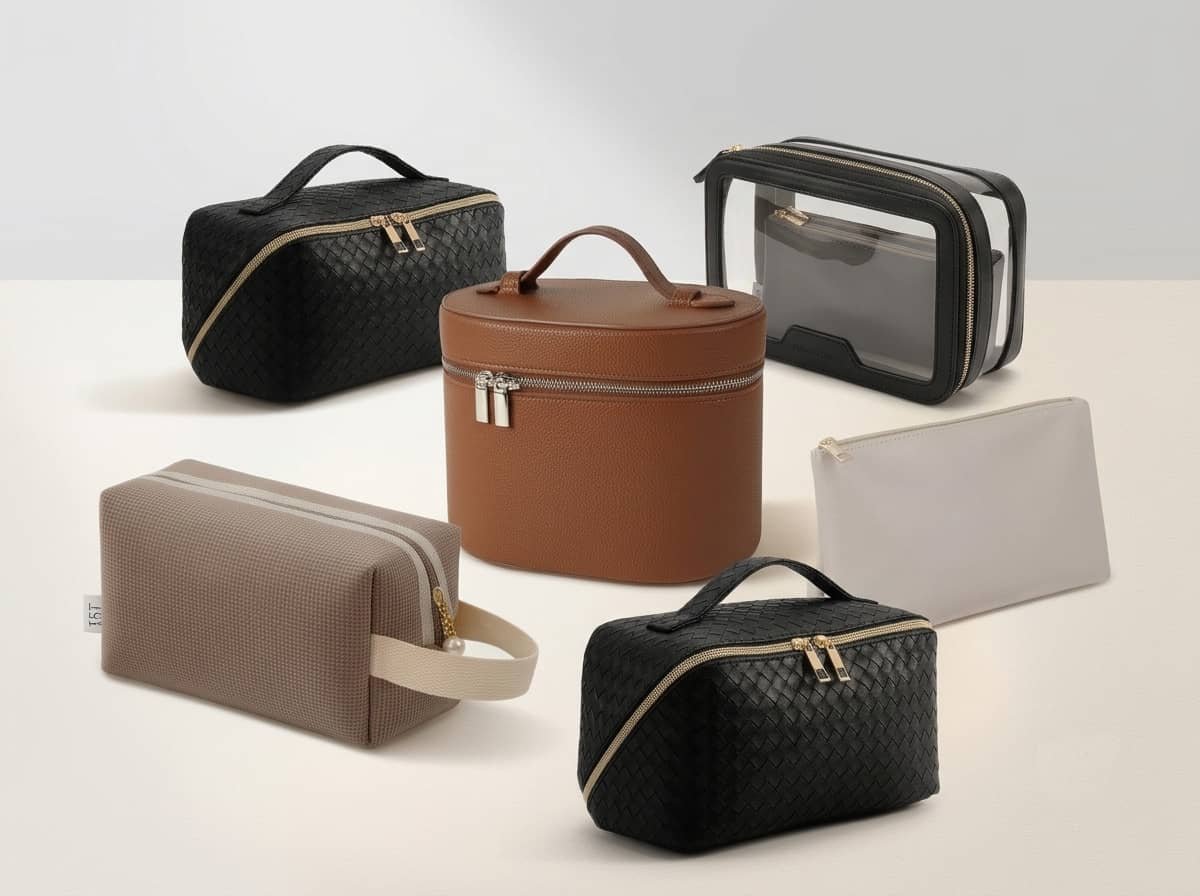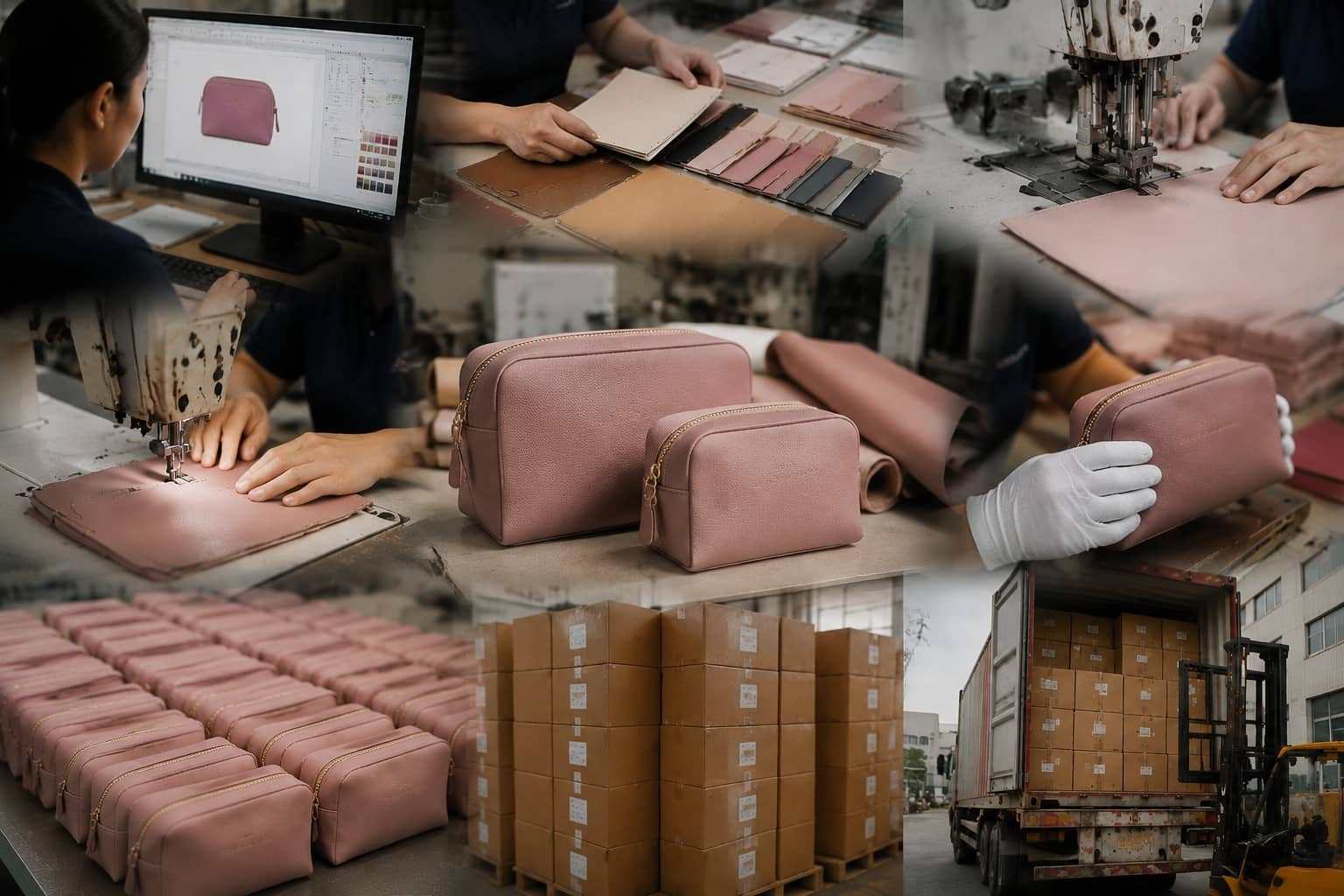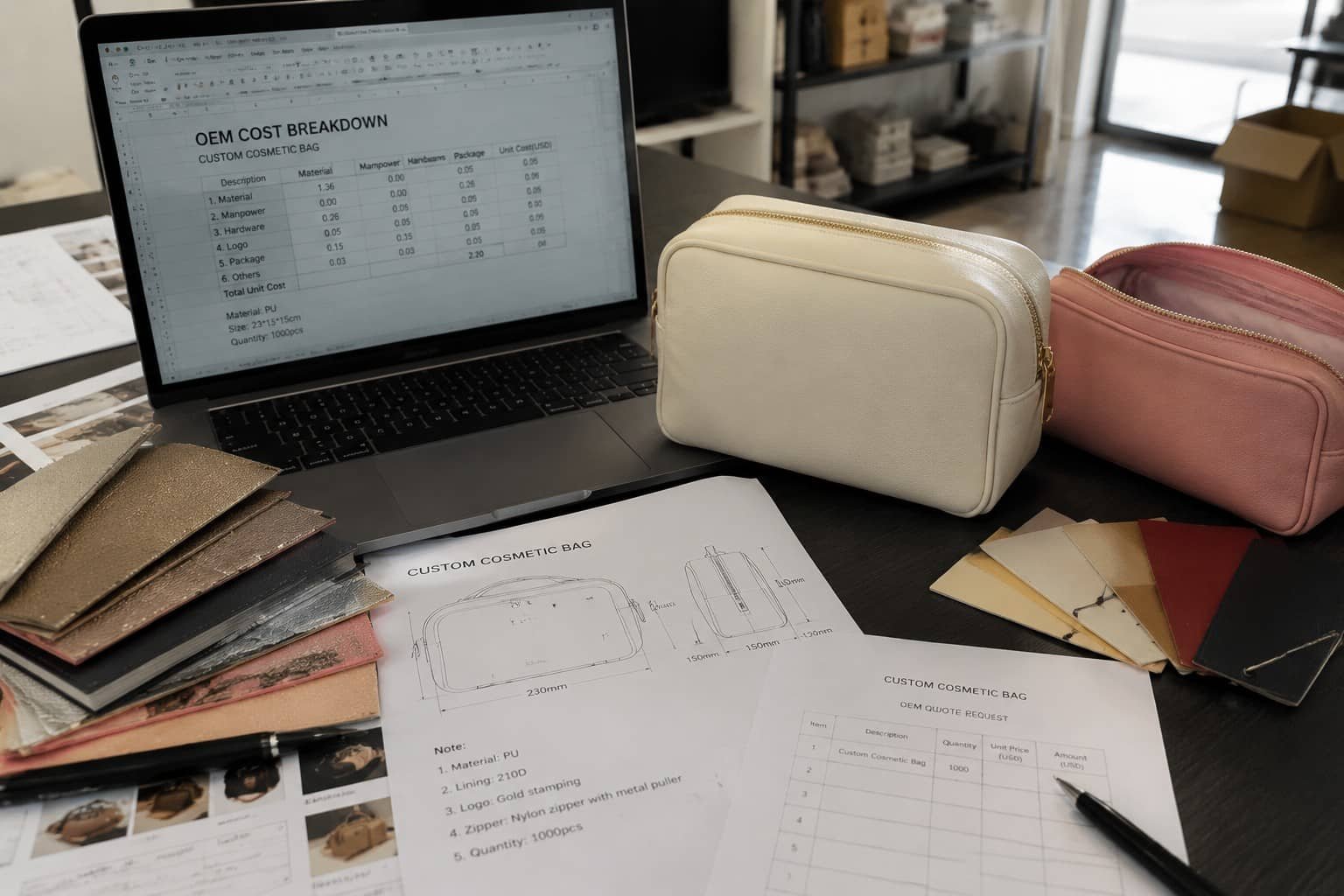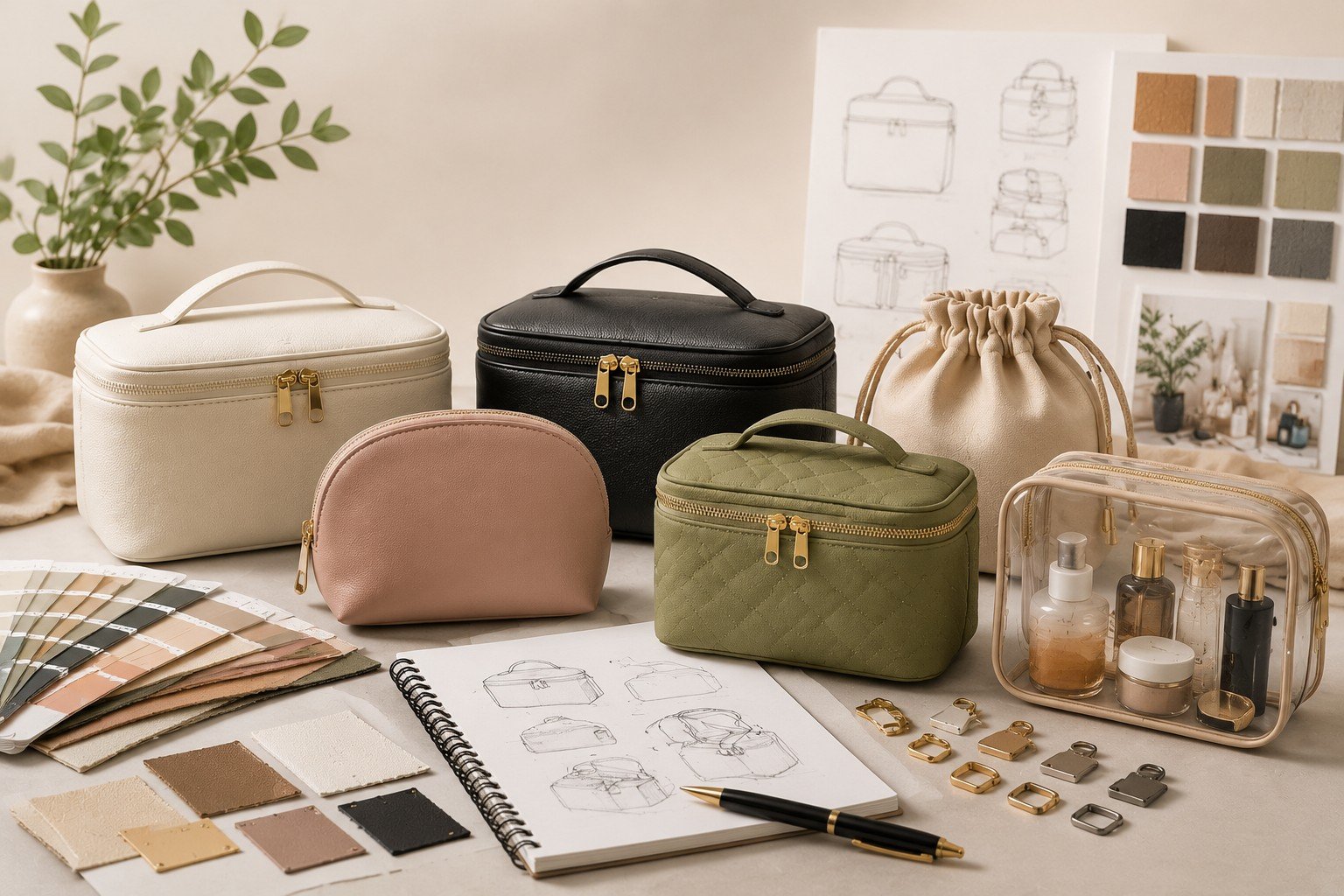
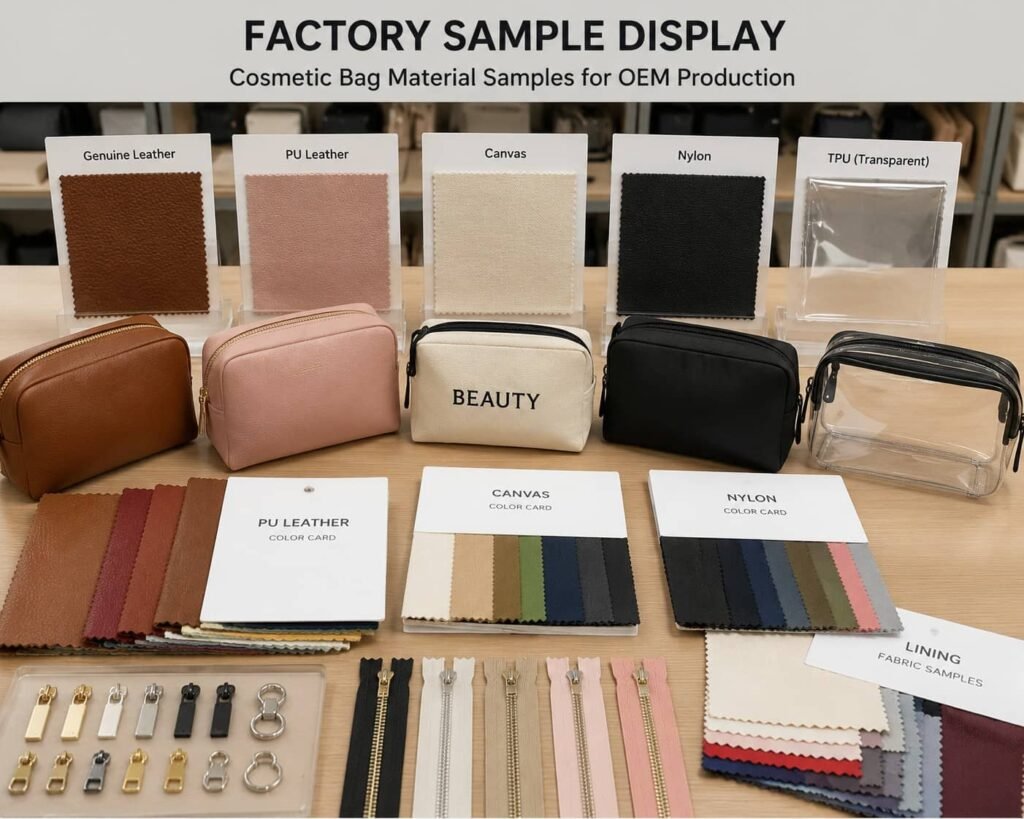
The best cosmetic bag materials depend on your brand positioning and target market. Genuine leather works best for luxury beauty brands seeking premium appeal; PU leather balances affordability with customization for fashion and private label brands; nylon is ideal for travel and outdoor collections; canvas suits promotional products and gift sets; TPU answers the demand for transparent, airport-friendly cosmetic bags. Each material affects durability, manufacturing cost, logo application, and customer perception — so your choice should align with your brand strategy, not just your budget. For brands looking to source custom cosmetic bags, understanding material trade-offs is the first step toward a successful product.
Key Takeaways:
Material Defines your brand — it sets your price tier, customer expectations, and where your product sits on the shelf.
- There is no single best material. Genuine leather, PU leather, canvas, nylon, and TPU each serve different brand positions.
- Logo method depends on material. What works on leather may fail on nylon — always test before production.
- Samples are non-negotiable. A spec sheet can’t tell you how a material feels in your customer’s hand.
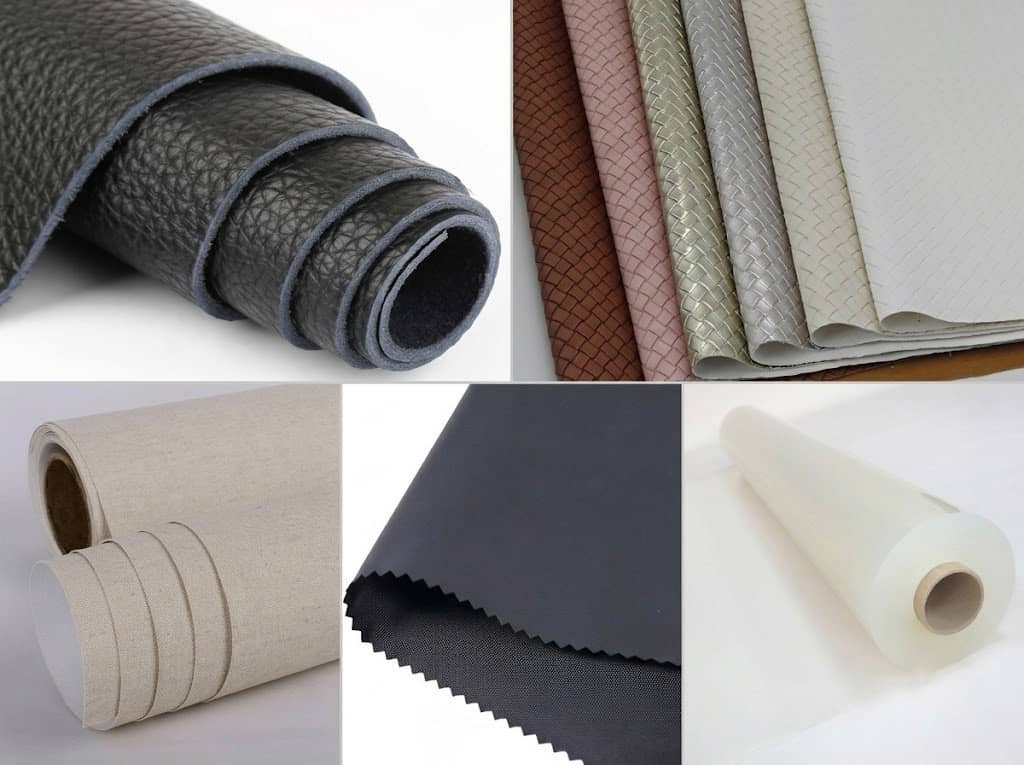
Table of Contents
Why Cosmetic Bag Material Matters
First-time buyers often fixate on unit price. But material choice ripples through every dimension of your product: how it looks on a shelf, how it holds up after six months in a handbag, what kind of logo you can apply, and what your factory quotes for tooling and labor. Over 400 custom cosmetic bag projects on our production floor, we have tracked a consistent pattern: brands that changed material after sampling saw an average lead time extension of 18 days and a 12–15% cost increase from re-tooling. Those who locked in material specs before sampling stayed on schedule and on budget.
|
Material Choice Impacts | Why It Matters |
|---|---|
| Product Quality | Determines feel, durability, and zipper longevity. Material grade is the #1 driver of return rates and repeat purchases. |
| Manufacturing Cost | Raw material, labor (leather requires skilled cutting), and waste rates (leather 15–25% vs. synthetic 5–8%). |
| Brand Image | A premium leather pouch elevates a brand. A cheap-feeling bag with a luxury logo confuses and disappoints customers. |
| Logo Application | Embossing is crisp on leather but invisible on nylon. Silkscreen pops on canvas but scratches off TPU. |
| Market Position | The same bag in leather targets department stores; in canvas, it fills trade show giveaway bags. |
Quick Comparison of Best Cosmetic Bag Materials
| Material | Cost | Durability | Waterproof | Luxury Feel | Customization | Typical Thickness | Best For |
|---|---|---|---|---|---|---|---|
|
Genuine Leather | $$$ | ★★★★★ | ★★ | ★★★★★ | ★★★★★ | 1.0–1.4mm | Luxury Brands |
| PU Leather | $$ | ★★★★ | ★★★★ | ★★★★ | ★★★★ | 0.6–1.0mm |
Fashion & Private Label |
| Canvas | $ | ★★★ | ★ | ★★ | ★★★★★ | 10–16 oz |
Promotional & Gifts |
| Nylon | $ | ★★★★ | ★★★★ | ★★ | ★★★ | 210D–420D | Travel & Outdoor |
| TPU | $$ | ★★★★ | ★★★★★ | ★★ | ★★★ | 0.3–0.5mm |
Transparent & TSA Bags |
Ratings are relative across common cosmetic bag applications. Thickness values reflect the most commonly specified production ranges.
Understanding the 5 Most Popular Cosmetic Bag Materials
Genuine Leather
Genuine leather is commonly selected by premium beauty brands because of its natural texture, durability, and luxury appearance.For brands looking for premium leather solutions, our custom leather cosmetic bags provide OEM customization options including leather selection, logo embossing, and private label production.
Available in full-grain, top-grain, and split grades, genuine leather is the material of choice for brands competing in the premium tier. At 1.0–1.4mm thickness (1.2mm is the sweet spot for cosmetic pouches), it delivers unmatched tactile quality and ages with a natural patina rather than looking worn out. Takes embossing, debossing, and foil stamping beautifully — the same logo dies produce noticeably crisper results on leather than on any synthetic alternative.
Limitations include the highest raw material cost among common cosmetic bag materials, the need for skilled cutting labor (hide utilization directly impacts per-unit cost — the gap between 70% and 85% utilization can significantly affect per-unit cost.), and susceptibility to liquid makeup stains without surface treatment. Color consistency also varies between batches, which is both a feature (authenticity) and a production challenge for brands re-ordering across multiple runs.
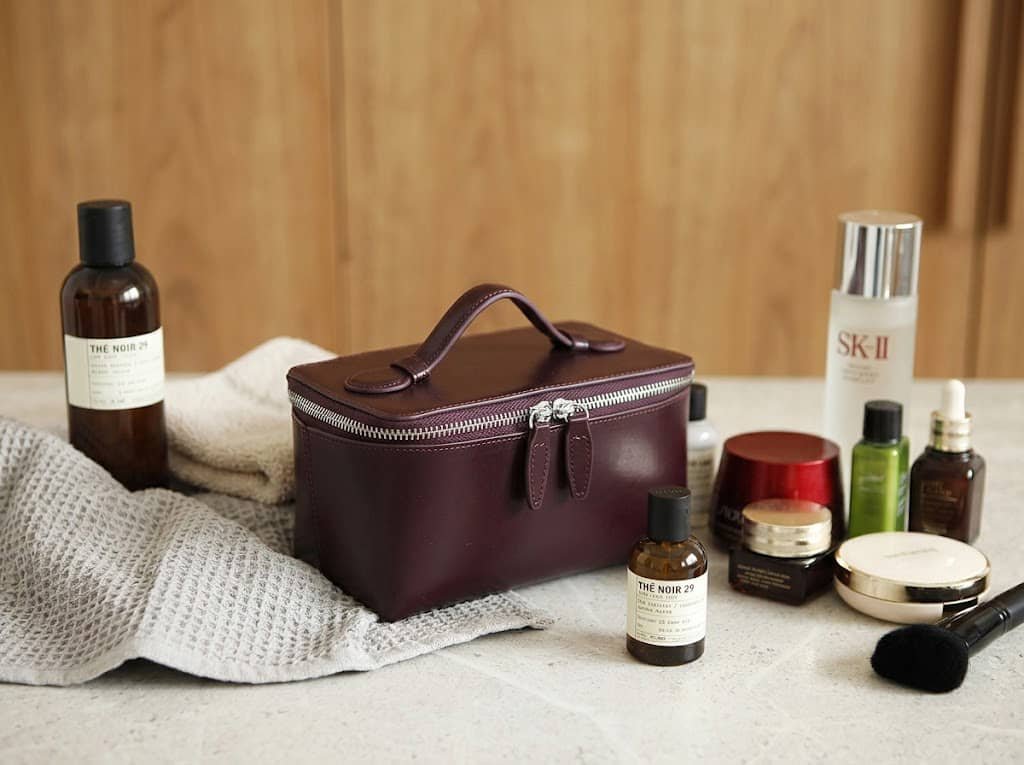
OEM Tip: Source leather by grade and finish specification, not just country of origin. A well-finished top-grain from a certified tannery will outperform a poorly processed full-grain from anywhere. For brands ordering across multiple production runs, request a tannery certificate to manage dye lot variance — shade drift between batches is real and can impact brand consistency.
Best For: Luxury beauty brands, high-end gift-with-purchase, premium hotel amenity kits, limited-edition collaborations.
PU Leather
In our OEM projects,PU leather is one of the most popular choices for fashion brands looking for affordable and customizable cosmetic bags. — it is the default choice for mid-market beauty brands. At 0.6–1.0mm thickness with microfiber backing, high-grade PU gets remarkably close to the genuine leather hand-feel at a fraction of the cost. The color palette spans over 200 active shades including metallics, pastels, and matte finishes, making PU the most flexible option for trend-driven brands launching seasonal collections.
Quality varies dramatically between suppliers — low-grade PU at 0.35mm thickness peels within months; high-grade PU at 0.6mm+ lasts years. Vegan-friendly positioning has driven a 30%+ increase in PU requests since 2023. Key customization methods include debossing, foil stamping, silkscreen, and laser-cut logo designs.
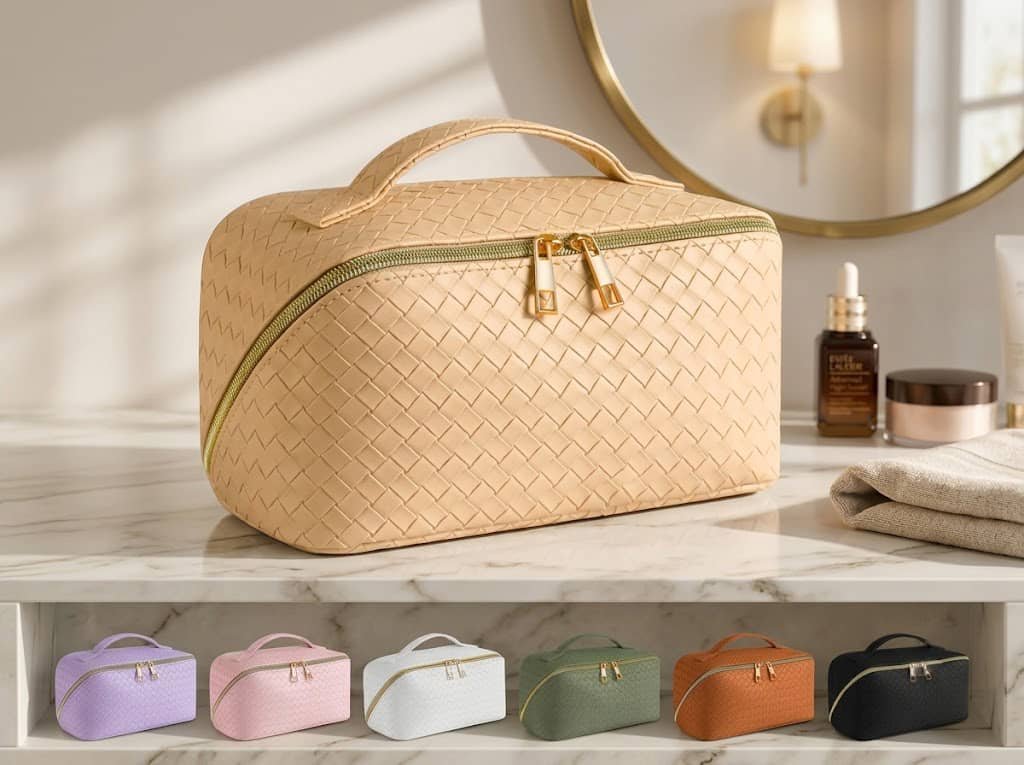
OEM Tip: Always require the factory to specify PU thickness in millimeters on the quote sheet. Below 0.4mm will feel flimsy regardless of coating quality. For vegan brands, confirm the backing material — some PU uses wool-blend backing; specify polyester backing for fully synthetic construction.
Best For: Fashion brands, private label, Instagram-native beauty brands, mid-tier department store lines.
Canvas
Canvas is the go-to material for promotional programs and eco-conscious casual brands. At 10–16 oz (12 oz is the recommended sweet spot), it is lightweight, immensely printable, and carries an approachable, handmade aesthetic. Canvas has the lowest MOQ flexibility and setup costs of the five materials, making it ideal for trade show giveaways and subscription box packaging where volume is high and unit cost is the critical constraint.
The main limitation is water resistance — canvas absorbs liquid cosmetics unless treated with a wax or PU coating (adds 15–20% to material cost). A common feedback from our promotional clients: ‘We should have added the water-repellent treatment.’ A coated canvas pouch gets used daily; an uncoated one lives in a drawer.
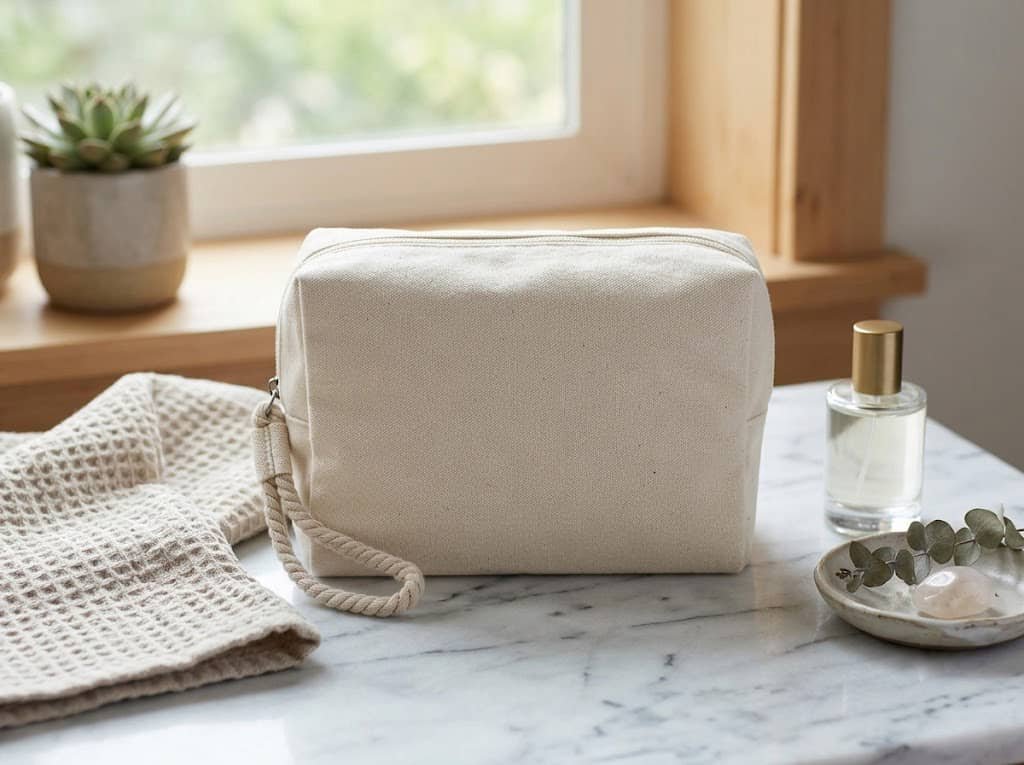
OEM Tip: Specify canvas weight in ounces. 10 oz works for lightweight giveaways; 12 oz balances cost and structure for most pouches; 14–16 oz is substantial enough for retail gift sets. Always confirm pre-shrinking — canvas shrinks after washing, and an un-shrunk 20cm panel will drift to 19.5cm across your production batch.
Best For: Promotional giveaways, trade shows, subscription box packaging, eco-friendly brand lines, gift-with-purchase.
Nylon
Nylon does not try to look like leather — and that is its strength. For travel and outdoor beauty brands, 210D–420D nylon delivers water resistance, tear strength, and packability that no other material matches at its weight. A medium 210D nylon pouch weighs just 25–40g and folds completely flat. At 420D with a DWR coating, the fabric handles daily abuse while shrugging off foundation spills. While our cosmetic bag collection spans all materials, nylon remains the top choice for travel-focused clients.
The trade-off is aesthetics — nylon looks technical, not premium, and logo options are limited to silkscreen and heat transfer (embossing and debossing do not work). The biggest quality variable is seam construction: because nylon is thin and slippery, poorly tensioned stitching creates visible puckering. When evaluating a nylon sample, pull gently on both sides of every seam — bunching fabric or visible thread means the factory’s nylon process is not dialed in.
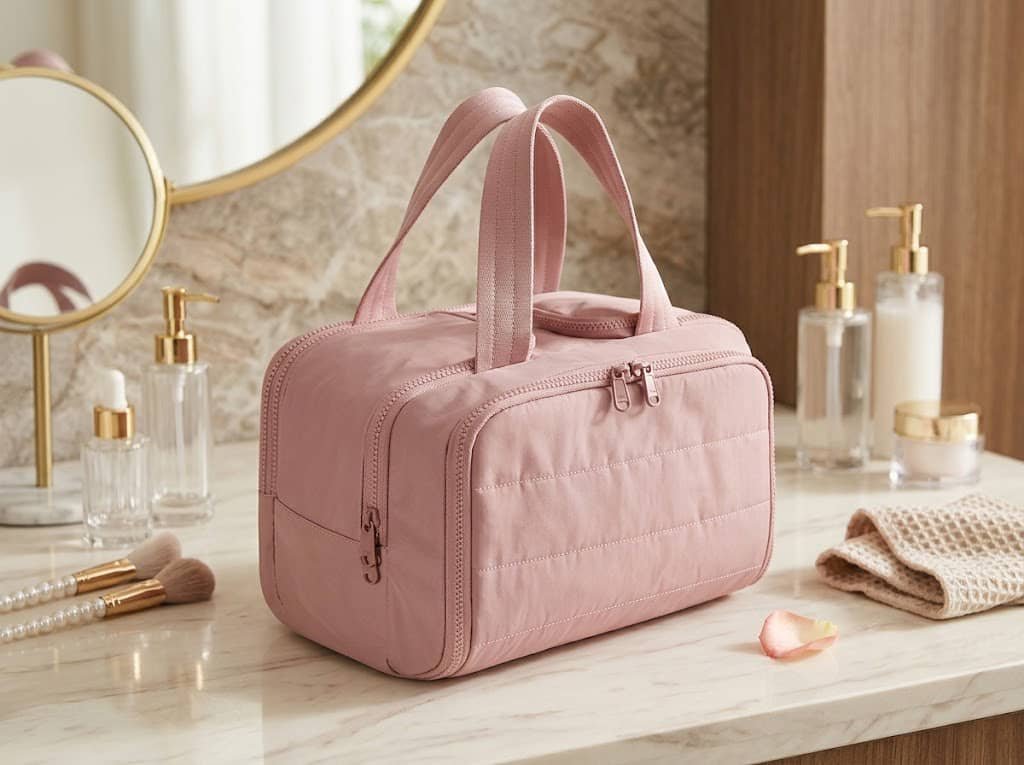
OEM Tip: Pair 420D nylon with YKK zippers and a waterproof interior lining. Many factories coat the exterior but leave the lining absorbent — a spilled toner will find its way through the inside seams. Specify 210T waterproof polyester lining and test the complete bag, not just the outer fabric.
Best For: Travel makeup organizers, gym pouches, outdoor brand collaborations, airline amenity kits.
TPU (Thermoplastic Polyurethane)
TPU has been our fastest-growing material category — order volume has roughly tripled since 2022, driven by TSA compliance requirements and the transparent beauty trend on social media. At 0.3–0.5mm thickness, TPU is crystal-clear, fully waterproof, and wipes clean with a damp cloth. Unlike PVC, quality TPU retains clarity 2–3x longer under UV exposure and remains flexible across temperature ranges.
TPU and transparent plastic materials require special attention during sewing. Unlike traditional fabrics, transparent plastic surfaces can create friction on sewing machines and may stick to the presser foot during production. To improve sewing performance, manufacturers often place a thin tissue paper layer on the surface of the material during stitching and remove it after sewing.
The stitch length should also be adjusted carefully. A stitch length of around 3.0–3.5mm is commonly recommended for TPU cosmetic bags. If the stitch density is too high, the needle creates too many perforation points in the plastic material, which can weaken the structure and increase the risk of tearing during use. Proper sewing techniques are essential to achieve clean seams and long-lasting For logo application, UV printing bonds better than silkscreen on the smooth TPU surface. Fingerprints and smudges are visible and require frequent cleaning to maintain the pristine look.
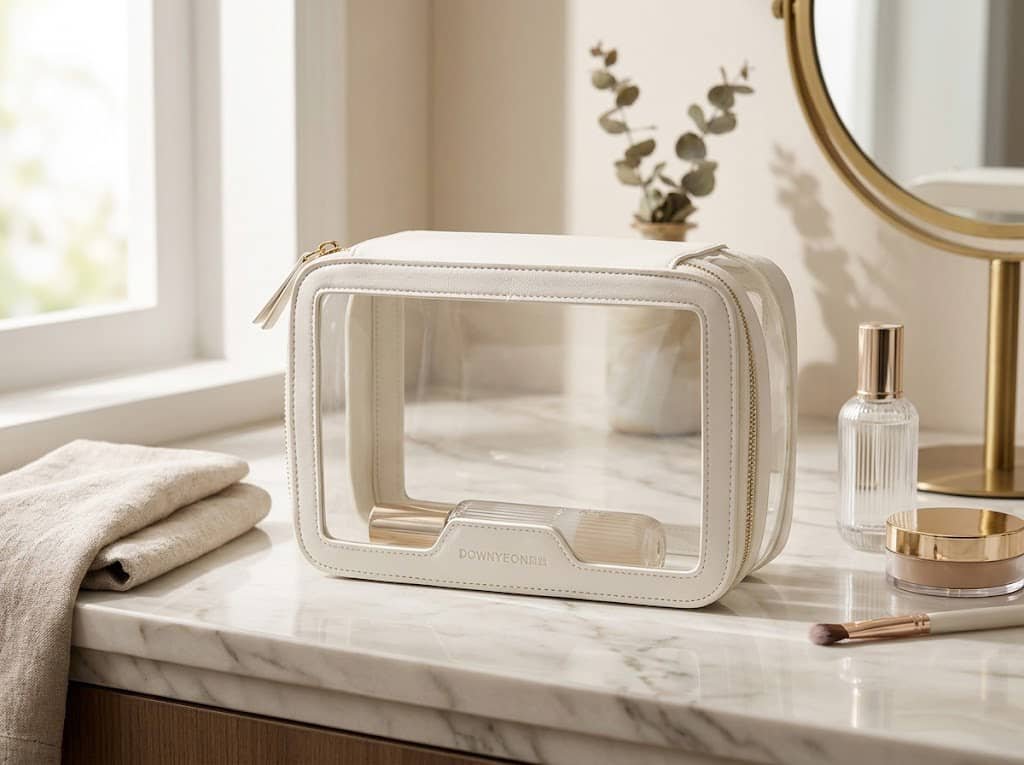
OEM Tip: Specify 0.5mm for daily-use organizers (holds structure, resists creasing); 0.3mm for occasional-use travel pouches (lighter, more packable). Confirm the welding method — ask for a seam pull-test video. Use industrial-grade TPU from established polymer suppliers; budget TPU becomes brittle in cold climates and tacky in high heat, a real problem if your customers span from Canada to Dubai.
Best For: TSA-compliant travel pouches, transparent organizers, minimalist beauty brands, duty-free and airport retail.
Which Cosmetic Bag Material Is Best for Your Brand?
The right material is not the one that wins on any single dimension — it is the one that aligns with who your brand is and what your customers expect when they unzip the bag. Use the decision framework below to narrow your options, then match your brand profile to the recommendation.
Buyer Decision Tree: Which Material Should You Choose?
| Step | Question | Answer → Material |
|---|---|---|
| 1 |
Is your brand positioned as luxury or premium
(department store, $80+ retail)? | Yes → Genuine Leather No → Go to Step 2 |
| 2 | Do you need transparency (TSA compliance, see-through design)? | Yes → TPU No → Go to Step 3 |
| 3 | Is the primary use case travel, outdoor, or gym (water-resistant, packable)? | Yes → Nylon No → Go to Step 4 |
| 4 | Is this a high-volume promotional order (5,000+ units, trade show, gift program)? | Yes → Canvas No → Go to Step 5 |
| 5 | Are you a fashion or private label brand needing color variety and fast trend response? |
Yes → PU Leather No → PU Leather
(default mid-market choice) |
Brand-to-Material Recommendation
| Brand Type |
Recommended Material | Why | Thickness Spec |
|---|---|---|---|
|
Luxury Beauty Brands | Genuine Leather | Premium feel, long lifespan, supports high retail pricing. Embossing looks crispest. | 1.2mm full-grain |
|
Fashion & Private Label | PU Leather | Affordable, 200+ colors, fast trend response, easy logo customization. |
0.6–1.0mm with microfiber backing |
|
Travel & Outdoor Brands | Nylon | Lightweight, water-resistant, folds flat, lowest return rate of all materials. |
420D with DWR coating |
|
Promotional & Gift Programs | Canvas | Cost-effective at volume, superior print quality, lowest setup costs. |
12 oz (10 oz for giveaways) |
|
Transparent Collections | TPU | Modern aesthetic, fully waterproof, TSA-friendly, strong social media appeal. |
0.5mm for daily use; 0.3mm for travel |
Each of these materials can be fully customized through our OEM and private label services. Whether you need a luxury leather vanity case or 50,000 canvas promotional pouches, the key is matching material to both your brand identity and your production realities.
How Material Selection Affects Manufacturing Costs
The same bag design — same dimensions, same zipper, same lining — can land at three very different price points depending solely on material. Across 400+ custom manufacturing projects, the cost gap between leather and canvas for an identically sized pouch has ranged from 3x to 7x. Understanding what drives that spread helps you budget accurately before requesting quotes.
| Cost Factor | Impact | What It Means in Practice |
|---|---|---|
|
Material Type | High | Raw hide vs. woven cotton is just the start. Leather requires skilled cutting labor; canvas does not. Labor delta compounds across volume. |
|
Material Thickness | Medium | 1.4mm leather needs a walking-foot industrial machine and experienced operator. 0.6mm PU runs on standard equipment. Different machine, different labor rate. |
| Hardware | Medium | Zippers, pulls, and metal accents should match the material tier. We stock five zipper grades — pairing a YKK Excella with cheap canvas is as mismatched as a generic zipper on premium leather. |
| Lining | Medium | Basic polyester ($) vs. waterproof 210T ($$) vs. full PU-backed waterproof ($$$). Leather often skips lining; nylon almost always needs it. |
|
Logo Method | Medium | Embossing a brass die costs $80–150 tooling + skilled labor per unit. Silkscreen costs $30–50 screen + faster production. Over 5,000 units, silkscreen vs. embossing can differ by $0.30–0.80 per bag. |
|
Order Quantity | High | Ordering 300 leather pouches means retail hide pricing. Ordering 3,000 means wholesale pricing. Meaningful per-unit breaks typically occur at 500 and 2,000 units for leather and custom-dyed PU. |
The takeaway is not ‘choose the cheapest material.’ It is that material and cost are a package deal — separate them at your own risk. The time to think about cost is during material selection, not after the quote lands at triple your expectation.
Material cost is just one piece of the total quote. See how material choice interacts with MOQ, design complexity, and customization in our custom cosmetic bag cost guide
Common Cosmetic Bag Material Selection Mistakes Brands Should Avoid
After working with brands from 200-unit startups to 50,000-unit re-orders, here are the five mistakes we see repeat most often — and how to avoid them.
Mistake 1: Choosing Materials Based Only on Price
A bag that looks fine in the factory photo but falls apart in three months costs more in brand damage than the margin it saved. We have had brands come to us after a cheaper factory experience with boxes of unsellable inventory. Set a quality floor before you set a budget ceiling.
Mistake 2: Ignoring Target Customers
A 22-year-old buying a $12 pouch from Instagram expects something different than a 45-year-old buying a $120 leather vanity case from a department store. About a third of private label project briefs we receive specify a material that does not match their stated target customer — usually because the brand chose based on personal preference rather than customer research.
Mistake 3: Using the Wrong Logo Method for the Material
Debossing barely shows on canvas (the fabric compresses and springs back). Foil stamping melts TPU surfaces. We see this mismatch at least once a month — almost always caught at sampling, after tooling costs are already sunk. Test your logo method on a swatch of your actual material before commissioning tooling.
Best Logo Methods for Different Cosmetic Bag Materials
| Logo Method | Genuine Leather | PU Leather | Canvas | Nylon | TPU |
|---|---|---|---|---|---|
| Debossing / Embossing | ★★★★★ | ★★★★ | ★ | ★ | — |
| Foil Stamping | ★★★★★ | ★★★★ | ★★ | ★★ | ★ |
| Silkscreen Print | ★★★ | ★★★★★ | ★★★★★ | ★★★★★ | ★★ |
| Embroidery | ★★ | ★★ | ★★★★★ | ★★★★★ | — |
| UV / Digital Print | ★★ | ★★★ | ★★★★★ | ★★★ | ★★★★★ |
| HF / Ultrasonic Weld | — | — | — | — | ★★★★★ |
Mistake 4: Overlooking Durability Requirements
Will the bag sit on a bathroom counter (low wear), travel in a gym bag (moderate wear), or ride in carry-on luggage twice a week (high wear)? Match the material to the use case. A beautiful 0.3mm matte PU with a luxurious hand-feel will scuff within weeks of daily bag-in-bag use — right look, wrong application.
Mistake 5: Selecting Materials Without Prototype Testing
A material swatch tells you about color and texture. It does not tell you how the material behaves when sewn into a 3D bag, how the zipper interacts with the fabric, or how it feels full of products. The $80–150 cost of a pre-production sample is negligible next to the cost of 5,000 defective units. Put makeup in it, zip it 50 times, carry it for a week. Real-world testing catches what spec sheets miss.
OEM Expert Tips for Choosing Cosmetic Bag Materials
These come from the factory floor, not a textbook. Small decisions that make the difference between a smooth production run and months of corrections.
Tip 1: Match Material with Brand Positioning. Don’t try to make canvas look like leather or leather feel like nylon. Each material has inherent characteristics that signal value level. Align first with brand positioning — everything else follows.
Tip 2: Test Logo Compatibility Before Production. Test your logo on a production sample of your actual material before committing. An embossing depth that looks elegant on 1.2mm leather might vanish on 0.8mm PU.
Tip 3: Balance Durability with Production Cost. Define ‘durable enough’ for your customer. A promotional giveaway bag does not need 420D nylon-grade durability. A daily-use travel pouch should not be built to giveaway standards.
Tip 4: Confirm Lining and Zipper Compatibility. Specify the zipper type and lining material alongside the outer material. On returned cosmetic bags across our client base, zipper failure and lining staining account for 70%+ of quality complaints — not outer material failure.
Tip 5: Request Material Samples Before Mass Production. Request physical material swatches and a pre-production sample. Photographs lie — thickness, texture, and drape can only be evaluated in hand. Two weeks of sampling saves two months of post-delivery issues.
Once you’ve narrowed down your material, the next step is turning your idea into a product. custom makeup bag production process guide walks through each manufacturing stage — from pattern making to final QC.
Ready to start your project?Contact us for professional makeup bag manufacturing
Frequently Asked Questions
What is the best material for cosmetic bags?
There is no single best — it depends on your brand positioning. Genuine leather suits luxury brands; PU leather works for fashion and private label; canvas is ideal for promotional products; nylon excels for travel; TPU serves the transparent, TSA-compliant market. The best material aligns with your target customer’s expectations and price point. If you’re unsure, our team can help — contact us for a free material consultation based on your brand profile.
Is genuine leather better than PU leather?
Depends on what you are optimizing for. Genuine leather wins on luxury feel, aging character, and brand prestige. PU leather wins on affordability, color variety, vegan positioning, and batch consistency. For a $200 vanity case, genuine leather is the right call. For a $25 fast-fashion pouch, high-grade PU at 0.6mm+ is the smarter business choice.
Which cosmetic bag material is the most durable?
In tear resistance and daily abuse tolerance, 420D nylon tends to outlast other materials in real-world use. Genuine leather is highly durable when cared for but susceptible to water damage from liquid cosmetics. TPU at 0.5mm+ also offers excellent durability for transparent applications.
What material is best for travel makeup bags?
Nylon and TPU are the top contenders. Nylon is lightweight (25–40g per pouch), water-resistant, and folds flat. TPU is transparent and TSA-compliant, allowing passengers to pass through security without removing products. For premium travel lines, some brands combine a nylon body with leather trim.
Which material is easiest to customize?
Canvas offers the widest range — silkscreen, digital print, heat transfer, and embroidery all apply readily. PU leather is highly customizable via debossing, foil stamping, and silkscreen. Genuine leather requires specialized tooling (brass dies) but yields the most premium finished result.
How do I choose the right cosmetic bag material for my brand?
Start with three questions: (1) Where does your brand sit — luxury, mid-tier, or value? (2) How and where will customers use the bag? (3) What is your target retail price and does the material cost leave enough margin? Answer these in order and your options narrow naturally. When stuck between two materials, request physical swatches of both. For personalized guidance, check our FAQs page or reach out directly — we help brands navigate this decision every day.
Conclusion
The question is not ‘which material is best?’ — it is ‘which material is best for my brand?’ Genuine leather signals luxury and longevity. PU leather delivers on-trend aesthetics at accessible price points. Canvas brings approachable charm to promotional programs. Nylon serves the practical, travel-focused customer. TPU captures the transparent aesthetic driving a fast-growing product category.
None of them are wrong. Each one is right for a specific brand position, target customer, and business model. The key is choosing intentionally — with a clear understanding of how material impacts manufacturing costs, customization options, daily customer experience, and long-term brand perception.
Looking for a reliable OEM manufacturer for leather, PU leather, canvas, nylon, or TPU cosmetic bags? Contact our team to discuss your custom project. We will walk you through material samples, provide professional recommendations based on your brand positioning and budget, and deliver a detailed quotation — no guesswork, just practical guidance from a factory that has produced over 400 custom cosmetic bag projects.