Introduction
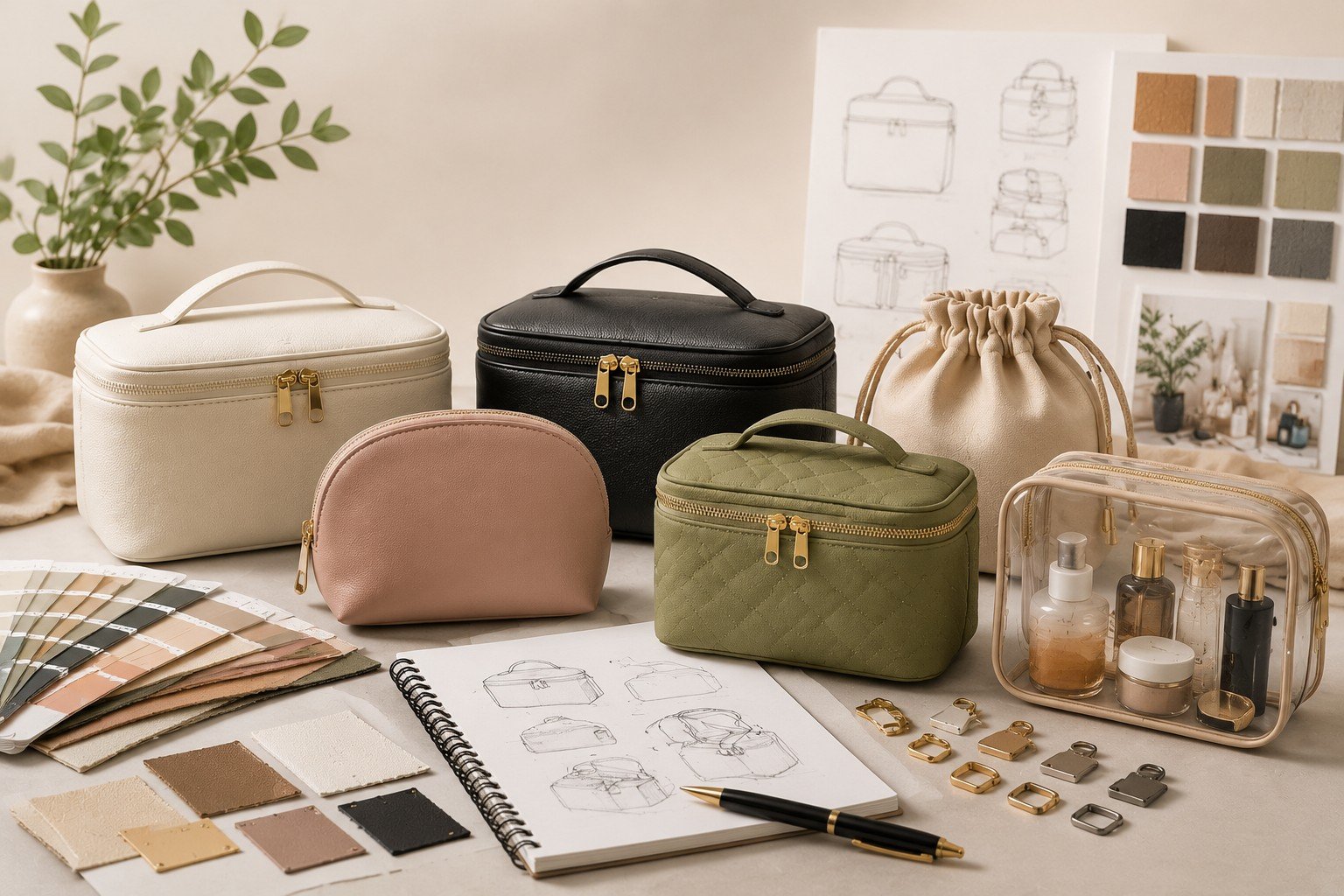
Creating custom makeup bags allows beauty brands to develop products that match their target customers, brand identity, and market positioning. Whether you are a luxury skincare line launching a gift-with-purchase program or a private label brand building a cosmetic accessories collection, the custom makeup bag design decisions you make — bag style, material, interior structure, branding, and hardware — directly shape how customers perceive your brand and how much the product costs to produce.
This guide walks through the complete custom makeup bag design and development process, from defining your brand position to testing prototypes. It covers material selection, functional design, logo customization, cost estimation, and how to prepare a professional design brief for your OEM manufacturing partner. By the end, you will have a clear, step-by-step framework to take your concept from sketch to production.
Quick Answer: How to Design Custom Makeup Bags
Walk into any beauty retailer, and the brands that stand out do not use generic pouches. Their makeup bags look like they belong to the brand — same color palette, same quality, same attention to detail. That is a deliberate decision: treating custom makeup bag design as a brand asset rather than an afterthought.
Build brand identity. A luxury skincare line shipping products in a genuine leather pouch with debossed branding sends a different signal than one using printed canvas. The bag is often the first physical touchpoint — it should feel intentional.
Improve customer experience. Smart internal organization — elastic brush loops, waterproof compartments, flat-lay designs — turns a daily frustration into a daily delight. Customers remember products that make their routine easier.
Create differentiation. If your bags look identical to competitors, you compete on price alone. A distinctive design gives customers a reason to choose you. Brands investing in custom bag design report higher perceived value and lower return rates on gift-with-purchase campaigns.
Table of Contents
Why Custom Makeup Bags Matter for Beauty Brands
Walk into any beauty retailer, and the brands that stand out do not use generic pouches. Their makeup bags look like they belong to the brand — same color palette, same quality, same attention to detail. That is a deliberate decision: treating the bag as a brand asset rather than an afterthought.
Build brand identity. A luxury skincare line shipping products in a genuine leather pouch with debossed branding sends a different signal than one using printed canvas. The bag is often the first physical touchpoint — it should feel intentional.
Improve customer experience. Smart internal organization — elastic brush loops, waterproof compartments, flat-lay designs — turns a daily frustration into a daily delight. Customers remember products that make their routine easier.
Create differentiation. If your bags look identical to competitors, you compete on price alone. A distinctive design gives customers a reason to choose you. On the production side, we have seen that brands investing in custom bag design report higher perceived value and lower return rates on gift-with-purchase campaigns.
Step 1: Define Your Brand Position for Custom Makeup Bag Design
Before sketching a design, answer one question: who is this bag for, and what do they expect when they unzip it? The same design can delight one customer and disappoint another. A 22-year-old buying a $15 pouch from Instagram expects trend colors and social-worthy packaging. A 45-year-old buying a $120 leather vanity case expects quality materials and understated elegance. Your custom makeup bag design strategy should start with the customer, not the aesthetic.
| Brand Type | Design Direction | Material Signal | Key Hardware |
|---|---|---|---|
| Luxury Beauty Brand | Structured, refined, minimal branding | Genuine leather, suede lining | Gold-tone metal zippers, custom pullers |
| Travel Beauty Brand | Lightweight, packable, practical | 420D nylon, TPU accents | YKK water-resistant zippers, hang loops |
| Fashion / Private Label | Trend-responsive, bold colors | PU leather, printed canvas | Contrast zippers, branded pulls |
| Professional MUA Brand | Large capacity, multi-compartment | Heavy canvas, reinforced nylon | Oversized zippers, sturdy handles |
| Promotional / GWP | Cost-effective, printable, giftable | Light canvas, basic PU | Simple zipper, hang tag |
Work backwards from your retail price, not forwards from a mood board. A bag in a $200 gift set has different constraints than one sold at $19.99.
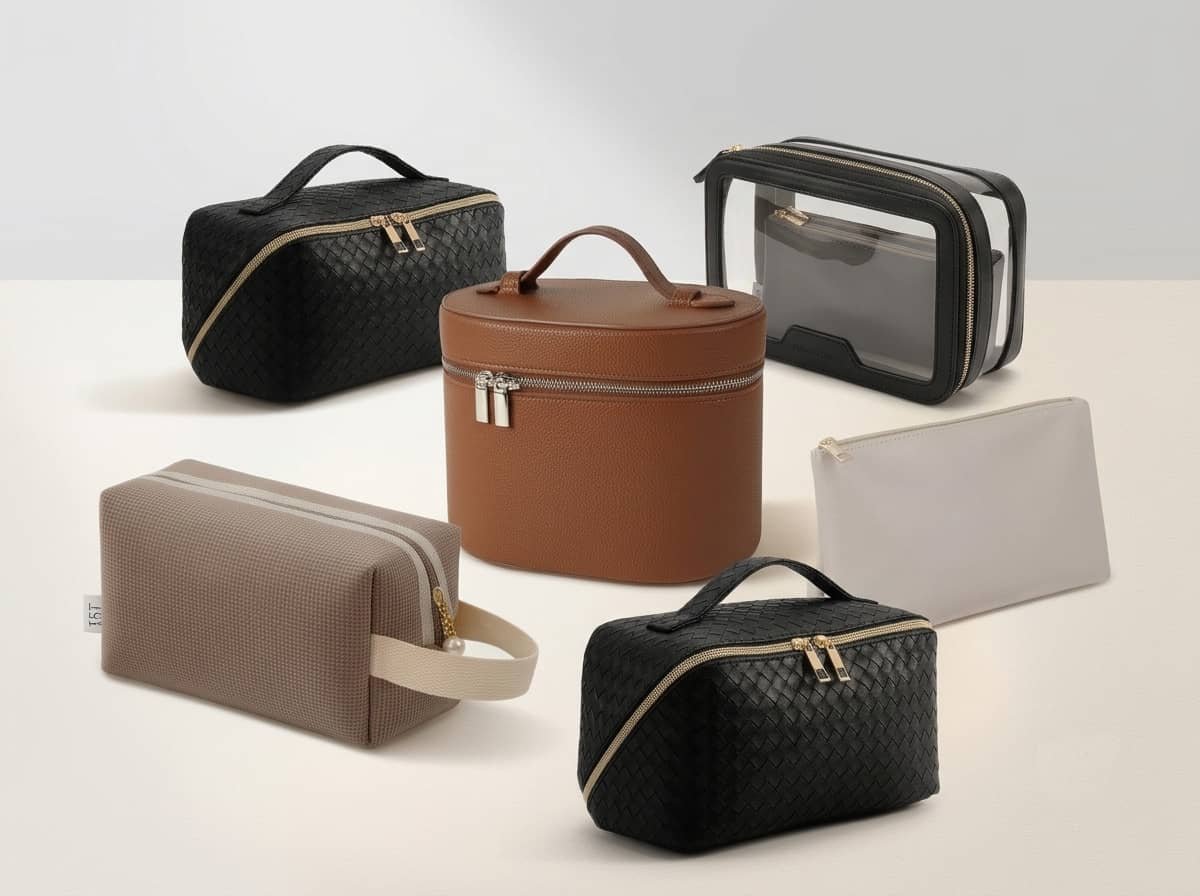
Step 2: Choose the Right Makeup Bag Style and Structure
The style is the single biggest cost driver in your design — more than material, more than hardware. A flat pouch uses roughly a quarter of the material and half the labor of a multi-compartment train case. For a complete overview of current market trends, see our guide to the most popular makeup bag styles.
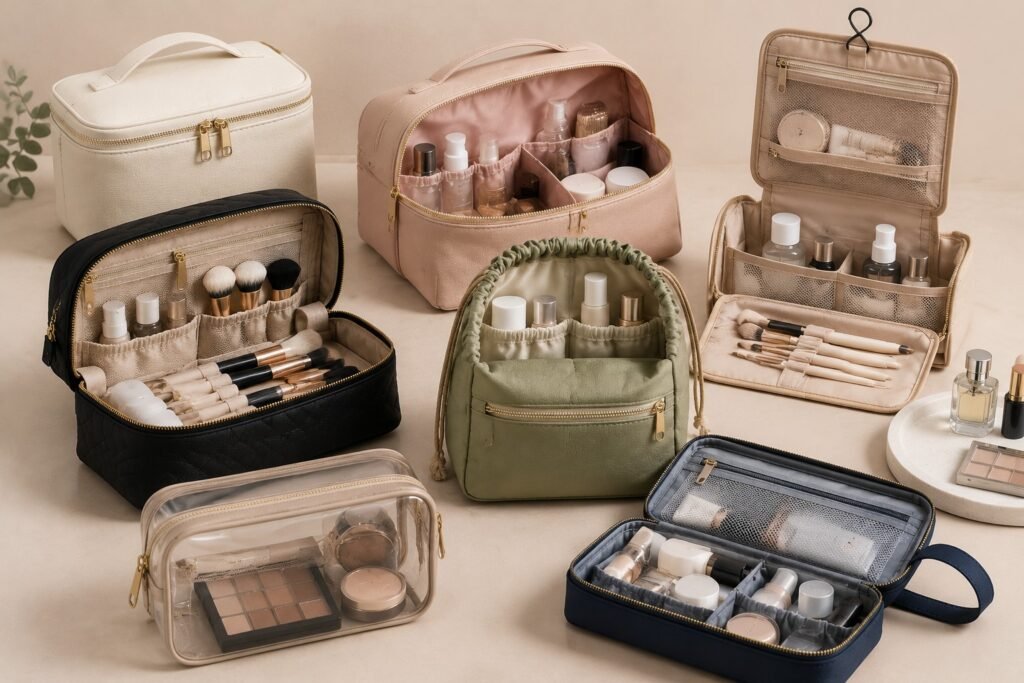
| Style | Best For | Design Consideration |
Labor Complexity |
Typical Lead Time |
|---|---|---|---|---|
| Flat Cosmetic Pouch |
Everyday use, giveaways |
Simple structure; easy to produce at scale | Low | 15–25 days |
|
Structured Vanity Case |
Professional users, luxury sets |
Strong support; requires internal reinforcement | High | 30–45 days |
| Hanging Organizer |
Travel market, frequent flyers |
Lightweight structure; needs sturdy hook/loop | Medium-High | 25–35 days |
|
Multi-Compartment Organizer |
Large capacity, daily organization |
More compartments = more stitching & QC steps | Medium | 25–35 days |
| Drawstring / Roll-Up |
Casual, eco-friendly, gift sets |
Minimal structure; lowest production complexity | Low | 15–20 days |
|
Transparent TSA Pouch |
Airport retail, travel compliance |
Welded seams, not stitched; requires TPU expertise | Low-Medium | 20–30 days |
Factory insight: the simplest designs are usually the best. Every extra seam, compartment, and custom panel adds labor time, increases defect risk, and extends your sampling cycle. If a feature does not solve a specific customer problem, leave it out. You can always add features in version two.
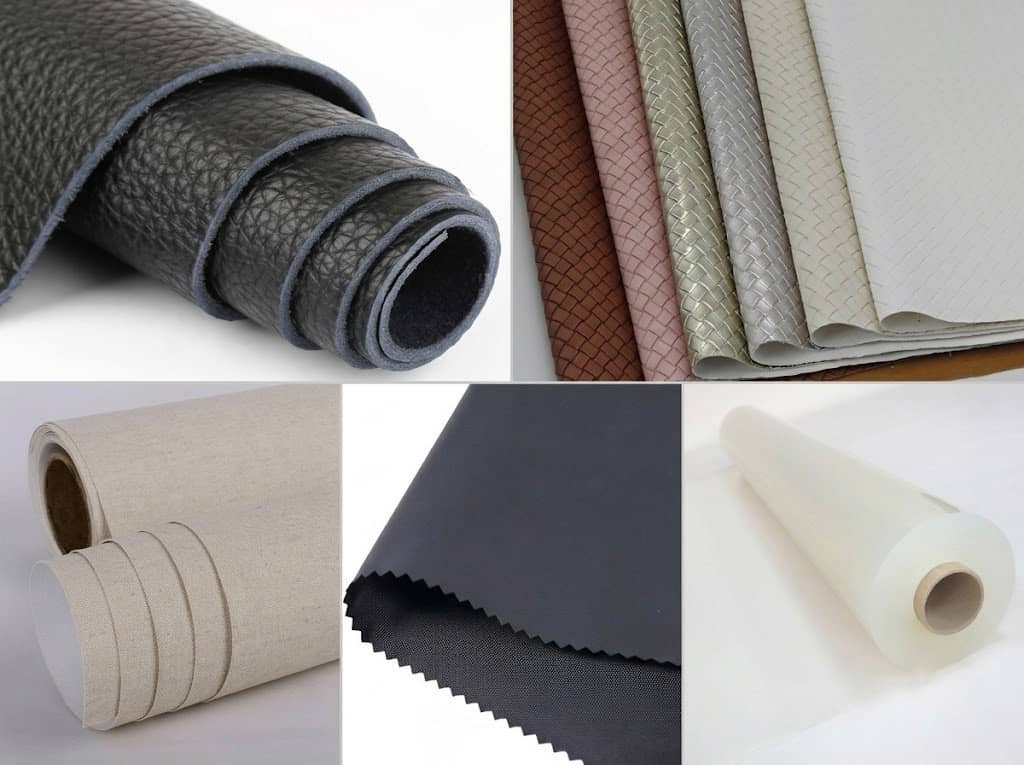
Step 3: Select Materials for Your Custom Makeup Bag Design
Choosing the right materials is one of the most important decisions in custom makeup bag design. It affects durability, appearance, and target pricing. Material is the thread connecting brand positioning to manufacturing cost to customer experience. For a deep dive, see our comprehensive cosmetic bag material guide. Here is the design-focused version:
| Brand Goal |
Best Material | Why | Key Consideration |
|---|---|---|---|
|
Luxury positioning |
Genuine Leather |
Unmatched hand-feel, ages with patina, crisp embossing |
Hide utilization (70–85%) impacts per-unit cost significantly |
|
Affordable fashion | PU Leather |
200+ color options, fast production, vegan-friendly |
Minimum 0.6mm, below 0.4mm feels flimsy |
|
Natural / eco feel | Canvas |
Soft hand-feel, best print surface of all materials |
Not waterproof without coating (+15–20% cost) |
|
Travel / active use | Nylon 420D |
Water-resistant, 25–40g per pouch, folds flat |
Seam puckering is the #1 quality issue |
|
Transparency / TSA | TPU 0.5mm |
Crystal-clear, waterproof, flexible across temps |
Seams use ultrasonic welding, not stitching |
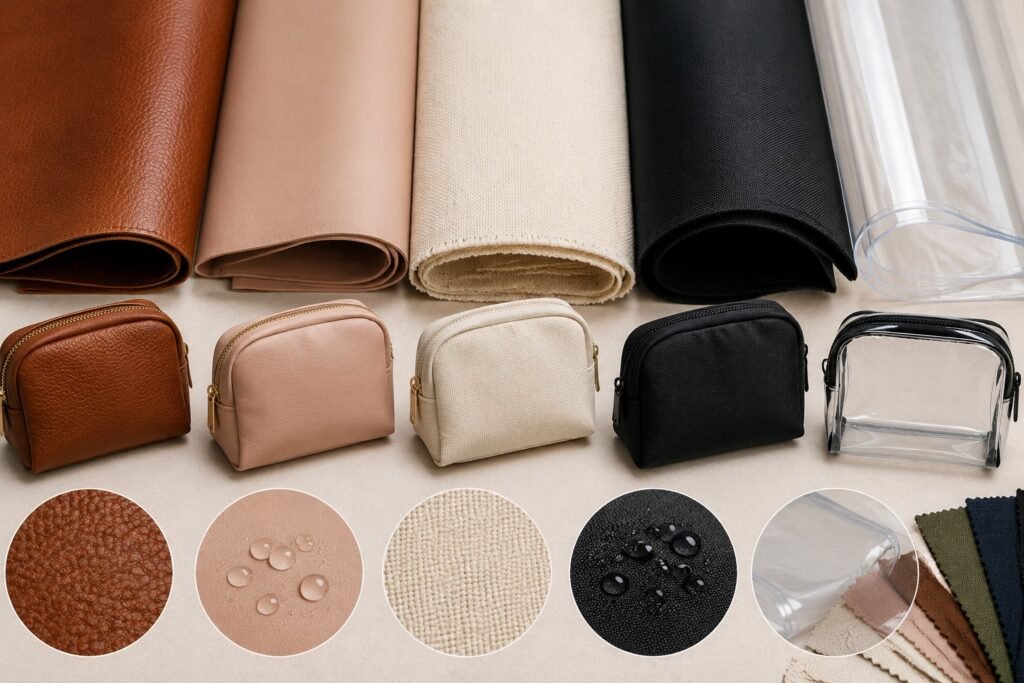
Industry note: luxury brands often prefer genuine leather because texture and aging performance influence perceived value, while emerging brands typically choose PU leather to balance appearance and production cost. Material also determines which factories can produce your bag — leather requires specialized cutting equipment; TPU requires welding machines. Confirm your manufacturing partner has the right capability before committing.
For a deeper comparison across the five most common materials — including durability ratings,cost implications, and best logo methods — see our complete cosmetic bag materials guide
Get a Free Consultation →
Step 4: Design Functional Details That Improve User Experience
This is where generic becomes custom. Functional details — what customers interact with every time — separate products people use daily from those that sit in a drawer.
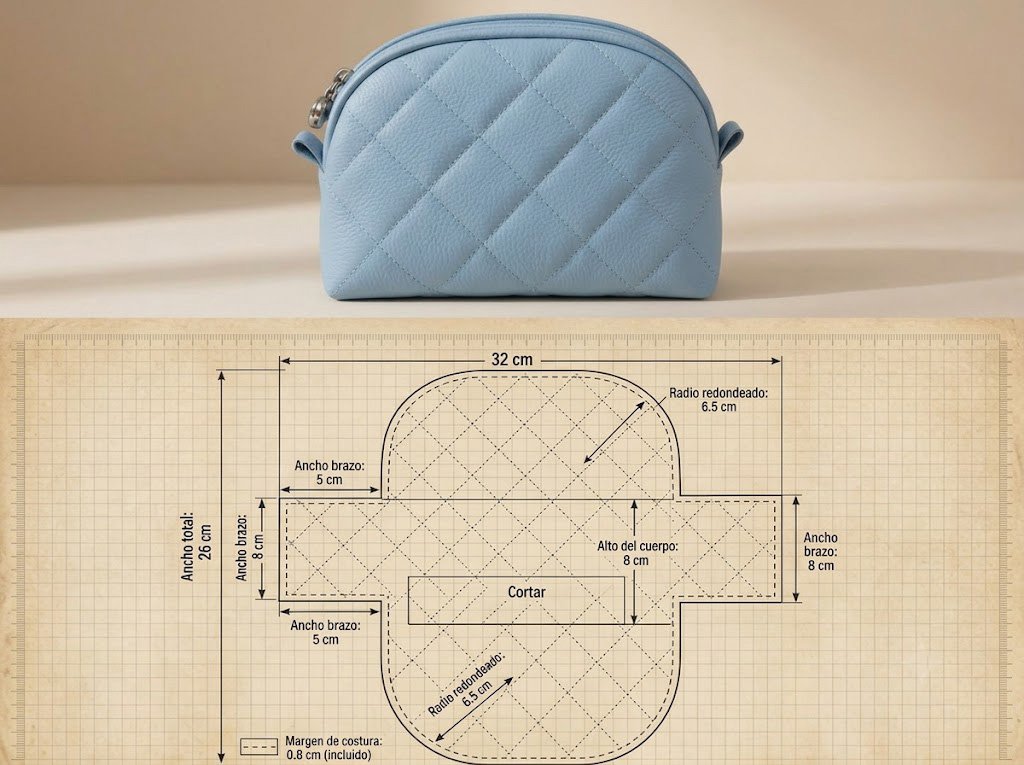
Size planning. Measure real products, not imaginary ones. A standard foundation is ~10–12cm tall, an eyeshadow palette ~15×10cm. Design from the contents outward. The #1 complaint after first samples: ‘It is smaller than we expected.’
Internal organization. Elastic brush holders, mesh pockets for visibility, a waterproof-lined section for liquids, and a flat base so the bag stands upright. Adding too many compartments may improve organization, but it also increases sewing processes and per-unit labor cost — a key trade-off in custom makeup bag design. Prioritize based on the customer’s actual routine.
Closure systems. The zipper fails first — always. Across returned custom cosmetic bags, zipper failure and lining staining account for over 70% of quality complaints. Specify YKK or equivalent branded zippers above budget tier. Metal zippers feel premium; nylon coil suits lightweight pouches.
Handles and straps. A wristlet loop (~$0.10–$0.30/unit) significantly improves portability. A detachable shoulder strap turns a vanity case into a crossbody — same product, different use case.
Step 5: Customize Branding Elements for Custom Makeup Bags
Your logo thoughtfully integrated into a custom makeup bag design says you built this product for your customer. The difference is in the execution.
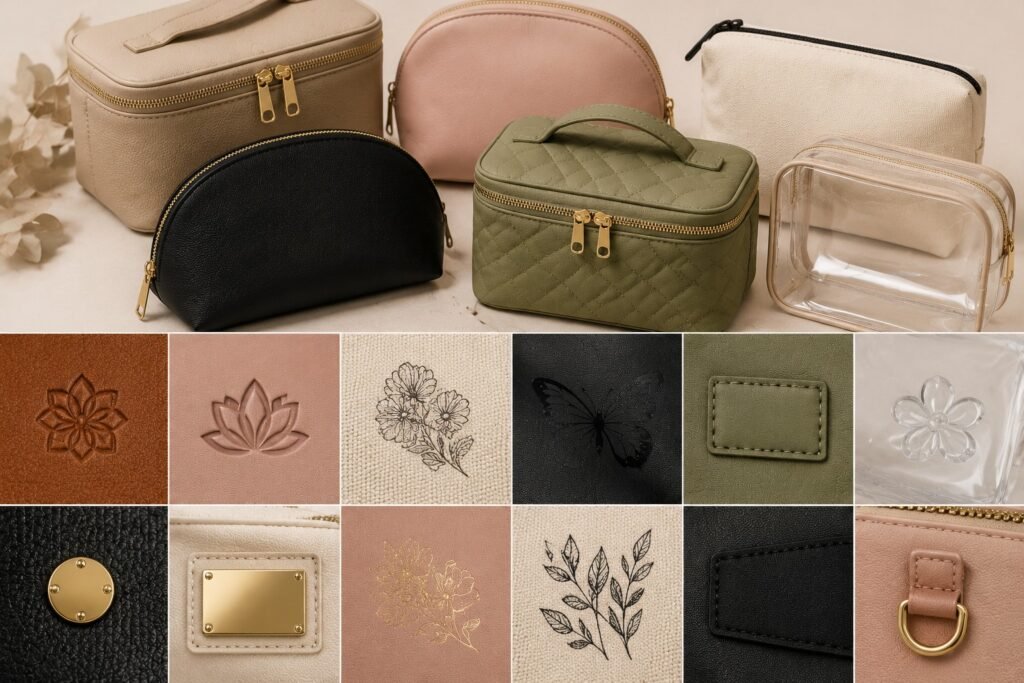
| Logo Method | Leather | PU Leather | Canvas | Nylon | TPU |
|---|---|---|---|---|---|
| Debossing / Embossing | ★★★★★ | ★★★★ | — | — | — |
| Foil Stamping | ★★★★★ | ★★★★ | ★★ | ★★ | — |
| Silkscreen Print | ★★★ | ★★★★ | ★★★★★ | ★★★★★ | ★★ |
| Embroidery | ★★ | ★★ | ★★★★★ | ★★★★★ | — |
| Metal Logo Plate | ★★★★★ | ★★★★ | ★★★ | ★★ | ★★★ |
| UV Digital Print | ★★ | ★★★ | ★★★★★ | ★★★★ | ★★★★★ |
Beyond the logo: custom zipper pullers with brand initials, printed interior lining with a subtle repeat pattern, branded dust bags for premium leather, and hang tags describing material and care. Test your logo on your actual material before commissioning tooling. A debossing die costs $80–150; a 10-minute test press on a material swatch costs nothing.
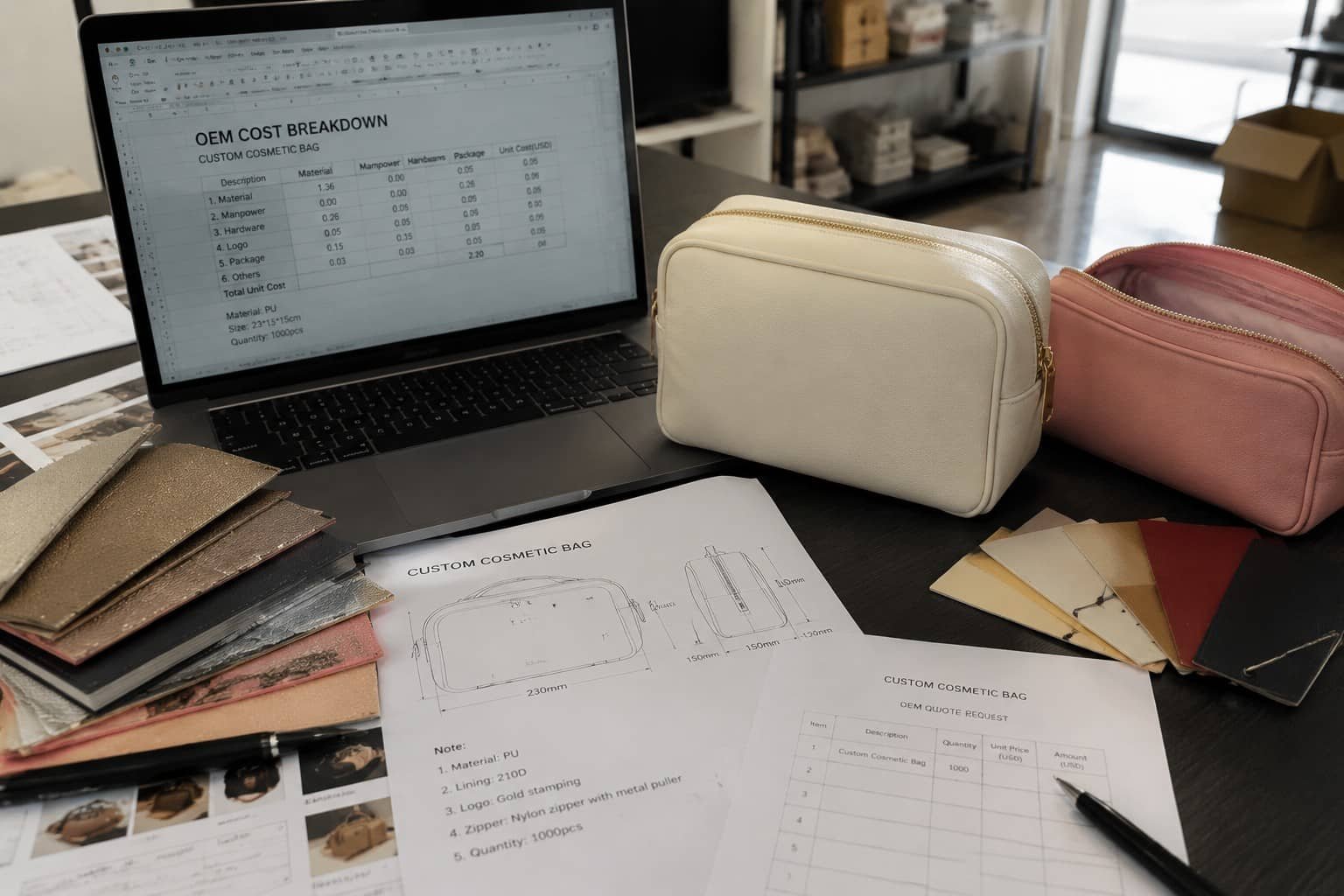
Step 6: Evaluate Production Costs Before Finalizing Design
The time to think about cost is during design, not after the quote lands at triple your budget. Here is what drives the per-unit cost in custom makeup bag design:
| Design Element |
Cost Impact | How to Control |
|---|---|---|
| Material type | High | Canvas < PU < Leather. Design for cost-effective materials first; upgrade for premium SKUs. |
|
Panel count & seams | High | More panels = higher labor cost. A 2-panel pouch uses ~70% less stitching than a 6-panel case. |
|
Interior compartments | Medium | Bundle strategically. One well-designed interior panel is cheaper than three separate pockets. |
| Custom hardware | Medium | Custom pullers require tooling ($50–250). Standard hardware avoids this upfront cost. |
| Premium lining | Medium | Waterproof PU-backed lining costs more than basic polyester. Match lining tier to price point. |
| Logo method | Medium | Silkscreen: ~$0.05–0.15/unit. Debossing: ~$0.15–0.40 + $80–150 die. Over 5,000 units, method matters. |
| Order quantity | High | 300 units = retail material pricing. 3,000 = wholesale. Cost breaks at 500, 2,000, 5,000 units. |
Work backwards: if wholesale is $8, production cost needs to be ~$3–4. Let those numbers guide your design, not constrain it.
Step 7:How to Prepare a Custom Makeup Bag Design Brief
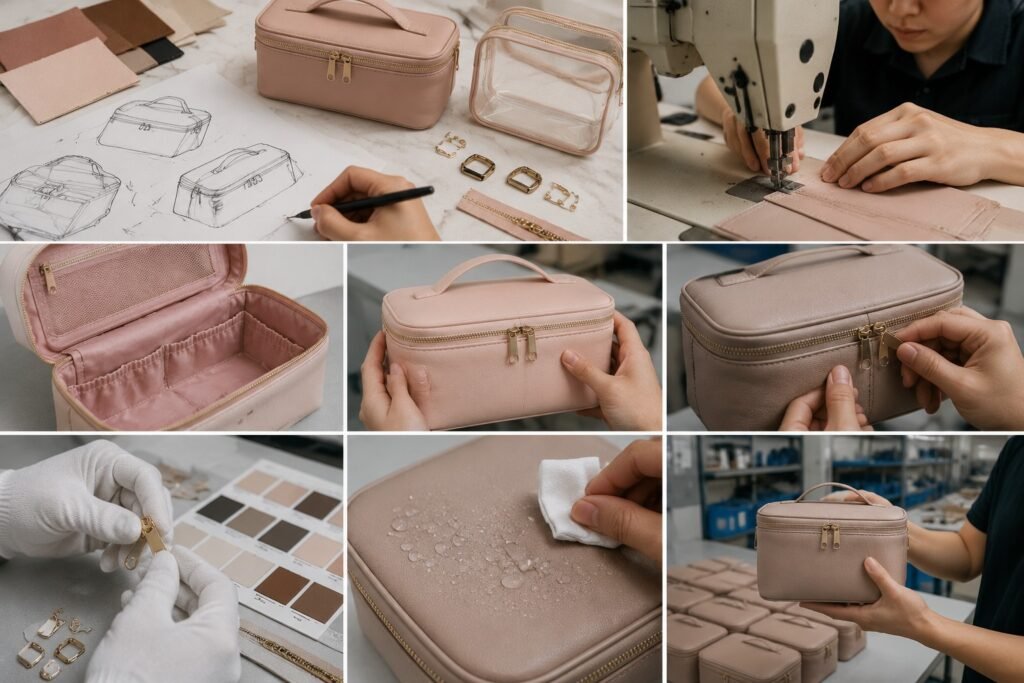
A good design brief gets you an accurate quote faster and reduces sampling rounds. This is what separates professional buyers from first-timers — and what helps OEM manufacturers deliver exactly what you envision for your custom makeup bag design. Prepare these details before contacting a factory:
| Information to Provide | Why It Matters |
|---|---|
| Target customer profile | Defines product direction — luxury, fashion, travel, or promotional |
| Preferred bag style | Determines structure, material usage, and labor complexity |
| Size requirements | Controls material consumption and capacity expectations |
| Material preference | Affects cost, appearance, durability, and factory compatibility |
| Logo method & placement | Determines production process and tooling requirements |
| Target quantity | Influences MOQ feasibility and per-unit pricing |
| Packaging requirements | Supports brand positioning — dust bag, gift box, hang tag |
| Reference images | Communicates aesthetic direction better than written descriptions |
| Target price range | Lets the factory suggest cost-efficient alternatives upfront |
The briefs that get the fastest, most accurate quotes are specific without being rigid. They communicate brand intent and customer need, not just specifications. A brief saying ‘luxury-feeling travel pouch for premium skincare — leather or high-grade PU, gold hardware, waterproof lining, ~20×12×8cm’ tells a factory what matters and gives room to suggest the best approach.
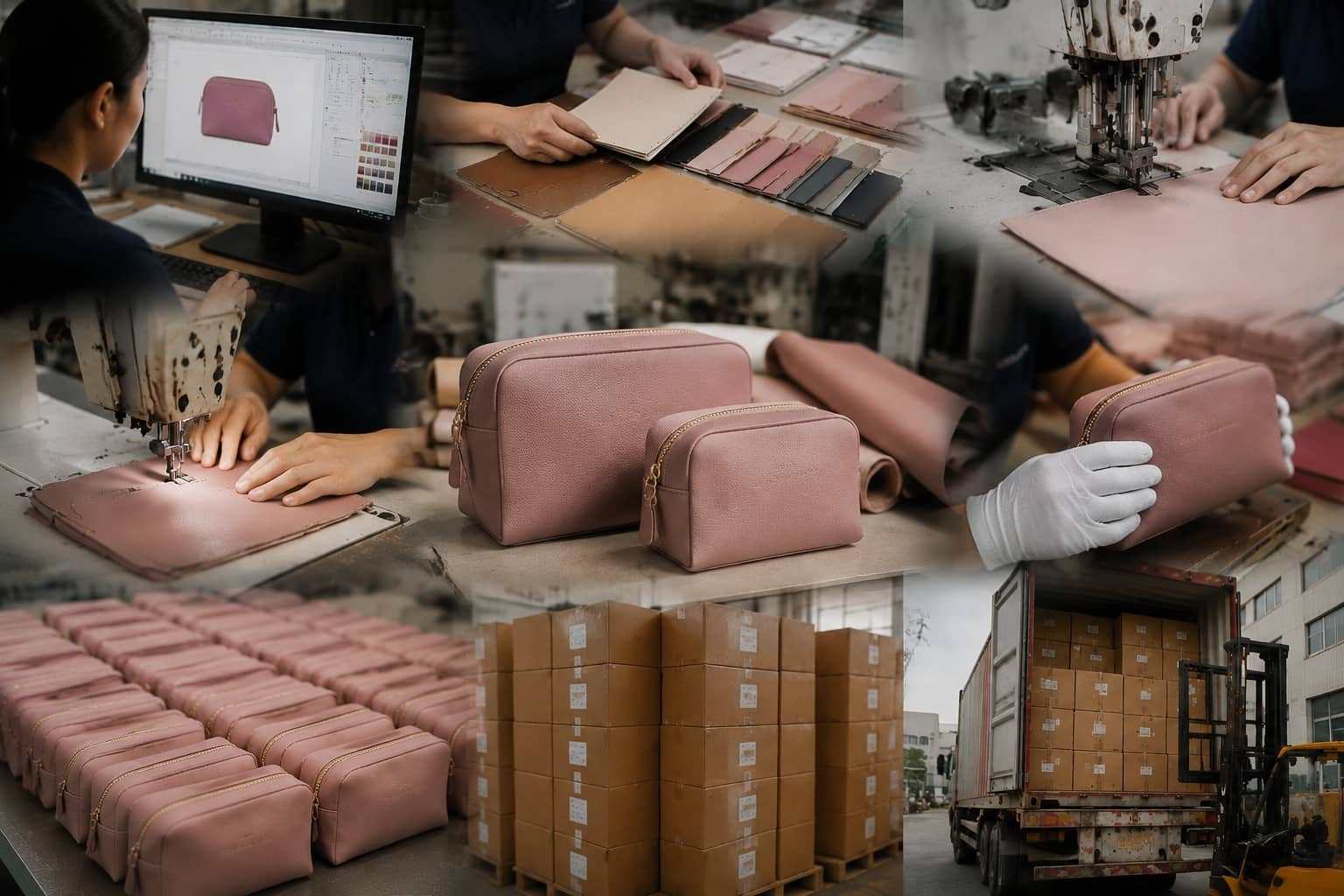
Step 8: Prototype and Sample Testing Before Mass Production
A material swatch tells you about color. A sketch tells you about proportion. Neither tells you how the bag feels full of products or how the zipper performs after 100 cycles. Pre-production sampling is not optional — it is the cheapest insurance against a production disaster. Every custom makeup bag design should go through a sample phase before mass production.
Sample Review Checklist:
- Appearance — Color matches Pantone? Material has correct sheen and hand-feel? Seams straight and consistent?
- Stitching — Pull gently on both sides of every seam. No puckering, loose threads, or uneven tension.
- Zipper & Hardware — Zip and unzip 50 times. Smooth glide? Puller feels solid? No catching at the tape edge?
- Material Performance — Put real products inside. Full foundation bottle. Loose powder. Carry it for a week. Leak test the lining.
- Logo Quality — Embossing depth, print alignment, color accuracy. Foil stamping crisp at edges, not flaking.
- Function Testing — Does it stand upright on a vanity? Do brush handles fit the elastic holders? Does it pass TSA inspection?
The 1-week rule: carry the sample yourself for a week. Most design flaws reveal themselves within 3–5 days of real-world use. A week of testing catches what spec sheets and factory photos miss.
Once your design is approved, the next phase is production. Walk through each step —
cutting, sewing, logo application, quality control — in our custom makeup bag production process guide.
Common Custom Makeup Bag Design Mistakes to Avoid
After working with brands from startups to established private labels on custom makeup bag design projects, these are the mistakes we see most often:
Mistake 1: Designing Without Considering Production Feasibility
Extreme curves, ultra-thin panels, and unconventional seam placements add complexity through cutting, stitching, and QC. Before falling in love with a sketch, ask your manufacturer: is there a simpler way? A small adjustment often preserves the aesthetic while cutting cost by 20–30%.
Mistake 2: Picking Materials That Do Not Match the Use Case
A 0.3mm matte PU with a gorgeous hand-feel scuffs within weeks of daily bag-in-bag use. Match material durability to the actual scenario: bathroom counter (low wear), daily handbag carry (moderate), travel carry-on (high).
Mistake 3: Over-Designing the Interior
More compartments seem like value, but each adds cutting steps, stitching time, and QC checkpoints. Solve the top 2–3 organization needs and stop. Survey customers after launch for version two.
Mistake 4: Skipping the Prototype Phase
The $100–200 cost of a sample is trivial compared to 5,000 unusable units. We have seen brands arrive with boxes of unsellable bags — peeling logos, mismatched colors, seized zippers — because they skipped sampling with a previous factory.
Mistake 5: Submitting an Incomplete Design Brief
Sending vague specs outsources design decisions to someone who has never met your customer. The result reflects factory defaults, not brand intent. Use the design brief checklist in Step 7 to avoid this.
Next Steps After Finalizing Your Design
Production Process: From Sample to Mass Production
Materials Guide: Compare Leather, PU, Canvas & More
Frequently Asked Questions
What should I consider when designing custom makeup bags?
Start with your brand positioning, target customer, and use case. Then work through bag style, material, size, internal layout, closure type, branding method, and budget. The most important principle: design from the customer’s actual routine, not from aesthetic preference alone. Our cosmetic bag OEM team can guide you through each decision point.
What is the best material for custom makeup bags?
It depends on brand positioning. Genuine leather suits luxury brands; PU leather works for fashion and private label; canvas is ideal for promotional products and eco-friendly lines; nylon excels for travel bags; TPU serves the transparent, TSA-compliant market. See our complete material comparison guide for detailed OEM recommendations.
How much does it cost to make custom makeup bags?
Cost varies by material, size, complexity, and quantity. The same design in leather vs. canvas can differ by 3x–7x. A simple canvas pouch at 5,000+ units sits at the lowest end; a leather structured vanity case at 300 units sits at the highest. Meaningful per-unit cost breaks occur at 500, 2,000, and 5,000 units.
What is the MOQ for custom makeup bags?
Canvas and basic PU pouches: 200–300 units. Genuine leather: 300–500 units. TPU and complex designs: 500+ units. Some manufacturers offer low-MOQ programs (50–100 units) at a higher per-unit cost for brands testing new designs. Always confirm MOQ during the initial consultation.
How long does custom makeup bag production take?
Design and sampling: 2–3 weeks. Prototype approval: 1–2 weeks. Material sourcing: 1–2 weeks. Mass production: 3–5 weeks. Shipping: 1–4 weeks. Total: 8–14 weeks for a first-order project. Plan for 10–12 weeks realistically.
Can I create custom makeup bags with my own logo?
Yes. Logo methods include debossing, embossing, foil stamping, silkscreen printing, embroidery, metal plates, and UV digital printing. The best method depends on your material — embossing works beautifully on leather but barely shows on nylon. Always test on a material swatch before commissioning tooling.
Can startups order custom makeup bags?
Yes. Many makeup bag manufacturers work with startups and offer flexible MOQ programs. You may pay a higher per-unit cost on smaller orders, but it allows you to test designs in the market before scaling. Provide a clear design brief and be upfront about your budget and timeline.
What information should I provide to a manufacturer?
At minimum: target customer profile, preferred bag style or reference images, approximate dimensions, material preference, logo specifications, target quantity, and budget range. The more detail you provide upfront, the faster and more accurate your quote. See the design brief checklist in this guide for a complete template. For more guidance, check our custom makeup bag design guide.