-Guangzhou, China · OEM & ODM
Custom Small Leather Goods Manufacturer
Custom pen cases, eyewear cases, keychains and bag charms, developed to your specifications — OEM, private label and custom branding, produced in our own factory.
-Product range
The small leather goods we make
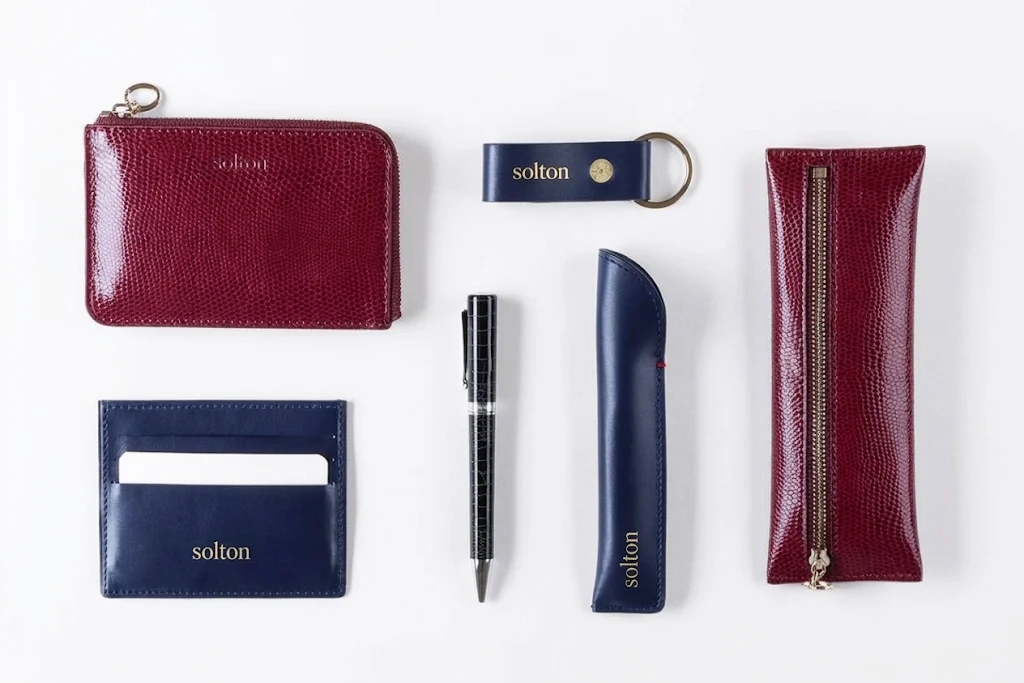
Five product families covering everyday leather accessories, custom brand merchandise and coordinated gift items. Each product is developed according to its construction, material and finishing requirements.
Pen cases & sleeves
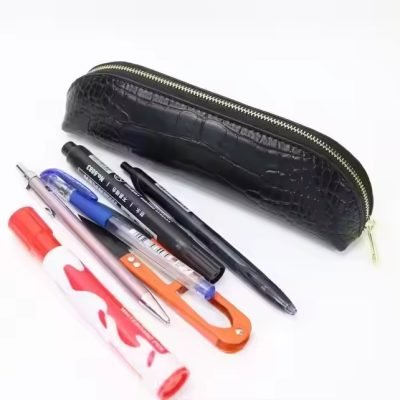
Custom leather pen cases and sleeves developed around your preferred dimensions, materials, construction and branding.
Eyeglass & sunglasses cases
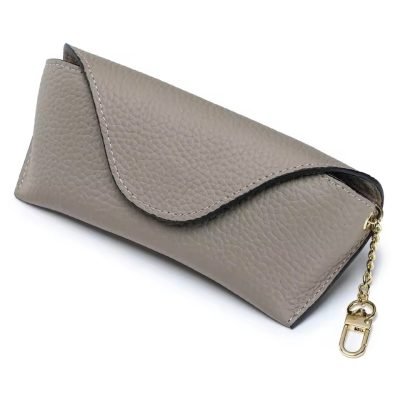
Leather eyewear cases in soft, structured and foldable constructions, specified to your frame size and lining.
Keychains & bag charms
Custom leather keychains, key fobs and bag charms in die-cut, tassel and miniature designs. Choose your preferred shape, leather, hardware and branding to create accessories that match your collection.
Small pouches & organisers
Compact leather pouches and organisers for tech accessories, everyday storage and gift-with-purchase.
Travel & desk accessories
Custom leather travel and desk accessories for branded collections, corporate gifting and everyday use. Product designs can be adapted to your preferred materials, dimensions and branding requirements.
PEN CASE
EYEGLASS CASE
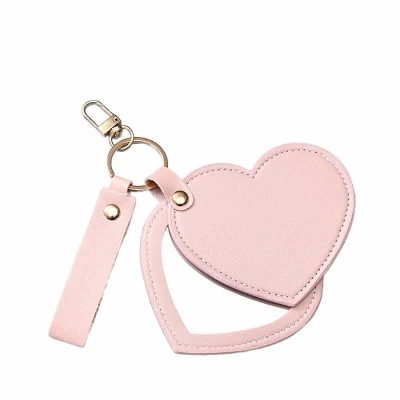
KEY CHAIN

BAG CHARM
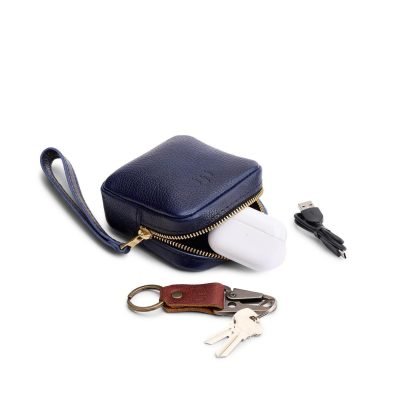
LEATHER POUCH
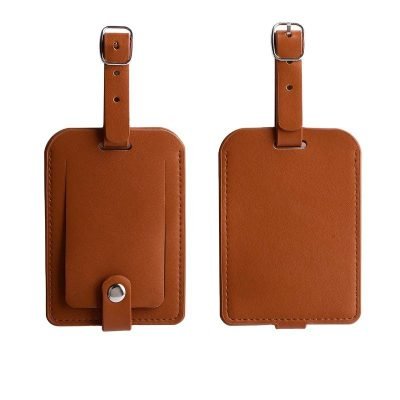
LUGGAGE TAG
-Manufacturing & craftsmanship
How these are made
Six steps, from pattern to hardware. Each one answers a question buyers actually ask: what we do, why it decides how the product feels, and what we check before it leaves the line.
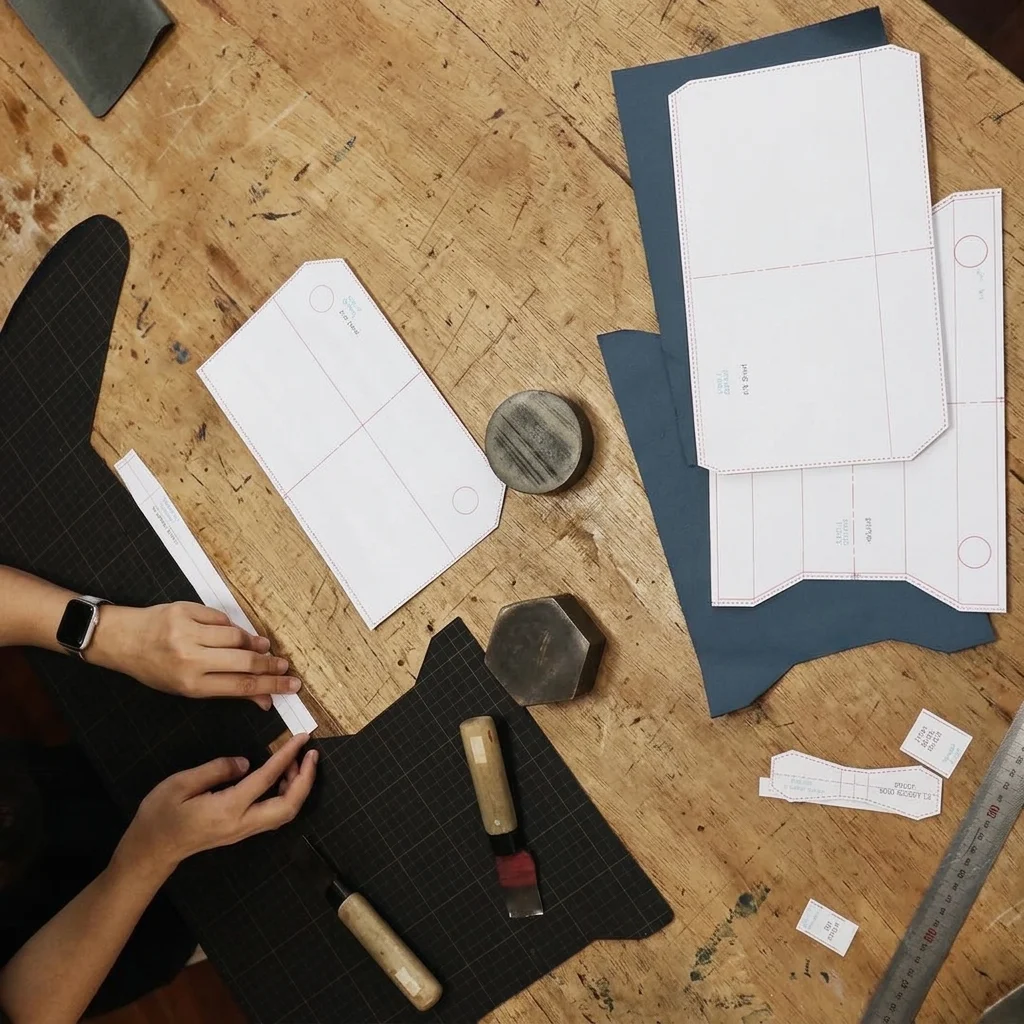
Pattern development
We build the pattern from your tech pack, sketch or a physical reference sample, then check it against the finished dimensions you need.Fold allowances and seam widths are adjusted according to the leather thickness, construction method and finished dimensions, rather than taken directly from a flat drawing.
The pattern decides whether the item actually holds what it is supposed to hold. A pattern cut to finished size without adding for leather thickness produces a piece that closes short once the edges are folded — it looks acceptable flat and feels wrong in the hand.
Finished dimensions against spec, fold allowance on every edge, interior capacity with the intended contents inside, and symmetry across the two halves of the item.
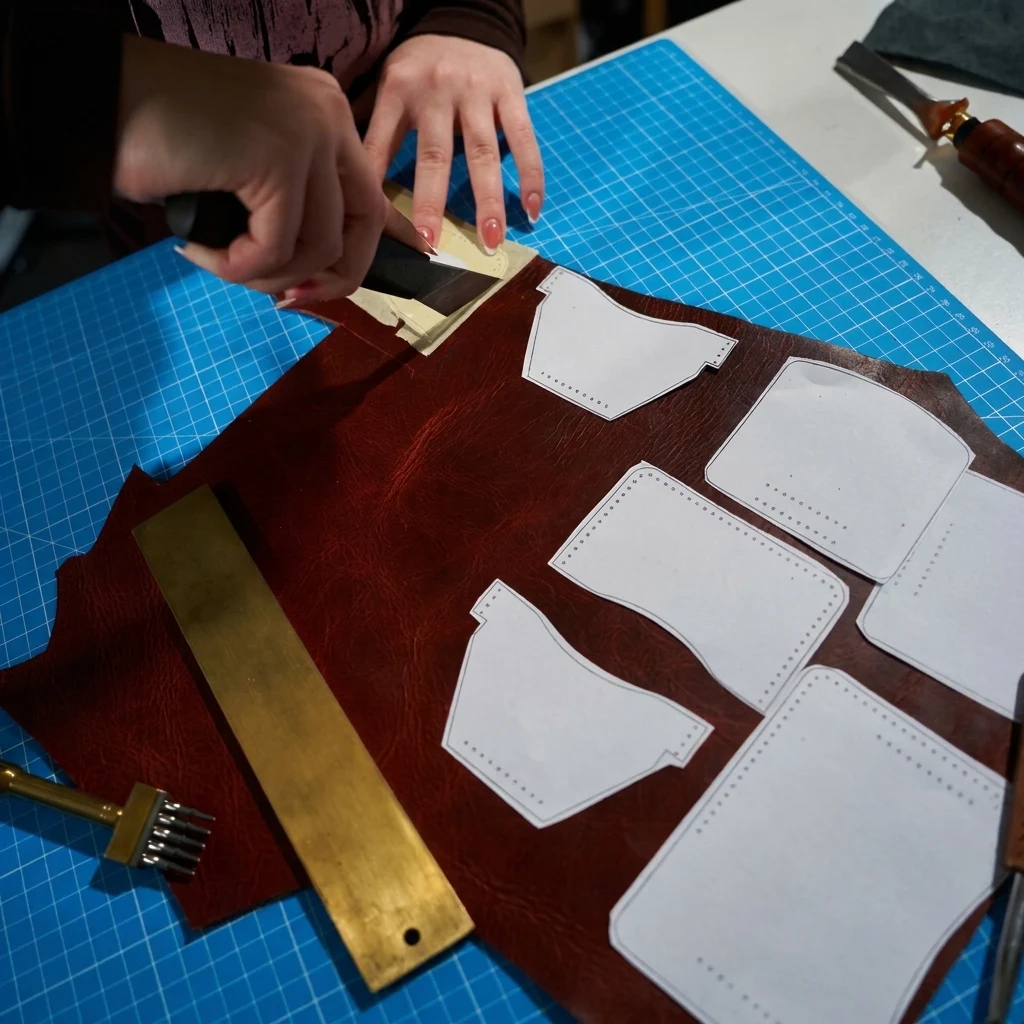
Material cutting
Hides are inspected under daylight for scars, growth marks and shade before any cutting.Panels placed next to each other on the finished item may show noticeable shade differences if they are cut from areas with varying colour or surface characteristics.
This step decides whether a finished set looks like one product or a batch of leftovers. Reviewing the cutting layout helps maintain a more consistent appearance across adjacent panels and manage material waste.
Shade consistency across adjacent panels, scar and growth-mark placement against the cutting layout, grain direction and usable leather yield. Reviewing the layout before cutting helps estimate material consumption and manage cutting waste.
Skiving & folding preparation
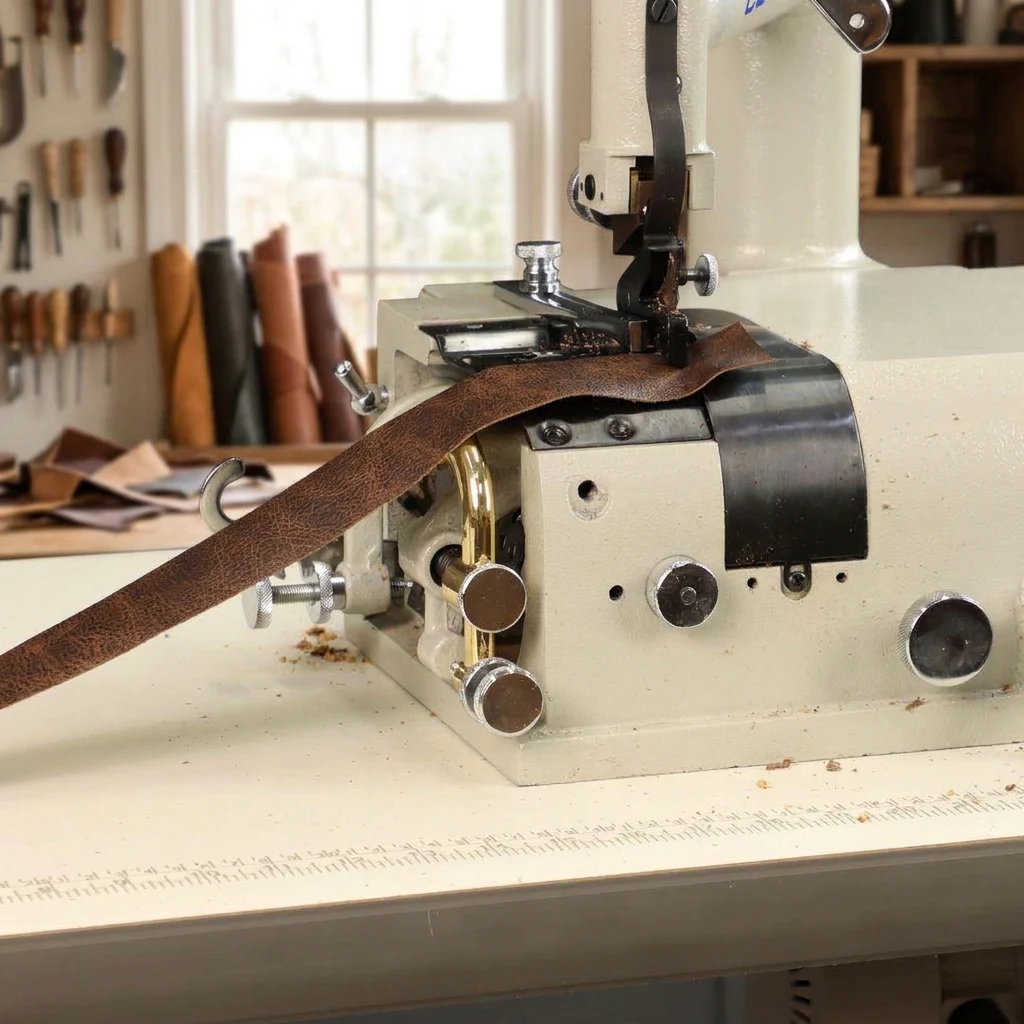
Leather is thinned in selected areas where folding is required, helping the edge close cleanly without excessive bulk. Skiving depth depends on the leather thickness, fold construction and strength requirements. For example, a folded edge on 1.2 mm leather may be skived to around 0.6–0.8 mm, while thicker leather or load-bearing areas may require more material to remain.Actual skiving thickness is adjusted according to the leather material and construction requirements.
Skiving affects how slim or bulky a small leather good feels, how cleanly its edges fold, and how well those folded areas survive repeated use. Too little removal leaves a bulky edge; too much weakens the leather at the point that flexes every time the item is opened.
Fold thickness against spec, the transition where skived leather meets full thickness, seam alignment either side of the fold, and consistency between the first, middle and last pieces of a run.
Stitching
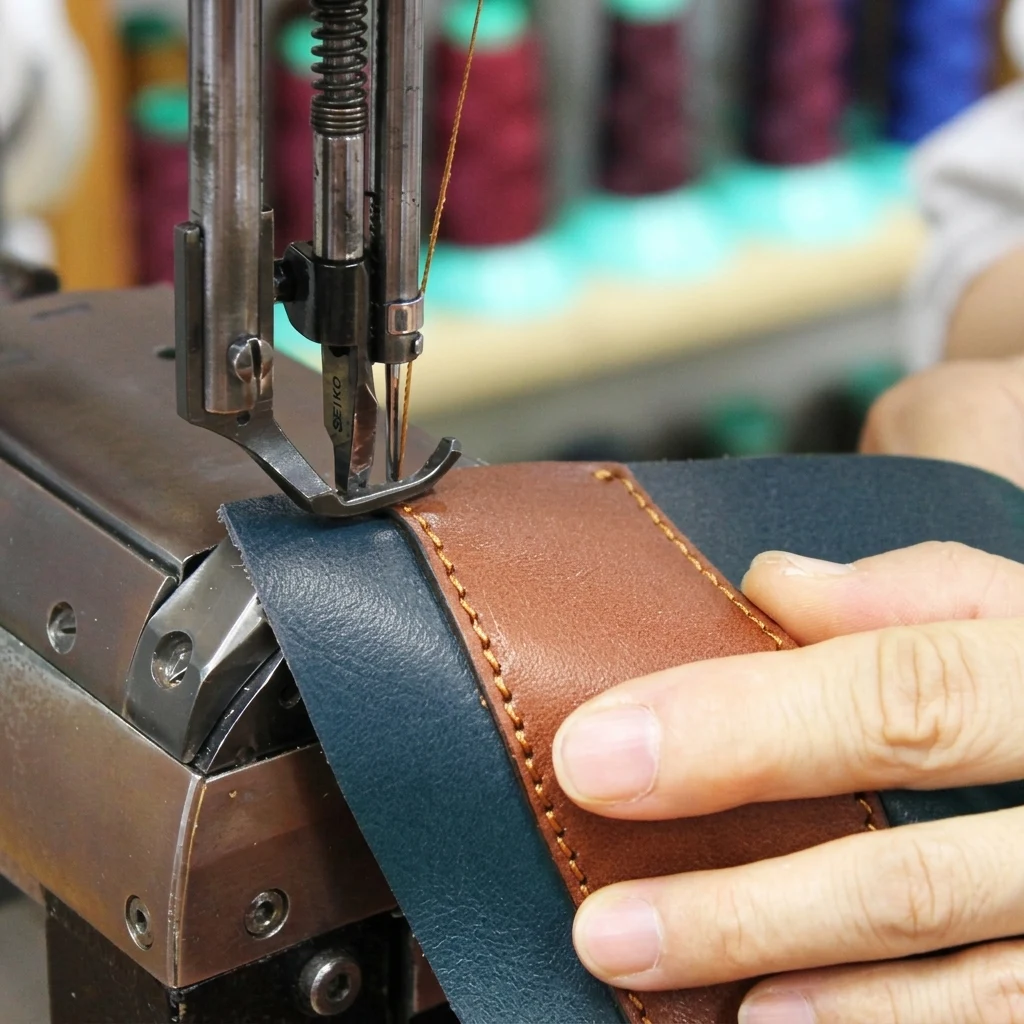
Thread size, stitch length and tension are set per material. Tension is dialled in on scrap leather of the same thickness before the run starts, and checked again whenever a machine is re-threaded or a new operator takes over the station.
Stitching is one of the most visible details of a small leather good and an important factor in its durability. Excessive tension can cause the leather to wrinkle along the seam, while insufficient securing at the start or end of a stitch line can allow stitching to loosen during use.
Stitch length against spec, tension across the full length of each seam, corner and curve quality where the feed is least stable, backstitch at every start and end point, and thread colour match against the approved sample.
Edge finishing
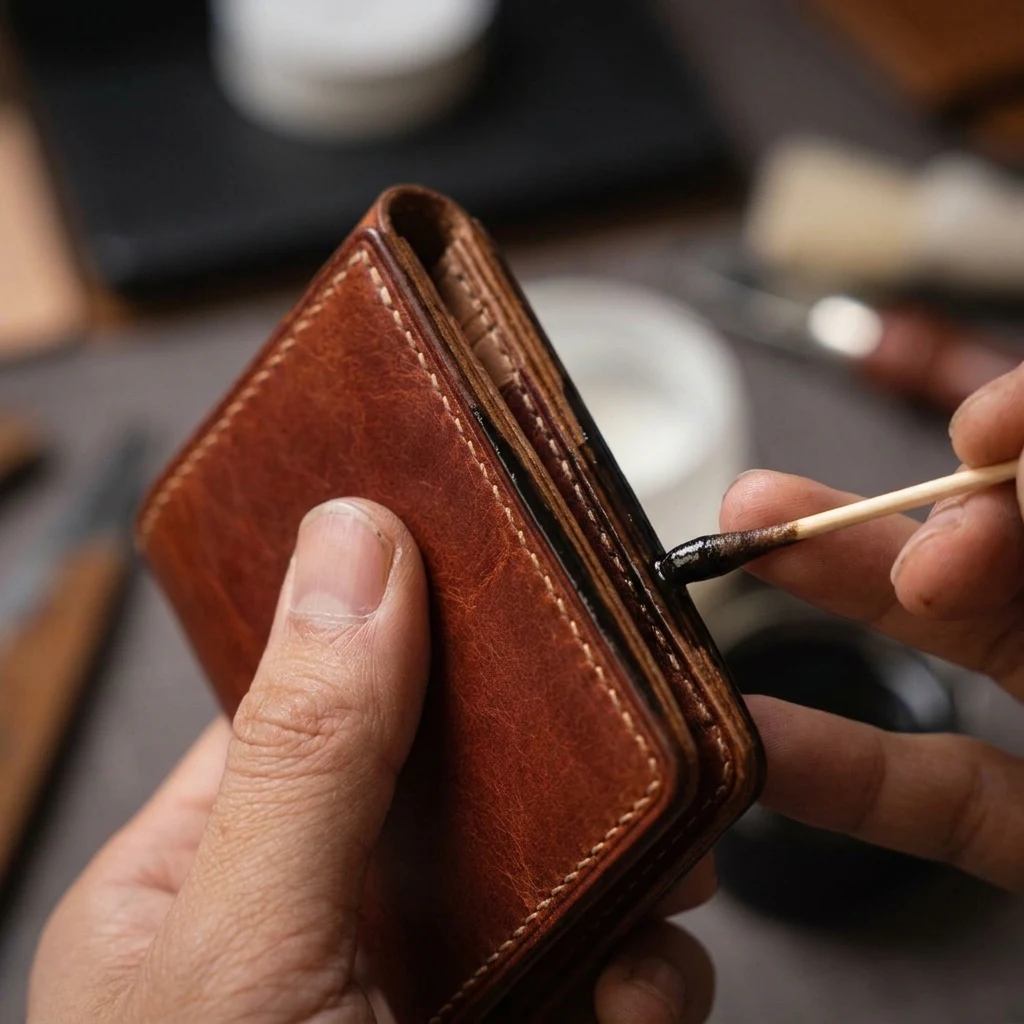
Edges are sanded, coated, left to dry, sanded again and coated again — usually two to three cycles, more on an edge that is exposed on both sides.Each coat is allowed to dry according to the finishing material and process requirements before the next is applied. Proper sanding, coating thickness and drying conditions help achieve a smooth, consistent edge and reduce the risk of uneven finishing or adhesion problems.
The edge is one of the most frequently handled and closely inspected areas of a small leather good. A single coat may initially look acceptable but can wear or peel over time. Temperature, humidity and drying conditions affect adhesion and appearance, while applying another coat before the previous one is fully dry can lead to uneven finishing and rework.
Edge flatness, coat thickness at the cross-section, adhesion by flexing the finished edge, colour consistency between panels, and that the item has rested long enough before packing.
Hardware setting
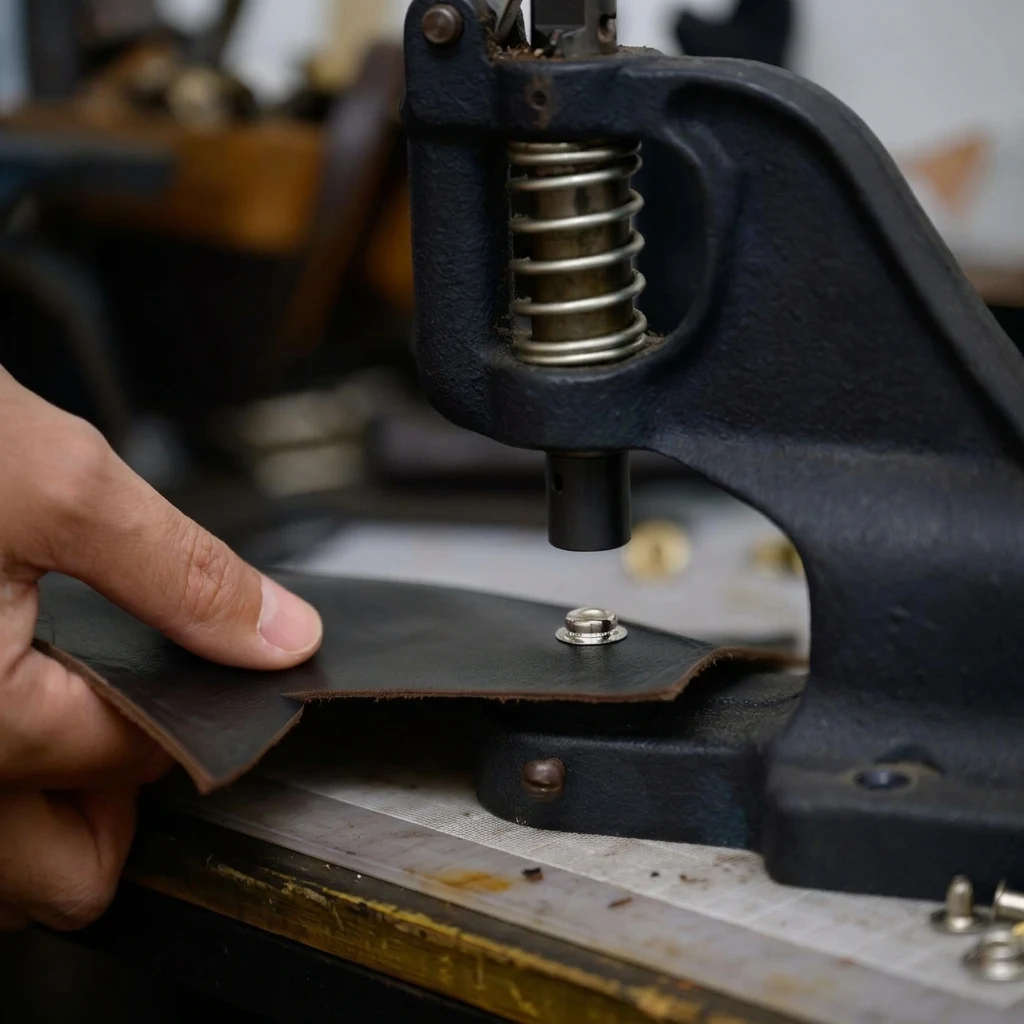
Snaps, magnetic closures, rivets and D-rings are set with a press rather than by hand, so the post seats square and to a repeatable depth.Where hardware is installed in thin leather or areas exposed to repeated stress, reinforcement may be added to help support the attachment point and reduce the risk of pull-through.
Incorrectly installed hardware can loosen, pull through the leather or affect the function of a closure. Reinforcement and correct setting depth help distribute stress around attachment points, particularly where hardware is installed in thinner leather or areas exposed to repeated use.
Hardware position against the pattern, seating depth, closure open-and-close cycles on the first and last pieces, pull strength on load-bearing rings, and that plating colour matches across the batch.
-Private label & customisation
Private label small leather goods
Most buyers arrive without a finished tech pack. That is a normal starting point, not a problem — the four steps below are how a reference becomes a product. If you already have a specification and only need production, the private label route skips the first two steps.
From reference to custom product
01 · Design reference
Send what you have
A product photo, a sketch, an existing sample, a set of dimensions or a technical drawing. Any one of these is enough to start. Tell us what the item has to hold and what it must not do, and we will tell you what we need to fill in.
02 · Materials & construction
Settle the build
We review material options against the use case, then settle structure, lining, hardware and branding. This is the stage where cost moves most, because a lining or a closure change can alter both material and assembly time.
03 · Sample development
Hold it in your hand
A physical sample to evaluate shape, function, material and workmanship. Measure it, fill it, carry it. Revisions at this stage may extend the timeline, but they let you adjust design or construction before bulk begins; changes after production starts may affect cost, lead time and finished goods.
04 · Bulk production
Repeat the approved sample
Production follows the approved sample and written specification, not a verbal understanding. The approved sample stays with us as the reference for every inspection.
What can be changed
| MATERIALS | Leather and material options include full-grain and top-grain leather, nubuck, suede, saffiano-finish leather, PU and microfiber. Stock colours are available, with custom colour matching subject to material and production requirements. Colour samples or lab dips can be reviewed before bulk production when needed. |
| SHAPE & DIMENSIONS | Custom sizes, proportions and thickness. A new design may need pattern development and a cutting die, depending on the structure and the production method. Artwork in vector AI, EPS or PDF. |
| CONSTRUCTION | Compartments, closures, lining, reinforcement, stiffness. |
| HARDWARE | Available hardware includes selected brass, nickel and gunmetal finishes, with custom-shaped, cast or engraved components available for projects requiring specific designs. |
| LOGO & BRANDING | Hot foil, deboss, blind emboss, silk screen, metal plate, laser. Foil and deboss dies are kept for re-orders; storage terms are confirmed with the quotation. |
| PACKAGING | Gift box, printed sleeve, dust bag, hangtag, EAN or FNSKU barcode, FBA prep. |
| METHOD | EFFECT | BEST ON |
|---|---|---|
| Hot foil stamping | Metallic gold, silver or coloured foil | Flat panels, logo areas |
| Debossing | Recessed, tone-on-tone logo | Subtle branding on leather |
| Blind embossing | Uncoloured embossed logo | Selected leather surfaces |
| Screen printing | Flat colour logo | Large, relatively flat areas |
| Metal plate | Etched or engraved metal logo | Corporate gifting, premium accessories |
| Laser engraving | Permanent surface marking | Selected materials, one-off personalisation |
Methods can be combined on one item — foil on an outer panel, blind emboss inside. Die cost depends on artwork size and detail, and is quoted with the sample.
Flat leather panels are generally suitable for foil stamping and debossing, while curved surfaces or areas with limited stamping space may require alternative branding solutions such as metal plates or labels. The best method depends on the material, surface shape, logo artwork and required finish. Tooling requirements and costs are confirmed during sample development.
Laser engraving generally avoids the need for a traditional stamping die, making it suitable for selected materials and certain personalised applications. Material compatibility and the engraving result should be reviewed before production.
-MOQ & lead time
MOQ and lead time
There is no single MOQ for this range, and no single lead time. Both are set by the same set of variables, and the answer changes when any one of them changes.
MOQ depends on the product design, materials, colour selection and customisation requirements. Many small leather goods projects can start from around 100 pieces, while special materials, custom hardware or multiple colourways may require higher quantities. We confirm the quantity for your specific item in the quotation, before you commit to anything.
What determines MOQ
| Factor | Why it moves the number |
|---|---|
| Construction complexity | More panels, reinforcement, forming or assembly steps can increase setup and production requirements. |
| Material availability | Stock materials are generally easier to arrange than special materials or custom colour sourcing. |
| Colourways | Multiple colours may require separate material preparation, cutting plans and production arrangements. |
| Branding & hardware | Custom logo dies, cast hardware or engraved components may involve tooling and supplier minimums. |
| Packaging | Printed boxes, inserts and branded packaging may have separate supplier minimums. |
Lead time, stage by stage
| STAGE | WHAT SITS INSIDE IT | WHAT CAN EXTEND IT |
|---|---|---|
| Sample development | Pattern building, material sourcing, one physical sample | Building from a photo only, rather than a sample or drawing |
| Sample revision and approval | Revision, re-sample, your sign-off | Additional revisions may need a new development cycle, depending on the changes involved |
| Material preparation | Leather pulling, dyeing, hardware ordering, packaging print | Dyed leather waits on the tannery; custom hardware waits on the toolmaker |
| Bulk production | Cutting, skiving, stitching, edge finishing, assembly | Colour count, hand-finishing level, and order size |
| Inspection and packing | In-line checks, final inspection, photo report, packing | Packaging that arrives late holds the whole shipment |
Sample approval is required before bulk starts. We do not ask for a bulk deposit before you have held a sample. Payment terms sit outside this table — the questions buyers ask before ordering covers them.
-Coordinated sets
One collection, made together
Develop coordinated small leather goods for your brand, retail collection or corporate gifting programme — designed around matching materials, colours, branding and packaging, rather than four items that happen to be ordered at the same time.
| ITEM | ROLE IN THE SET | WHY IT IS THERE |
|---|---|---|
| Pen sleeve | Main piece | Carries the branding; the item the recipient keeps |
| Key fob | Small accessory | Low unit cost, high daily visibility, easy to add |
| Luggage tag | Travel piece | Extends the set into a use occasion |
| Mini zip pouch | Functional piece | Gives the set a practical reason to be kept |
Four pieces is an example, not a fixed set — two for a small gifting run, six for a retail collection. The roles change with the brief.
What we align across a set
| LEATHER | Coordinated leather selections and, where available, matching dye lots to minimise shade differences |
| THREAD | Consistent thread colour and specifications across the collection |
| HARDWARE | Coordinated finishes and plating specifications for a consistent appearance |
| EDGE FINISH | Matching edge paint colours and finishing requirements |
| PACKAGING | Coordinated packaging design with compartments or inserts for multiple items |
| BRANDING | Consistent logo placement, size, embossing depth and foil colour across products |
Coordinating materials, thread colours, hardware finishes, branding and packaging across a collection helps streamline product development and maintain a consistent appearance. It also makes it easier to manage multiple accessories as part of one brand or gifting project. A set usually reaches past this range: wallets and card holders come off a separate line, but can be matched to the same leather, thread and edge colour.
Frequently Asked Questions
Pen cases and sleeves, eyeglass and sunglasses cases, keychains, key fobs and leather bag charms, small pouches and organisers, and selected travel and desk accessories. Wallets and card holders are produced separately — see that page. If your item is not on the list, send a photo or a sample; non-standard constructions are what our development line is for.
Yes. We can start with a product photo, sketch, physical sample or set of dimensions. For reference-based projects, we review the visible structure and identify any missing details needed for pattern development. A physical sample may be required to confirm dimensions, internal construction and functional details before production.
Full-grain and top-grain leather, nubuck, suede, saffiano-finish leather, PU and microfiber, with microfiber, pigskin or twill linings. Stock colours are available; custom colour matching depends on the material and the production requirement, and lab dips can be reviewed before bulk when needed. We will recommend against a material when it does not suit the construction — nubuck on a high-friction edge, for example.
Yes — hot foil, deboss, blind emboss, silk screen, metal plate and laser engraving. The method depends on the panel: foil and deboss read best on flat panels, laser needs no die and suits one-off personalisation, metal plates suit corporate gifting. Foil and deboss dies are kept for re-orders, with storage terms agreed at order.
Sample first, then bulk, in that order — we do not start production before a sample is approved. The sample stage depends on whether we are working from a drawing, a sample or a photo. Bulk depends on material preparation, colour count and hand-finishing level. Both are confirmed in writing with the quotation.
Yes, and it is how most brand sets are developed. Coordinating leather, thread colour, hardware finish, edge paint and packaging across the items helps keep the set visually consistent. Where the same materials and dies are used again, a re-order can follow the first run closely.
Yes. We can support custom gift boxes, printed sleeves, dust bags, hangtags, barcode labels and other packaging requirements. Printed packaging may involve separate supplier minimums and lead times, which will be confirmed during quotation.
-Start a project
Start your custom small leather goods project
Whether you have a finished design, a reference sample or just an initial idea, we can help review your materials, construction, branding and production requirements. Send us your product reference, estimated quantity and customisation details to get started. We will come back with a quotation, or with the additional information needed to move your project forward.
- Response within 48 working hours, Monday–Saturday.
- An initial quotation, or the details we still need to evaluate your project.
- Sample first, then bulk. No bulk deposit before you hold a sample.