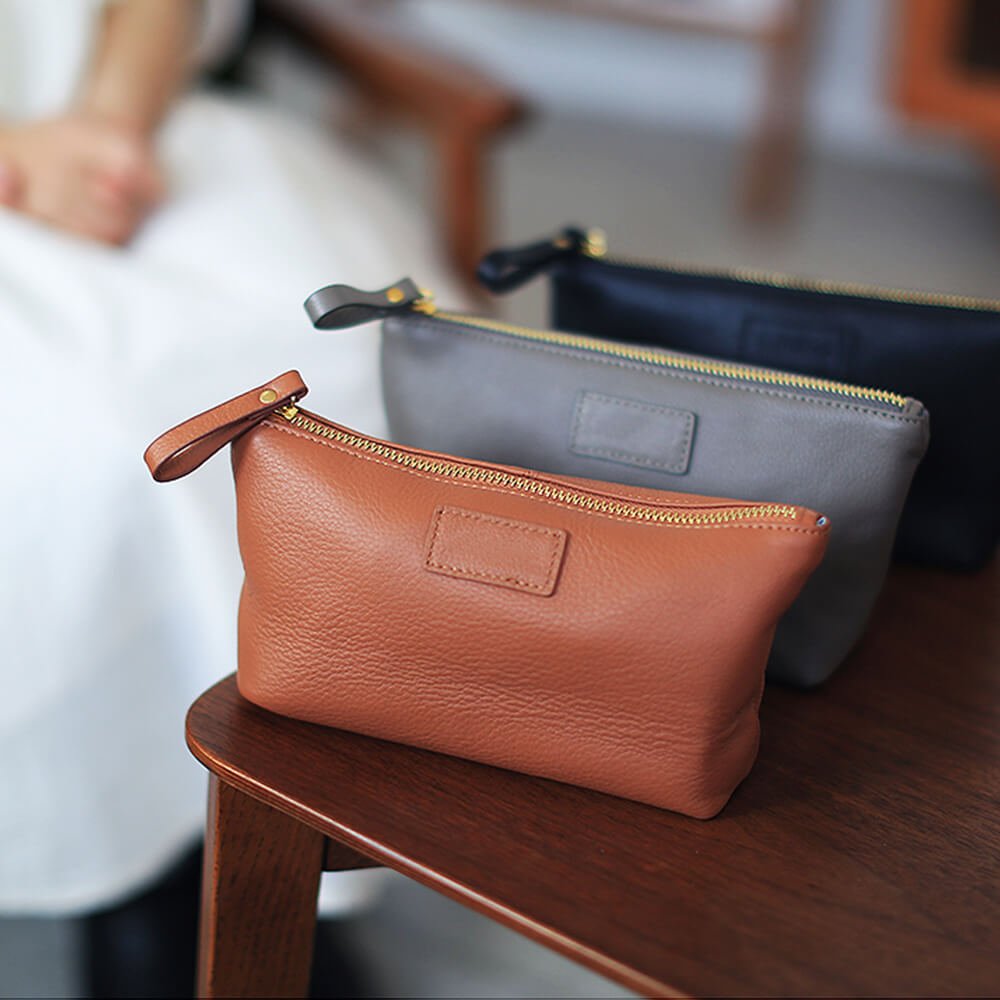
In today’s travel and lifestyle accessories market, the toiletry bag (also known as a dopp kit) remains one of the most commercially reliable products for brands. It’s compact, functional, highly customizable, and suitable for private label, OEM, and ODM production.
But for brand owners, designers, and sourcing managers, “how to make a simple toiletry bag” is not just a DIY question—it’s a manufacturing decision.
Solton Leather as a leather goods supplier with years of experience producing toiletry bags for global brands, we’ll walk you through the real manufacturing process behind a simple toiletry bag—from materials and construction to sizing, cost considerations, and customization options.
Whether you’re developing your first product or optimizing an existing line, this guide is written from a factory-side perspective, not a hobbyist one.
For brands looking to scale production, working with a reliable custom toiletry bag manufacturer is far more effective
Why Simple Toiletry Bags Are a Smart Product for Brands
From a manufacturing standpoint, simple toiletry bags offer several strategic advantages:
Low development risk (simple structure, stable demand)
Flexible materials (PU, leather, recycled fabrics, waterproof textiles)
Short sampling time
Scalable production from small MOQ to bulk orders
Strong gifting & travel use cases
For many DTC and retail brands, toiletry bags are often:
Entry-level products
Add-on items for bundles
Seasonal promotional SKUs
Corporate or gift-with-purchase items
Step 1: Define the Purpose Before Making a Toiletry Bag
Before cutting any material, manufacturers always start with one key question:
What is this toiletry bag designed for?
Because usage determines structure, material, and cost.
Common use cases include:
Daily bathroom essentials
Travel grooming kits
Hotel amenities or airline kits
Luxury men’s grooming products
Waterproof cosmetic storage
For example:
A travel toiletry bag usually requires lining + durability
A luxury leather dopp kit focuses on material quality and stitching
A promotional toiletry bag prioritizes cost control and fast production
Defining this early prevents redesigns and cost overruns later.
Step 2: Choosing the Right Materials to Make a Simple Toiletry Bag
Common Toiletry Bag Materials Used in Manufacturing
1. PU Leather
Cost-effective
Consistent texture
Easy logo embossing
Suitable for mid-range brands
2. Genuine Leather (Cowhide / Top Grain / Full Grain)
Premium positioning
Strong durability
Natural texture variation
Higher unit cost, higher perceived value
3. Waterproof Fabric (Nylon / Polyester / TPU-coated)
Lightweight
Travel-friendly
Easy cleaning
Ideal for outdoor or sporty brands
4. Recycled or Sustainable Materials
Growing demand in EU & US markets
Requires verified sourcing
Often paired with sustainability messaging
👉 Manufacturer tip:
Material thickness directly affects sewing difficulty, zipper lifespan, and bag structure. Always test samples before final approval.
Table 1: Toiletry Bag Material Comparison (For Brands & Manufacturers)
| Material | Cost Level | Durability | Water Resistance | Best For |
|---|---|---|---|---|
| PU Leather | Low–Medium | Medium | Medium | Private label brands, promotional toiletry bags |
| Genuine Leather | Medium–High | High | Low–Medium | Premium & luxury toiletry bags |
| Nylon / Polyester | Low | Medium | High | Travel and outdoor toiletry kits |
| Recycled Fabric | Medium | Medium | Medium | Sustainable and eco-conscious brands |
Step 3: Standard Sizes for a Simple Toiletry Bag
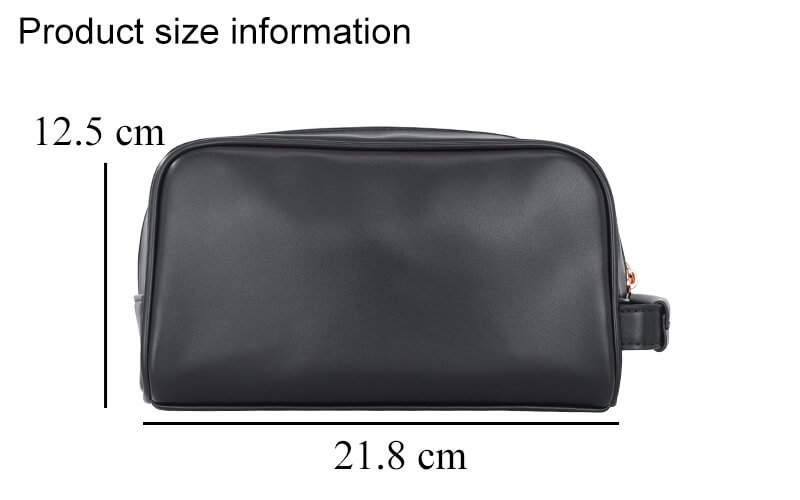
While toiletry bags can be fully customized, most manufacturers follow proven size ranges to reduce production risk.
Popular toiletry bag sizes:
Small: 20 × 8 × 10 cm
Medium (most common): 24 × 10 × 14 cm
Large / Travel: 26 × 12 × 16 cm
Choosing standard dimensions helps:
Optimize cutting efficiency
Reduce material waste
Control carton packing costs
Speed up sample development
Table 2: Common Toiletry Bag Sizes Used in Manufacturing
| Size Category | Dimensions (cm) | Capacity | Typical Use Case |
|---|---|---|---|
| Small | 20 × 8 × 10 | Minimal | Daily essentials, gift sets |
| Medium (Most Popular) | 24 × 10 × 14 | Standard | Travel toiletry bags, retail products |
| Large | 26 × 12 × 16 | High | Long trips, grooming kits |
Step 4: Pattern Making – The Foundation of Quality
In manufacturing, pattern design matters more than appearance.
A simple toiletry bag usually includes:
Main body panels
Side panels (or folded gussets)
Lining pattern
Zipper allowance
Reinforcement areas
Experienced factories design patterns with:
Seam tolerance
Material shrinkage
Sewing order efficiency
Zipper curve control
A poorly designed pattern leads to:
Uneven shape
Difficult zipper installation
Higher defect rate in mass production
Step 5: Cutting & Preparation
Once patterns are confirmed:
Materials are cut manually or by machine
Lining and shell are prepared separately
Reinforcement layers are added where needed
Zippers and hardware are pre-matched
For leather toiletry bags, grain direction and leather flaws must be considered during cutting to ensure consistency.
Step 6: Sewing & Manufacturing Process
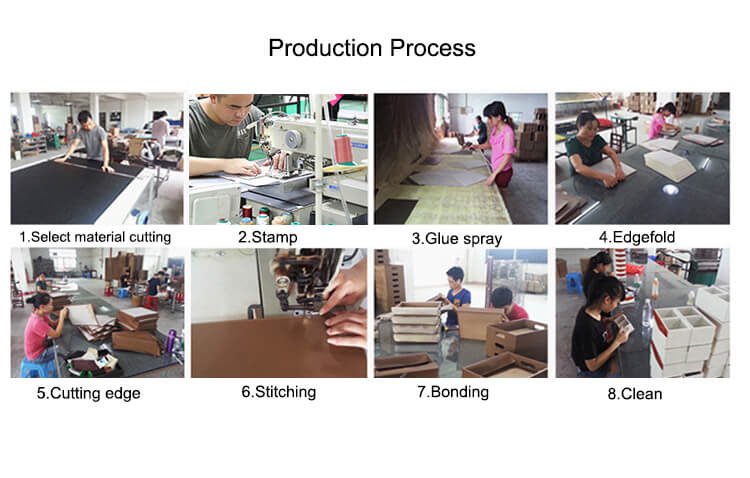
A basic toiletry bag sewing sequence includes:
Stitch shell panels
Install zipper
Attach side gussets
Sew lining
Combine shell and lining
Turn bag and shape
Final topstitching
This is where experienced workers make a real difference.
Clean stitching, even tension, and zipper alignment define perceived quality.
Manufacturing Flow: Simple Toiletry Bag Production
- Step 1: Pattern confirmation & material inspection
- Step 2: Material cutting (shell & lining)
- Step 3: Zipper installation
- Step 4: Sewing main panels & gussets
- Step 5: Lining attachment
- Step 6: Shape forming & top stitching
- Step 7: Quality control & packing
Step 7: Quality Control in Toiletry Bag Production
From a factory perspective, QC is not optional.
Typical quality checks include:
Zipper smoothness test
Stitch density consistency
Shape symmetry
Logo position accuracy
Material surface inspection
For B2B orders, pre-shipment inspection reduces return risk and protects brand reputation.
Step 8: Customization Options for Private Label Brands
One of the biggest advantages of toiletry bags is customization flexibility.
Common Custom Options
Logo: embossing, debossing, metal plate, printing
Lining color & pattern
Zipper type & puller
Handle or side strap
Packaging (dust bag, gift box, polybag)
👉 OEM insight:
Simple structure + customization = high perceived uniqueness with controlled cost.
Custom leather toiletry bags produced for private label brands
Step 9: Cost Factors You Should Know Before Production
Many brands ask: “Why do prices vary so much for the same toiletry bag?”
Main cost drivers include:
Material type & thickness
Lining quality
Zipper brand
Stitching complexity
Order quantity (MOQ)
Packaging requirements
Reducing cost doesn’t mean lowering quality—it means designing smarter with the factory.
💰 Table 3: Key Cost Factors in Toiletry Bag Manufacturing
| Cost Element | Impact Level | Notes from Manufacturer |
|---|---|---|
| Main Material | High | Leather thickness and quality directly affect unit cost |
| Lining | Medium | Waterproof lining increases cost slightly |
| Zipper & Hardware | Medium | YKK or custom pullers raise perceived value |
| Labor | Medium | Complex stitching increases labor time |
| Order Quantity | High | Higher MOQ significantly reduces unit price |
Step 10: From Sample to Bulk Production
A professional toiletry bag manufacturer typically follows this timeline:
Sample development: 5–7 days
Sample revisions: 3–5 days
Bulk production: 25–35 days
QC & packing: 3–5 days
Clear communication during sampling saves weeks later.
Common Mistakes Brands Make When Developing Toiletry Bags
From years of manufacturing experience, these are the most common issues:
Overcomplicated design for a simple product
Ignoring lining and zipper quality
Choosing material without testing durability
Skipping pre-production samples
Focusing only on price, not consistency
A “simple” toiletry bag still requires professional execution.
Why Work with an Experienced Toiletry Bag Manufacturer
For B2B buyers, the right manufacturing partner should:
Understand your target market
Advise on material and structure
Control quality at every step
Support OEM & private label needs
Scale with your business
At Solton Leather, we help brands turn simple toiletry bag ideas into repeatable, scalable products, not one-off samples.
FAQ – Toiletry Bag Manufacturing Questions
Q1: What is the best material for a toiletry bag?
It depends on your market positioning. PU for cost control, genuine leather for premium brands, waterproof fabric for travel-focused use.
Q2: Can I customize a toiletry bag with my brand logo?
Yes. Most factories offer embossing, metal logos, or printing options.
Q3: What is the MOQ for custom toiletry bags?
MOQ usually starts from 100 pcs, depending on material and customization.
Q4: How long does production take?
Samples: 5–7 days. Bulk orders: 25–35 days.
Q5: Are toiletry bags suitable for private label brands?
Absolutely. They are one of the easiest and most reliable private label products.
Q6: Is learning how to make a simple toiletry bag useful for brands?
Understanding how to make a simple toiletry bag helps brands communicate better with manufacturers, optimize design decisions, and control production costs.
Final Thoughts: Simple Design, Professional Manufacturing
Making a simple toiletry bag is not about complexity—it’s about precision, materials, and execution.
For brands, the real value comes from working with a manufacturer who understands both design intent and production reality.
Knowing how to make a simple toiletry bag is not about sewing skills, but about making smarter manufacturing decisions.