Insights from Solton Leather – OEM & ODM leather goods manufacturing for global brands.
Introduction: In 2026, Material Choice Is a Profit Decision — Not a Trend Decision
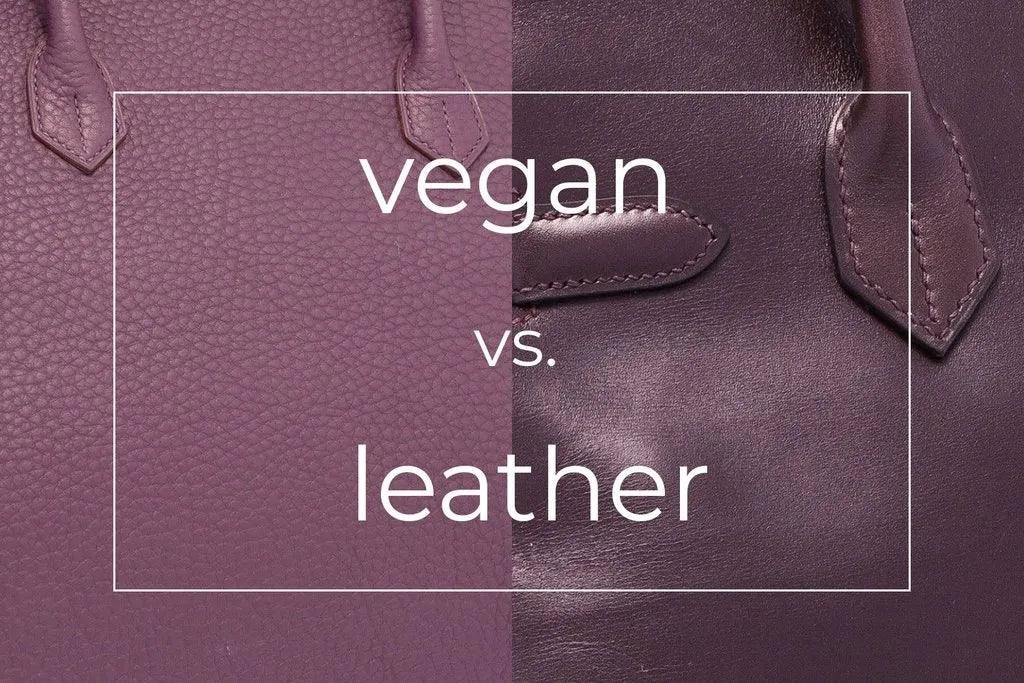
In 2026, the debate around vegan leather vs real leather has moved far beyond ethics or aesthetics. For fashion brands, especially those operating in the mid‑market and premium segments, material choice directly impacts unit margins, return rates, production efficiency, and long‑term brand value.
Most online content on this topic is written for consumers. It explains what vegan leather is or why real leather feels luxurious. But brand owners ask very different questions:
Which material leads to lower after‑sales risk?
Which one scales better without killing margins?
Where do hidden production costs appear?
At Solton Leather, we work as an OEM & ODM manufacturer supporting handbags, crossbody bags, cosmetic bags, wallets, and leather storage products. This guide filters the vegan leather vs real leather discussion through a manufacturer’s lens, grounded in real production data, sourcing constraints, and post‑launch brand performance.
What Is Vegan Leather vs Real Leather in 2026?
📌 Solton Insight: Brands often underestimate how broadly the term “leather” is used in sourcing discussions. Misalignment here is one of the most common causes of cost overruns.
Real Leather in Factory Reality
From a manufacturer’s standpoint, real leather is not a single material :
Full‑grain / top‑grain cowhide – Stable cutting yield, predictable sewing behavior, long product lifecycle
Corrected or split leather – Lower material cost, but higher defect sensitivity
🔍 Solton Experience: For structured bags and small leather goods, higher‑grade cowhide usually results in lower overall wastage during cutting compared to thin synthetic sheets that stretch or deform.
What “Vegan Leather” Means on the Production Floor
Vegan leather typically includes:
PU leather (most common)
PVC leather (declining due to compliance concerns)
Microfiber leather (higher consistency, higher MOQ)
Plant‑based / bio‑based (More Sustainable Options) (limited scalability in 2026)
🔍 Solton Experience: Many brands are surprised to learn that two PU leathers with identical supplier descriptions can behave very differently during stitching, edge painting, and long‑term use.
Durability Is Not a Marketing Claim — It’s a Return‑Rate Variable
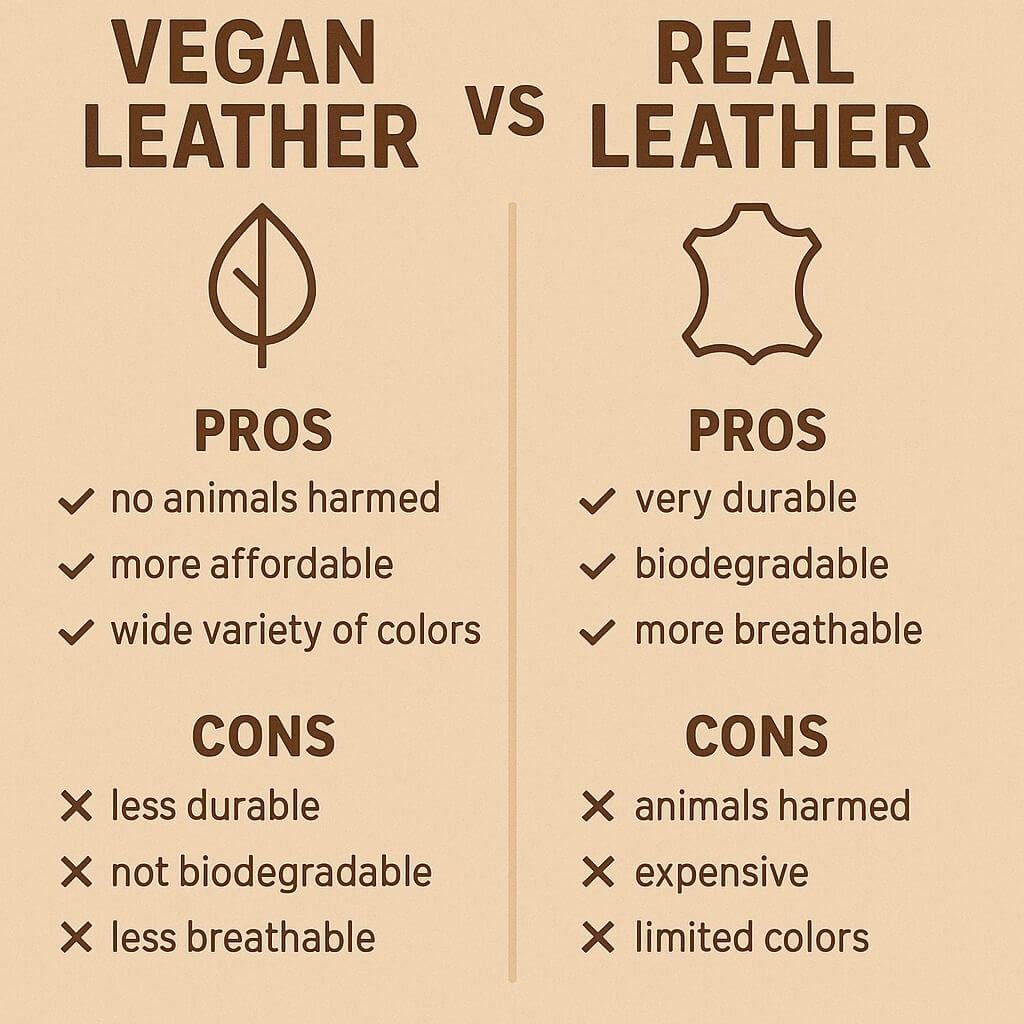
Real Leather: Long‑Term Performance
High‑quality cowhide consistently outperforms synthetic alternatives in tensile strength, seam retention, and surface aging.
🔍 Solton Observation: Products made with top‑grain leather typically maintain structural integrity for years, which directly supports lower warranty claims and better repeat‑purchase metrics.
Vegan Leather: Performance Trade‑Offs
Low‑end PU: Visually appealing at launch, but prone to cracking or peeling
Microfiber: More stable, but higher cost and stiffer hand feel
Plant‑based materials: Promising, but still inconsistent across batches
📊 After‑Sales Reality (Manufacturer Insight): Brands using lower‑grade PU frequently experience noticeably higher return and complaint rates within the first 12 months compared to brands using head‑layer cowhide. While exact percentages vary by product category, the pattern is consistent across markets.
For B2B buyers, durability should be evaluated not as a feature, but as a risk‑management tool.
Aging Behavior: Patina vs Product Failure
Real leather ages; synthetic leather degrades.
Real leather develops patina, reinforcing perceived value
PU leather tends toward surface fatigue and delamination
🔍 Solton Experience: In resale and re‑commerce channels, leather goods retain significantly higher perceived value, indirectly strengthening brand equity.
Cost Comparison: Vegan Leather vs Real Leather for Fashion Brands
📌 This is where most sourcing decisions go wrong.
Visible Material Costs (What Everyone Compares)
The following table compares common materials used in handbag manufacturing based on unit cost level and typical B2B use cases, ranked from highest to lowest cost.
| Material (Ranked by Cost) | Unit Cost Level | Typical B2B Use Case |
|---|---|---|
| Full-grain Leather | High | Premium core collections where durability, aging quality, and brand positioning are critical |
| Top-grain Leather | Medium–High | Scalable mid-premium lines balancing material cost, consistency, and long-term wear |
| Microfiber Leather | Medium | Structured synthetic collections requiring uniform texture and controlled production quality |
| PU Leather | Low | Entry-level or fast-fashion products prioritizing low upfront cost and rapid market turnover |
Invisible Costs (What Actually Impacts Margin)
🔍 Solton Leather Production Insight:
Wastage rate: PU sheets can have higher cutting loss on complex bag patterns
Labor cost: Synthetic materials often require slower sewing speeds
Rework risk: Edge cracking and surface marks increase QC rejection
After‑sales cost: Returns, replacements, and brand goodwill loss
Key takeaway: A lower material price does not automatically mean a lower total production cost.
Sustainability: Claims vs Lifecycle Reality in 2026
From a compliance and sourcing perspective:
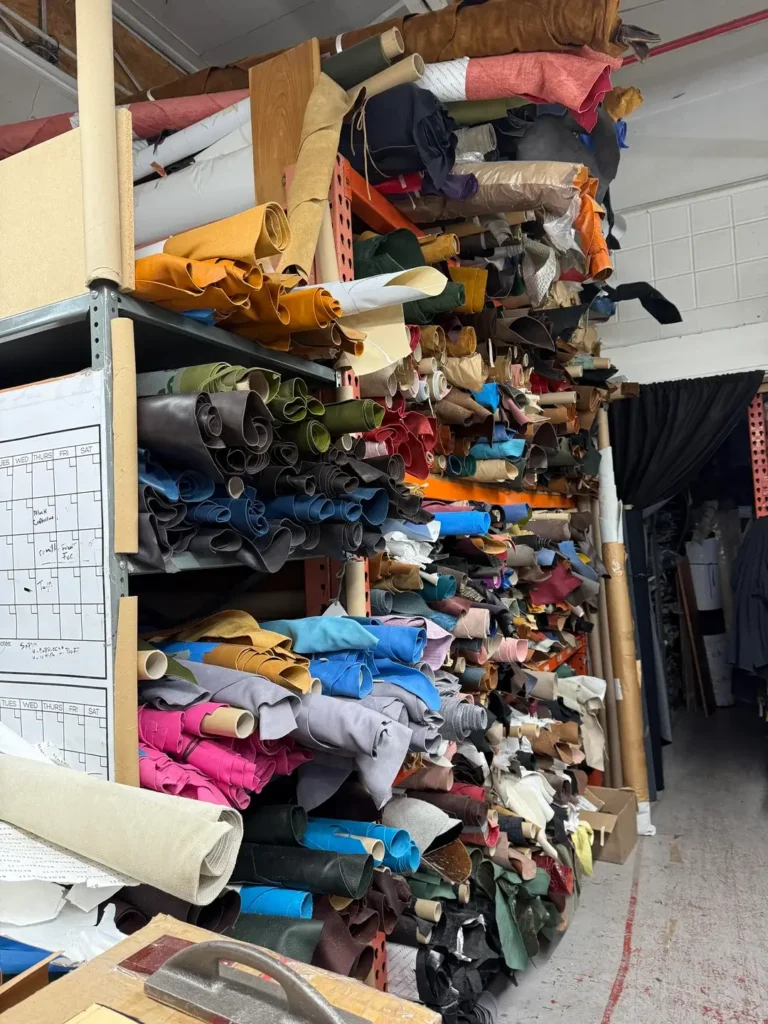
Real leather is a by‑product, not a primary driver of livestock farming
PU‑based vegan leather remains petroleum‑dependent
Bio‑based materials often still rely on polymer coatings
🔍 Solton Experience: Brands that communicate material transparency rather than absolute claims (“100% eco”) face fewer disputes and stronger long‑term trust.
Consumer Perception Meets Operational Reality
What the Market Says
Gen Z values vegan positioning — but expects honesty
Premium buyers still associate leather with craftsmanship
What Manufacturing Data Shows
🔍 Solton Observation: Brands that align material choice with price positioning and channel strategy experience fewer post‑launch corrections.
Touch, Feel, and Perceived Value at Shelf Level
Luxury is tactile.
Leather offers warmth, elasticity, and natural variation
Vegan leather offers uniformity and predictability
🔍 Solton Insight: For crossbody bags and wallets, tactile experience heavily influences in‑store conversion rates, not just online impressions.
Maintenance, Damage & Brand Risk
| Factor | Real Leather | Vegan Leather |
| Repairability | High | Low |
| Long‑term care | Conditioning | Replacement |
| Heat resistance | Moderate | Low |
Strategic Sourcing: Which Material Aligns with Your 2026 Brand Growth & ROI?
After comparing cost structures, hidden production risks, durability, and return rates, the real question for fashion brands is not “which material is better?” but “which material aligns with our brand strategy and product lifecycle?”
At Solton Leather, we help brands make this decision based on product category, target price point, and long-term operational risk, not just material price per meter.
1️⃣ When Vegan Leather Makes Sense for Your Brand
Vegan leather can be a practical choice for brands prioritizing speed-to-market, entry-level pricing, or short product cycles.
It often works best for:
Entry-level collections with strict cost ceilings
Trend-driven or seasonal SKUs
Promotional items or test launches
Solton Leather insight:
While PU leather offers a lower upfront material cost, brands should carefully assess wastage rate and labor complexity for structured designs. In some cases, complex PU styles result in higher scrap rates than expected, reducing the perceived cost advantage.
2️⃣ When Real Leather Is the Better Long-Term Investment
For brands focused on brand equity, durability, and lower after-sales risk, real leather remains the preferred option.
It is especially suitable for:
Core collections with long selling periods
Mid-to-premium positioning
Products where aging quality enhances perceived value
Solton Leather insight:
Based on our production and after-sales feedback, products made with low-end PU typically experience significantly higher wear-related complaints within 12 months compared to top-grain or full-grain leather alternatives.
3️⃣ A Hybrid Strategy Many Brands Overlook
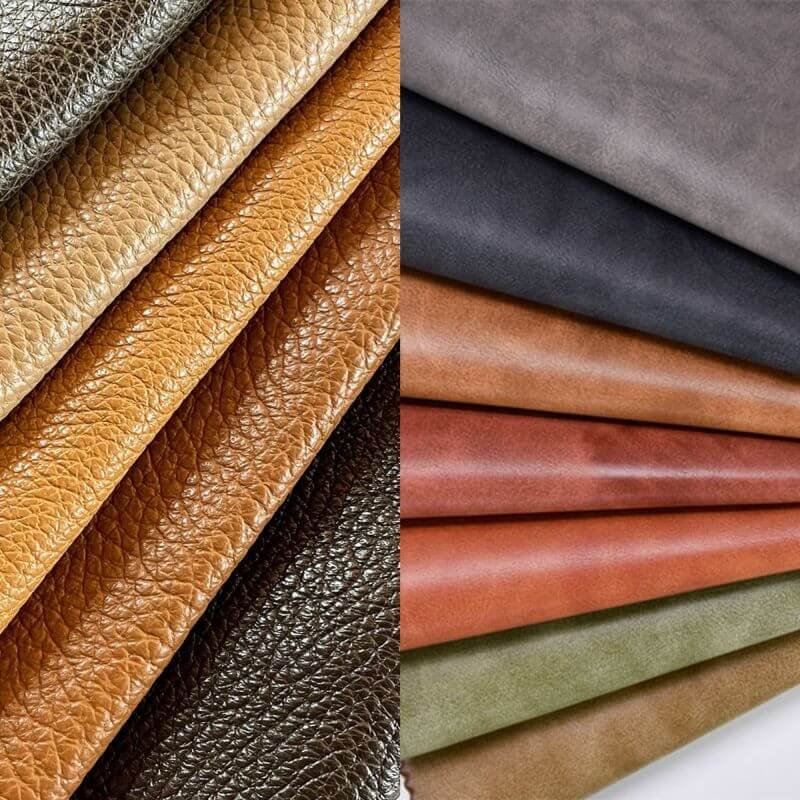
An increasing number of brands adopt a hybrid material strategy, using different materials across product lines rather than committing to a single solution.
A common approach includes:
Real leather for flagship and core products
Vegan or microfiber leather for entry-level or trend lines
Material flexibility based on regional market expectations
Solton Leather insight:
This approach allows brands to protect margin on premium lines while maintaining competitiveness in lower-priced segments without overexposing themselves to return or reputation risk.
Key Takeaway for Brand Owners
Choosing between vegan leather and real leather is ultimately a strategic decision, not a purely ethical or cost-based one.
Brands that evaluate production complexity, durability, return rates, and brand positioning together are far more likely to build sustainable collections—and avoid costly material missteps
The Sourcing Matrix: Aligning Material with Business Objectives To help our clients navigate the trade-offs between cost, durability, and speed, we have developed this Manufacturer’s Decision Matrix. Based on 2026 market data, here is how we recommend matching materials to your specific brand positioning:
| 品牌定位 (Positioning) | 推荐材料 (Recommended) | 核心优势 (Key Advantage) |
| Trend-Driven (快时尚) | Vegan Leather / PU | Speed to market & Low entry cost |
| Heritage & Premium (高端) | Full-Grain / Top-Grain | Brand equity & Zero peeling risk |
| Balanced Growth (中端) | Hybrid Strategy | Optimized margins & Scalability |
Strategic Sourcing Strategies for Fashion Brands
Instead of asking “Which material is better?”, experienced fashion brands focus on strategic sourcing questions that impact long-term profitability and operational stability:
Which material supports my target margin across multiple seasons?
Which option minimizes after-sales risk and return exposure?
Which material ensures consistent supply and pricing over time?
At Solton Leather, we see many growing brands move beyond single-material decisions and adopt a dual-material sourcing strategy.
Common approaches include:
Vegan leather for trend-driven or seasonal SKUs with shorter life cycles
Real leather for evergreen, core products where durability and brand equity matter most
This sourcing structure allows brands to protect margins on entry-level collections while maintaining long-term product quality and customer trust in their core lines.
Final Call to Action: Choose Materials Like a Manufacturer, Not a Marketer
n 2026, brands that win are those that treat material choice as an operational and financial decision, not a slogan.
At Solton Leather, we specializing in custom leather bag manufacturing and B2B wallet sourcing,we don’t push one material — we help brands evaluate true production cost, sourcing risk, and post‑sale performance before committing.
👉 If you are planning a new collection or reconsidering your material strategy, now is the time to validate your assumptions with a manufacturer’s data — before costly mistakes scale with your business.
Explore Solton Leather’s OEM & ODM manufacturing capabilities for handbags, crossbody bags, cosmetic bags, wallets, and leather storage solutions.
FAQ: Vegan Leather vs Real Leather (B2B Focused)
Top‑grain leather offers the most predictable scalability.
Only with careful material selection and honest branding.
Start with a focused material strategy aligned to channel and price point.
Brands should look beyond material price per meter and assess hidden manufacturing costs, including:
Material wastage during cutting
Labor cost differences caused by sewing difficulty
Edge finishing failure risk
Rework and quality control time
Delivery delays caused by production instability
At Solton Leather, we encourage brands to evaluate materials based on total landed production cost, not just sourcing price.
At Solton Leather, material recommendations are based on product structure, target price point, expected lifecycle, and production risk, not trends alone.
We work closely with brands during sampling and pre-production to evaluate cost efficiency, durability, and manufacturing stability, helping avoid costly material decisions before bulk production begins.